
There is something deeply satisfying about a piece of furniture that works hard and still looks gorgeous doing it. A farmhouse sideboard sits in that sweet spot perfectly.
It holds your stuff, anchors a room, and somehow manages to look like it belongs on the cover of a home decor magazine. Not bad for a storage unit, right?
If you have ever stood in your dining room or living space and thought, “I need more storage, but I refuse to sacrifice style,” then you and I are kindred spirits.
Farmhouse sideboards are my answer to that very problem, and today we are going to talk about everything you need to know to pick the right one and style it like a pro.
What Exactly Makes a Sideboard “Farmhouse”?
Before we get into the good stuff, let us clear up what gives a sideboard that farmhouse identity.
Not every wooden cabinet qualifies, and knowing the difference saves you from buying something that looks completely out of place in your home.
Farmhouse sideboards typically share these defining features:
- Reclaimed or distressed wood finishes that carry a lived-in, weathered look
- Simple, clean lines without overly ornate carvings or flashy hardware
- Neutral color palettes like whites, creams, warm grays, and natural wood tones
- Chunky, substantial builds that feel solid and grounded rather than flimsy
- Black or aged metal hardware on drawer pulls and knobs
The farmhouse style draws from rural American and European cottage aesthetics. It celebrates imperfection, warmth, and function.
So when you spot a sideboard with a slightly rough texture, visible wood grain, or a slightly chippy paint finish, that is not a flaw. That is the whole point.
Shop Farmhouse Sideboards On Amazon
Why a Farmhouse Sideboard Deserves a Spot in Your Home
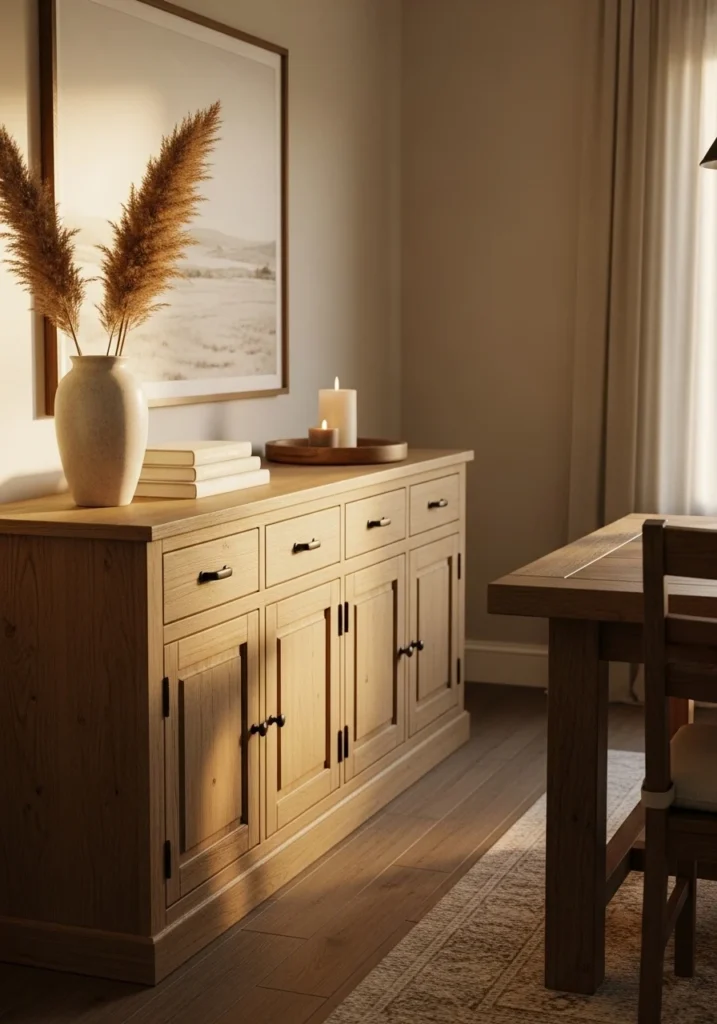
Here is a question worth sitting with: how many pieces of furniture in your home pull double duty as both storage and decor? Probably not many.
Most storage solutions are purely practical and aggressively ugly. Farmhouse sideboards break that rule entirely.
They Solve Real Storage Problems
A well-chosen sideboard gives you serious storage capacity without turning your room into a warehouse.
Most farmhouse sideboards come with a combination of cabinets and drawers, giving you flexibility to store everything from table linens and serving dishes to board games and extra blankets.
Here is what you can realistically store in a farmhouse sideboard:
- Dinnerware, serving platters, and extra cutlery
- Table runners, placemats, and cloth napkins
- Wine bottles and barware
- Kids’ art supplies or craft materials
- Remote controls, chargers, and small electronics
- Books, candles, and decorative extras
One sideboard can quietly absorb the clutter that might otherwise sit on counters, shelves, or the floor. And it does all of this while looking intentional and charming.
Browse Popular Farmhouse Sideboards On Amazon
They Anchor a Room Visually
A farmhouse sideboard does something for a room that a dozen throw pillows cannot. It grounds the space.
Place one along a dining room wall and suddenly the whole room feels purposeful and pulled together. The wide, low profile adds visual weight without making a space feel cramped.
The best rooms benefit from what designers call a “visual anchor,” and a sideboard fills that role beautifully.
It creates a natural focal point, a place where the eye lands and rests, especially when you style the top surface thoughtfully.
Choosing the Right Farmhouse Sideboard for Your Space
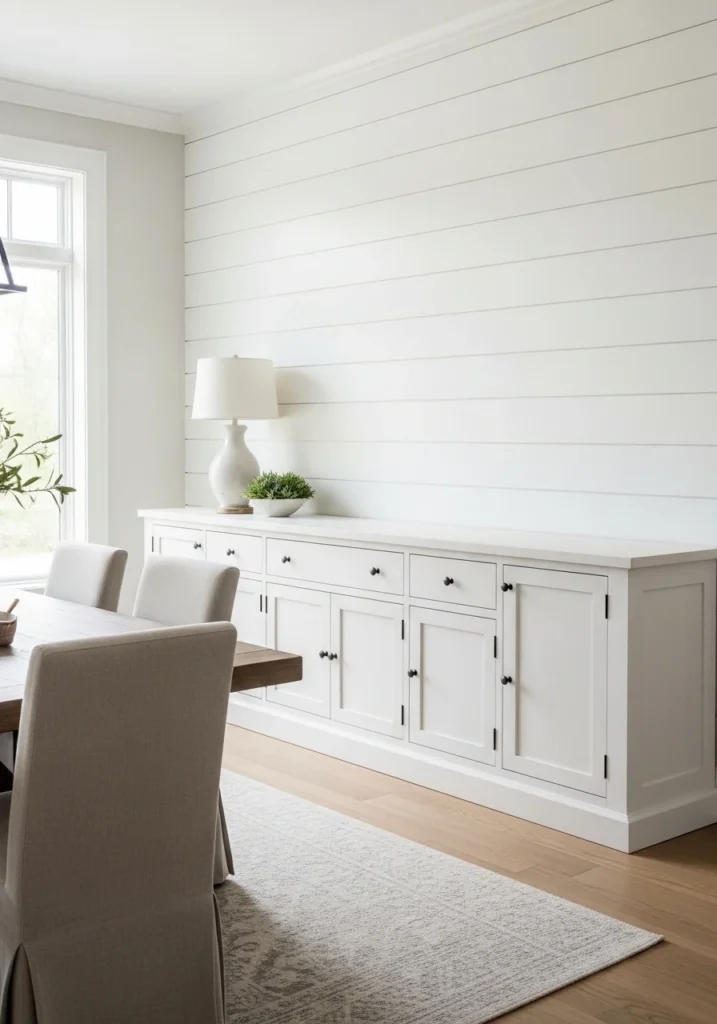
Not every sideboard will work in every home. Picking the wrong size or finish creates a mismatch that you will notice every single day. Here is how to make a smart choice.
Get the Proportions Right
Size matters more than most people realize when furniture shopping. A sideboard that is too small for your wall looks like it is apologizing for existing.
One that is too large crowds the room and makes movement awkward.
A few practical sizing rules:
- Leave at least 36 inches of walking clearance in front of the sideboard
- Match the height to your dining table so the proportions feel balanced (most sideboards land between 30 and 36 inches tall)
- Aim for a width that fills roughly two-thirds of the wall you are placing it on
- For open-plan spaces, a longer sideboard (60 inches or more) works well as a room divider
Always measure your wall and your room before falling in love with a specific piece online. Trust me, finding out a sideboard does not fit after delivery is a miserable experience.
Pick the Right Finish for Your Decor
Farmhouse sideboards come in a few core finishes, each creating a different mood:
- Whitewashed or painted white: Bright, airy, and works beautifully in coastal or Scandinavian-influenced farmhouse spaces
- Natural or honey oak: Warm and inviting, great for traditional farmhouse and rustic interiors
- Dark walnut or espresso stains: Moodier and more dramatic, perfect if you lean toward modern farmhouse with contrast
- Distressed gray or blue-gray: Fresh and slightly vintage, pairs well with shiplap walls and linen textiles
- Two-tone finishes (painted top, natural wood base): A popular modern farmhouse look that adds visual interest
If your room already has a lot of warm wood tones, a whitewashed sideboard creates lovely contrast. If your space feels cold or neutral, a natural wood sideboard adds warmth instantly.
Find Your Perfect Finish On Amazon
Styling the Top of Your Farmhouse Sideboard
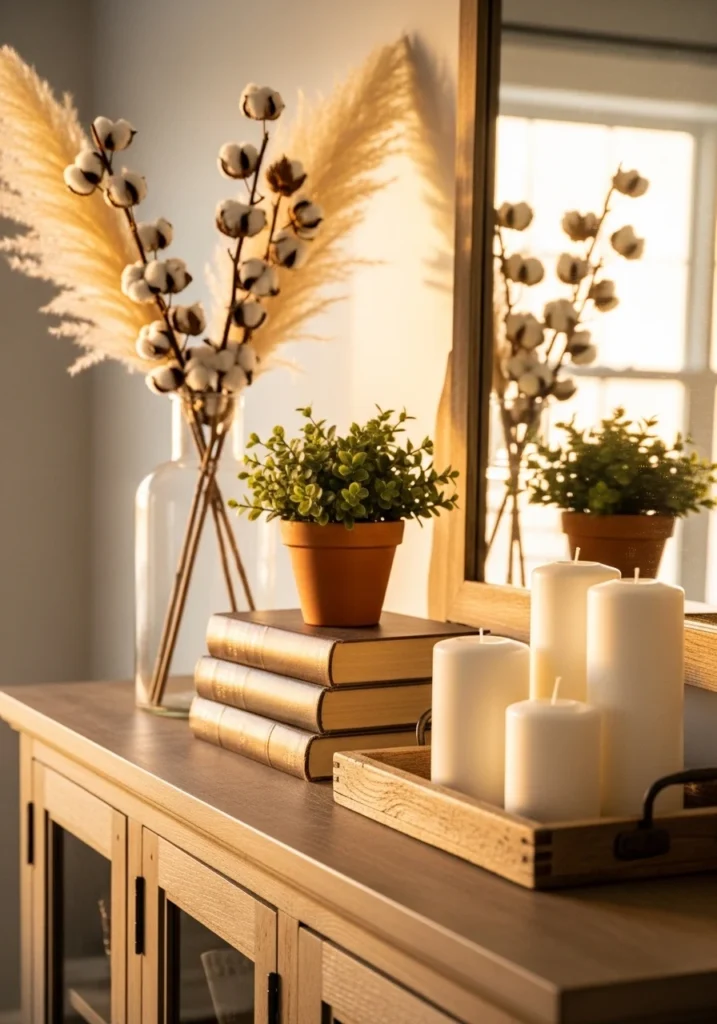
Here is where people either nail it or absolutely lose the plot. The top of a sideboard is valuable decorating real estate, and how you style it makes or breaks the whole look.
The Rule of Three and Varying Heights
Good sideboard styling almost always uses odd numbers of objects and varies the heights. This creates visual rhythm and keeps things from looking flat or staged.
A simple formula that works every time:
- One tall element like a large vase, a lantern, or a mirror leaning against the wall
- One medium element like a stack of books, a potted plant, or a decorative tray
- One low element like a candle cluster, a small bowl, or a wooden figurine
You do not have to overthink this. Start with these three height levels and adjust until it feels balanced to you.
Seasonal Styling Keeps Things Fresh
One underrated advantage of a farmhouse sideboard is how easily you can swap out the styling with the seasons.
A few dried cotton stems and a pumpkin in autumn, some greenery and white candles in winter, fresh wildflowers in spring. The sideboard stays the same, but the room feels current and alive.
Bold your styling anchors and let the seasonal accents rotate around them.
A large mirror, a favorite piece of pottery, or a meaningful family photo can stay put all year while smaller decorative items change around them.
Materials That Stand the Test of Time
Farmhouse furniture lives and dies by its materials. A sideboard built from solid wood will outlast your mortgage. A veneer-over-particleboard option might not survive three moves.
Solid Wood vs. Engineered Wood
Solid wood sideboards offer:
- Superior durability and resistance to warping over time
- The ability to be sanded and refinished if scratched
- Genuine character that develops with age
- A higher upfront cost that pays off over years of use
Engineered wood or MDF sideboards offer:
- Lower price points that make farmhouse style accessible
- Consistent color and finish without natural wood variation
- Acceptable durability for lighter use situations
- Limited ability to repair or refinish
For a piece you plan to keep for many years and potentially pass down, solid wood is worth the investment.
If you are furnishing a rental or a transitional space, a well-made engineered wood option does the job without breaking the bank.
Explore Solid Wood Farmhouse Sideboards On Amazon
Where to Place a Farmhouse Sideboard Beyond the Dining Room
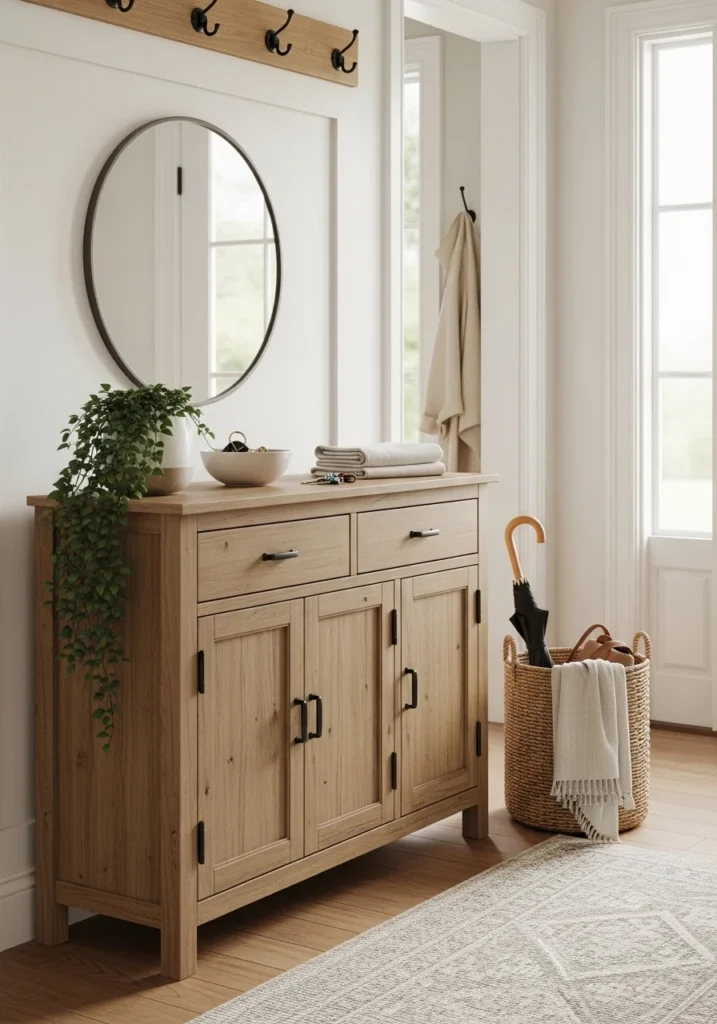
Most people picture a sideboard in the dining room, and that absolutely works. But farmhouse sideboards thrive in other rooms too, and placing one in an unexpected spot can genuinely transform a space.
Great alternative placements include:
- Entryway or hallway: A sideboard here handles keys, bags, and shoes while making a strong first impression on guests
- Living room: Use it as a media console or a bar cabinet with baskets for blankets and remotes
- Home office: Style it as a credenza for files, supplies, and equipment
- Bedroom: A sideboard works beautifully as extra dresser storage or a vanity surface
The versatility of farmhouse sideboards is one of their most compelling selling points. A good one moves with you through different homes and different life stages.
Final Thoughts
A farmhouse sideboard is one of those rare furniture purchases that you rarely regret.
It solves real storage problems, adds serious character to a room, and rewards you with daily satisfaction every time you walk past it. That is a pretty solid return on investment for a piece of furniture.
So measure your walls, decide on your finish, and stop letting your dining room or entryway go without the anchor it deserves.
Your space will thank you, your guests will notice, and you might just find yourself rearranging the top surface on a Saturday afternoon purely because it is that enjoyable to work with.
There are worse ways to spend a weekend.
What Is the Best Wood for a Farmhouse Sideboard?
Solid hardwoods like oak, pine, and acacia top the list for farmhouse sideboards. Oak offers exceptional durability and a prominent grain that suits both rustic and modern farmhouse styles beautifully.
Pine is a budget-friendlier option that takes paint and distressing techniques extremely well, making it a favorite for whitewashed and chippy-finish looks.
If longevity is your priority, always choose solid wood over MDF or veneer-over-particleboard construction.
How Wide Should a Farmhouse Sideboard Be for a Dining Room?
A farmhouse sideboard should ideally span roughly two-thirds of the wall you place it against. For most standard dining rooms, this translates to a width somewhere between 55 and 72 inches.
A sideboard that is too narrow will look lost on a large wall, while one that is too wide will crowd the space and disrupt traffic flow.
Always measure your wall and leave adequate clearance on both sides before committing to a specific width.
What Do You Put on Top of a Farmhouse Sideboard?
The most visually appealing sideboard tops combine varying heights, natural textures, and a mix of functional and decorative objects.
A large leaning mirror or tall vase anchors the arrangement at the back, a medium-height item like a potted plant or stack of books fills the middle layer, and low decorative pieces like candles or a wooden bowl complete the front.
Keeping the color palette cohesive and swapping out seasonal accents keeps the look fresh throughout the year without requiring a complete restyle.
Can You Use a Farmhouse Sideboard in a Living Room?
Absolutely, and it works surprisingly well. A farmhouse sideboard functions beautifully as a media console, a bar cart alternative, or an extra storage unit for blankets, books, and remotes in a living room setting.
Its low profile keeps the room feeling open while the surface area gives you plenty of decorating space.
Many homeowners find that placing a sideboard in the living room instead of the dining room creates a more unique and layered interior.
How Do You Style a Farmhouse Sideboard for Different Seasons?
Seasonal sideboard styling works best when you keep a few permanent anchor pieces in place and rotate smaller decorative accents around them.
In autumn, dried cotton stems, small pumpkins, and warm-toned candles bring a cozy harvest feel. Winter calls for greenery, pinecones, and clusters of white or metallic candles.
Spring styling benefits from fresh or faux florals, light linen textures, and pastel ceramics. Summer is the perfect time to bring in woven rattan, shells, and bright botanical prints.
Swapping just three or four small items is genuinely all it takes to make the whole piece feel intentional and seasonal.