
There is something almost magical about walking into a living room and immediately feeling like you want to kick off your shoes and stay forever.
More often than not, the secret weapon behind that feeling is a well-placed set of textured throw pillows.
They are small, they are affordable, and they carry more decorating power than most people give them credit for.
If you have ever spent twenty minutes rearranging pillows on a couch trying to make a space feel warmer and still ended up with something that looks like a hotel lobby, you are in the right place.
Let’s talk about what actually works, why texture matters more than color in most cases, and how to put it all together without losing your mind at the fabric store.
Why Texture Is the Real Hero of Throw Pillow Styling
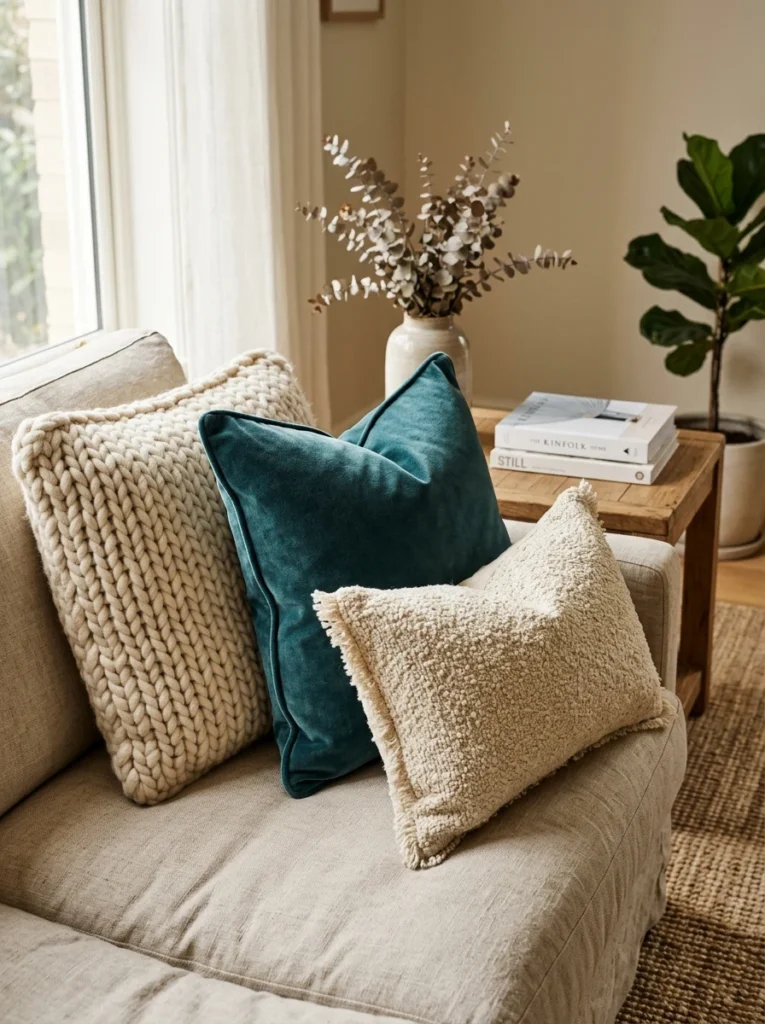
Most people obsess over color when they shop for throw pillows.
Color is important, sure, but texture is what creates that irresistible, layered, lived-in look that makes a living room feel genuinely cozy rather than just decorated.
Think about it. Two pillows can share the exact same shade of cream and still look completely different depending on whether one is a flat cotton print and the other is a chunky knit.
The knit one pulls you in. The flat one just sits there, doing the bare minimum.
How Texture Affects the Feel of a Room
Texture works on a psychological level as much as a visual one.
When you see a bouclé pillow or a faux fur cover, your brain immediately registers softness and warmth before you even touch it. That anticipation is exactly what makes a room feel inviting.
Here is what different textures tend to communicate in a space:
- Chunky knit feels casual, warm, and deeply cozy. Perfect for a relaxed, hygge-inspired living room.
- Velvet adds richness and a slight formality without making the space feel stiff.
- Bouclé brings a contemporary, designer-level look that works beautifully in neutral rooms.
- Linen and cotton weaves keep things grounded and breathable, great for a more relaxed or coastal vibe.
- Faux fur is basically a cheat code for instant coziness, especially in fall and winter.
Mixing two or three of these in one space is where the real magic happens.
Shop Textured Throw Pillow Covers On Amazon
Choosing the Right Textured Throw Pillows for Your Living Room
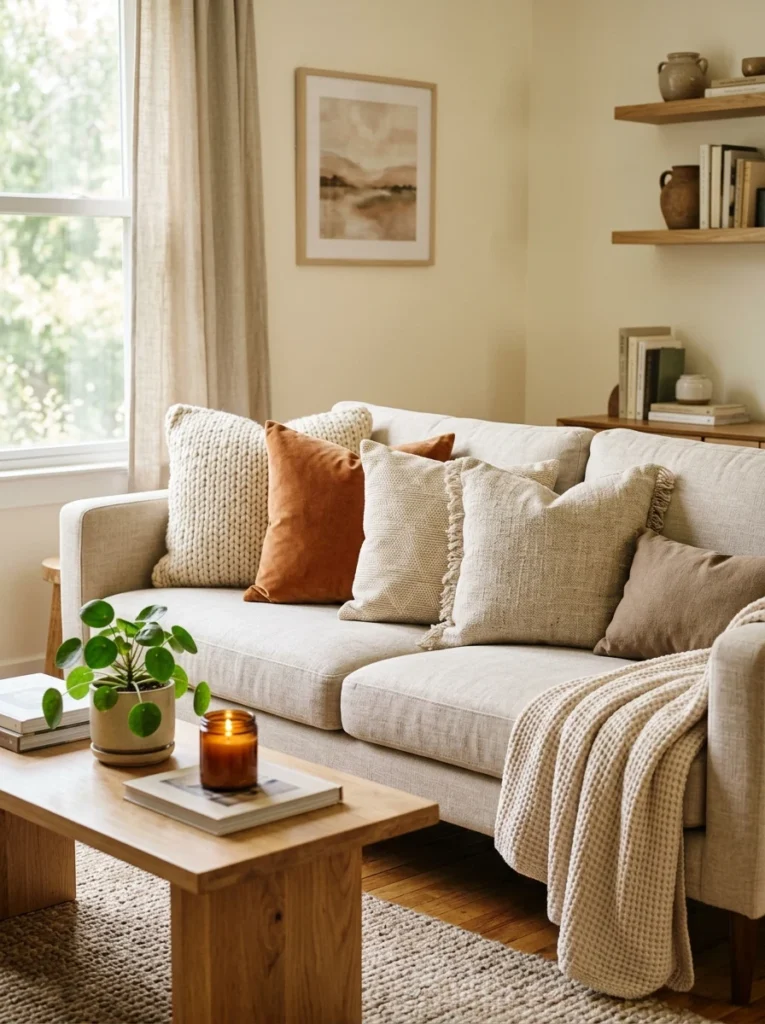
So how do you actually choose? Walking into a home goods store and staring at a wall of pillows is overwhelming enough to make anyone give up and order takeout instead.
The trick is to have a loose framework before you go shopping.
Start With Your Base
Look at the furniture you already have. Smooth leather sofas love chunky or highly tactile textures because the contrast is visually interesting.
A linen or fabric sofa, on the other hand, benefits from mixing textures that vary in weight rather than just surface feel. Velvet on linen, for example, creates a beautiful richness without competing with the sofa itself.
Your rug also matters more than most people realize. If your rug already has a strong texture or pattern, keep your pillow textures subtle.
If your rug is flat and minimal, your pillows can afford to be bolder and chunkier.
Think in Odd Numbers
Designers swear by odd numbers for a reason, and that reason is that it works. Three or five pillows on a sofa almost always looks better than two or four.
Two pillows looks symmetrical and a little stiff. Three pillows gives the eye somewhere to travel and makes the arrangement feel natural rather than placed.
A classic formula for a three-pillow setup:
- One large lumbar pillow in a woven or textured fabric
- Two matching or complementary square pillows in a contrasting texture
- Optional: one small accent pillow in a bolder texture like faux fur or velvet
This setup gives you variety without chaos.
The Best Textures for Each Season
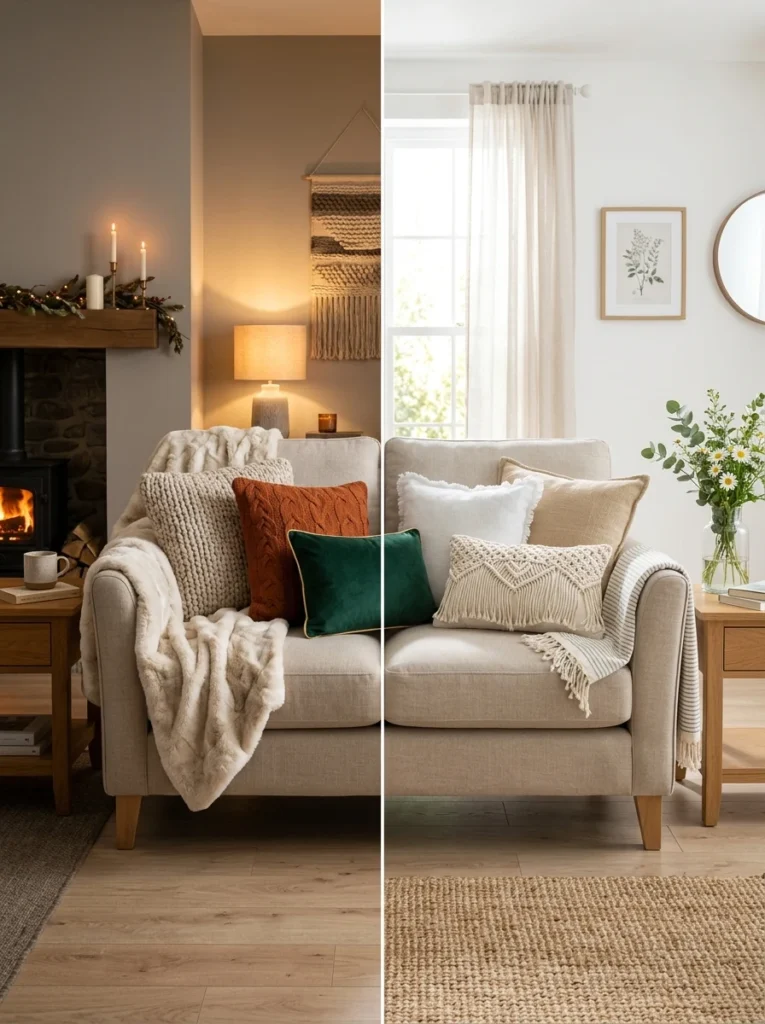
Here is something a lot of decorating guides skip over: your throw pillows do not have to stay the same year-round.
Swapping pillow covers seasonally is one of the easiest and most affordable ways to keep your living room feeling fresh without redecorating.
Fall and Winter
This is the season to go big on coziness. Think heavy textures, rich colors, and materials that look warm even from across the room.
- Chunky knit covers in oatmeal, rust, or deep forest green
- Faux fur in ivory or grey for an instant cabin-in-the-woods feel
- Velvet in jewel tones like emerald, burgundy, or navy
Nobody has ever looked at a chunky knit pillow in November and thought “this is too cozy.” It simply does not happen.
Shop Cozy Throw Pillows For Fall And Winter On Amazon
Spring and Summer
Lighter textures keep the room from feeling heavy when the weather warms up.
- Textured linen in soft whites, sandy neutrals, or muted pastels
- Woven cotton with subtle stripe or geometric patterns
- Macramé or fringe-edged covers for a breezy, relaxed look
The goal in warmer months is to keep the texture interesting while letting the space breathe. Lightweight does not have to mean boring.
Shop Lightweight Textured Pillow Covers On Amazon
How to Mix Textures Without Making It Look Busy
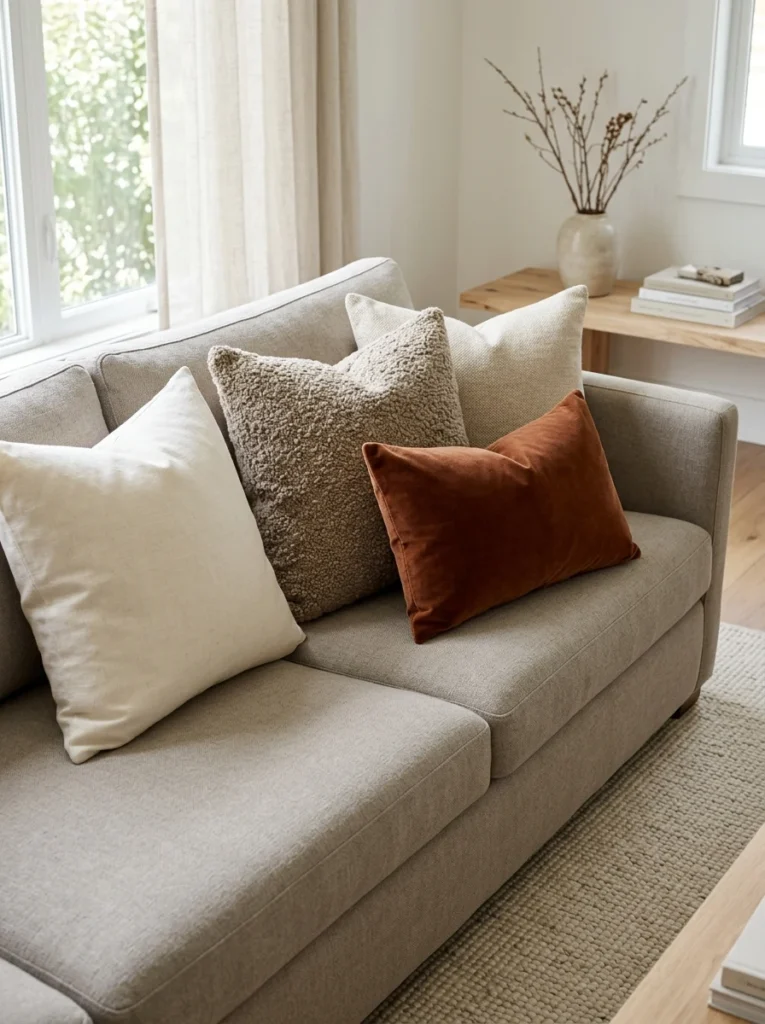
This is where most people get nervous, and honestly, that nervousness is what leads to playing it too safe and ending up with a boring, matchy-matchy setup.
Mixing textures is not as complicated as it looks, and a few simple rules will save you a lot of second-guessing.
The Rule of Contrast
Always pair a smooth texture with a rough or nubby one. Velvet next to chunky knit. Flat linen next to bouclé.
This contrast is what creates visual interest. When all your pillows have a similar texture weight, they blend together and the arrangement looks flat.
The Rule of Color Anchor
When you mix three or more textures, anchor the whole grouping with a neutral color that appears in at least two of the pillows. This creates cohesion without forcing everything to match perfectly.
A cream linen, a cream and taupe bouclé, and a rust velvet all feel intentional together because the cream threads through the grouping.
The Rule of Scale
Vary the size of your pillows. A 20×20 pillow, an 18×18 pillow, and a 12×20 lumbar sitting together immediately looks more considered than three identical sizes.
Size variation helps each texture stand out rather than compete.
Materials Worth Knowing Before You Buy
Not all textured throw pillows are created equal, and once you start noticing material quality, it is impossible to un-notice it. Here is a quick breakdown of what to look for:
Bouclé: A looped, nubby fabric that has had a serious moment in interior design recently. It is durable, visually interesting, and looks expensive even at a mid-range price point. Look for tighter loops for longevity.
Velvet: Crush velvet adds more dimension than standard velvet and handles everyday use better. Check that the fabric feels substantial and not thin or papery when you squeeze the pillow.
Chunky Knit: Hand-knit options tend to feel cozier and more artisan, but machine-knit covers hold their shape better over time. For everyday use, machine-knit is the practical choice.
Faux Fur: Quality varies wildly here. Run your hand through the pile and check that the backing is solid. Cheap faux fur sheds aggressively and loses its shape after a few washes.
Woven Cotton and Linen: These are the workhorses of the pillow world.
They wash well, age beautifully, and work in almost every decorating style. A good woven cotton pillow cover can last years without looking tired.
Browse Throw Pillow Covers By Material On Amazon
Where to Place Textured Throw Pillows for Maximum Impact
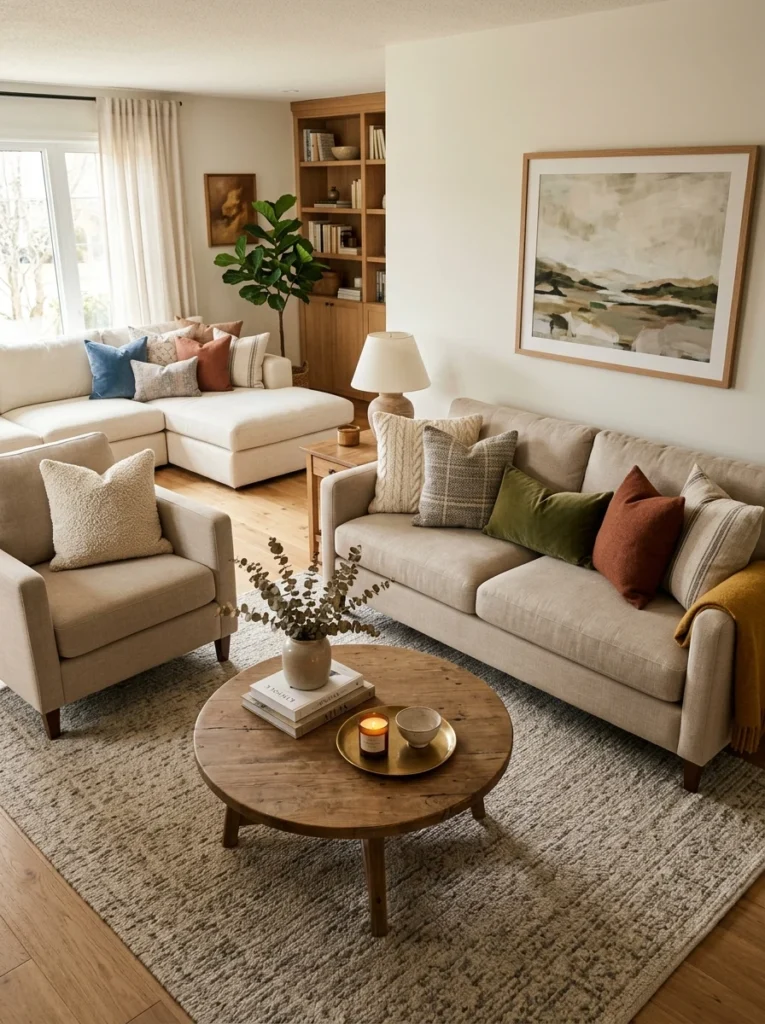
Placement sounds like an afterthought, but it genuinely changes how a room reads.
The goal is always to draw the eye toward the seating area and make it look welcoming, not to create a fortress of pillows that nobody wants to sit on.
On a sofa, stack two pillows against each arm and place the lumbar or accent pillow in the center. On a sectional, cluster pillows at the corner and at one end rather than spreading them thinly across the entire length.
On an armchair, a single well-chosen textured pillow does the job beautifully without crowding the seat.
And yes, you are absolutely allowed to actually use the pillows. The best living rooms look lived-in because they are.
Final Thoughts on Building a Cozy, Textured Living Room
Textured throw pillows are genuinely one of the highest-return investments you can make in your living room.
A few well-chosen covers can transform a space from “just fine” to “I never want to leave” without a renovation, a new sofa, or a designer consultation.
Start with one or two textures that complement your existing furniture, add a seasonal rotation to keep things interesting, and remember that odd numbers and contrast are your best friends.
The whole process should feel enjoyable, not stressful.
At the end of the day, a cozy living room is one you actually want to spend time in. And if a chunky knit pillow and a velvet accent cushion are what get you there, that is a decorating win by anyone’s standards.
What Are the Best Textures for Throw Pillows in a Living Room?
The best textures depend on your existing furniture and the mood you want to create. Chunky knit and faux fur work beautifully for a warm, casual feel, while velvet and bouclé add a richer, more polished look.
Woven linen and cotton are the most versatile options because they complement almost every decorating style without overpowering the space.
Mixing two or three complementary textures always looks more intentional than sticking to just one.
How Many Throw Pillows Should You Put on a Living Room Sofa?
Most designers recommend using an odd number of pillows because odd groupings look more natural and visually balanced than even ones. For a standard three-seater sofa, three to five pillows is the sweet spot.
A typical arrangement pairs two square pillows at each end with one lumbar or accent pillow in the center.
Going beyond five pillows on a sofa usually tips from cozy into cluttered territory, so it is worth keeping the number intentional.
How Do You Mix Textured Throw Pillows Without the Setup Looking Too Busy?
The key is to follow three simple principles: contrast, color anchoring, and scale variation. Pair a smooth texture like velvet with a rougher one like chunky knit so each pillow stands out visually.
Choose a neutral color that appears in at least two of your pillows to tie the grouping together. Vary the sizes so you have at least two different pillow dimensions in your arrangement.
These three steps alone will make even a bold mix of textures look cohesive and considered.
When Should You Switch Out Your Throw Pillow Covers Seasonally?
Swapping pillow covers twice a year, once heading into fall and again heading into spring, keeps your living room feeling fresh without requiring a full redecoration.
For fall and winter, lean toward heavier textures like faux fur, velvet, and chunky knit in warm, deep tones.
For spring and summer, lighter textures such as woven cotton, linen, and macramé work better and keep the space feeling airy.
Seasonal swaps are also one of the most budget-friendly ways to update your living room decor consistently.
What Should You Look for When Buying Quality Textured Throw Pillow Covers?
Always check the backing fabric first because a flimsy backing usually signals a lower-quality cover overall. For faux fur, run your hand through the pile and confirm it does not shed excessively.
For velvet, squeeze the pillow to check that the fabric feels substantial rather than thin or papery. Bouclé covers should have tight, dense loops that hold their shape over time.
For knit covers, machine-knit options tend to maintain their structure better than hand-knit ones under everyday use.