
Small bedrooms have a way of making you feel like you are sleeping inside a shoebox. You rearrange the furniture, you swap out the bulky nightstands, and still the room feels tight and cramped.
Here is the thing nobody tells you: lighting is one of the fastest ways to change how a room feels, and wall sconces are one of the best tools you have got.
Wall sconces free up surface space, draw the eye upward, and create depth that overhead lighting simply cannot.
If you have been sleeping in a bedroom that feels smaller than it actually is, this article is going to change how you think about your walls.
Why Wall Sconces Work So Well in Small Bedrooms
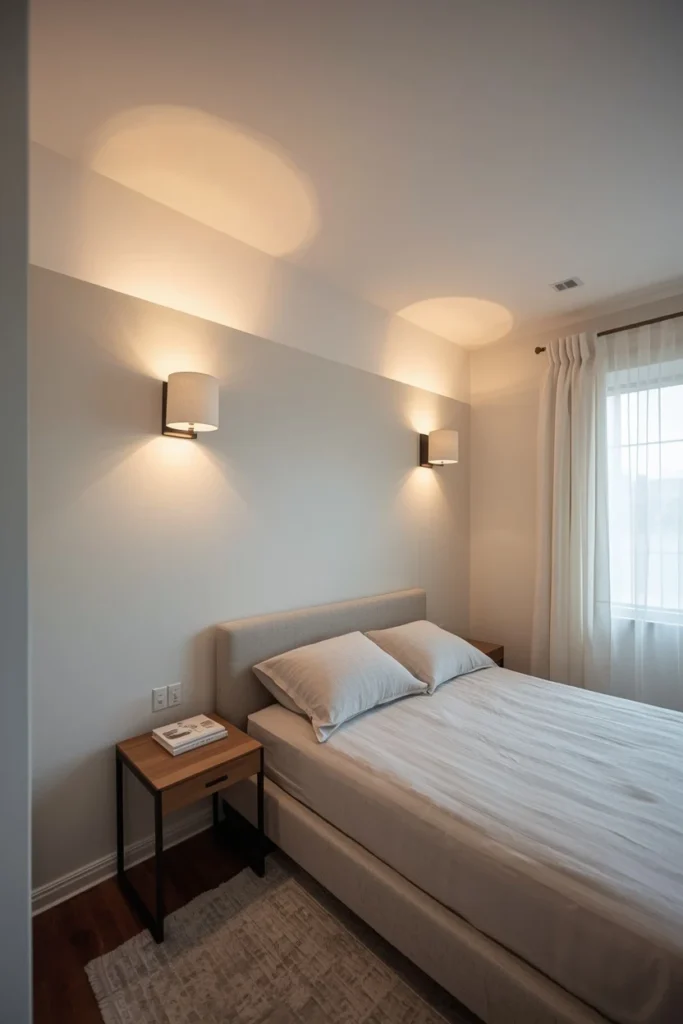
Let’s start with the basics. A small bedroom does not just feel small because of its square footage. It feels small because of how the light moves, or more accurately, how it fails to move through the space.
A single overhead fixture flattens a room. It sends light straight down and creates harsh shadows along the walls and corners.
Wall sconces, on the other hand, push light outward and upward, which visually expands the space around them.
The result is a room that feels airier and more open, even if you haven’t moved a single piece of furniture.
The Visual Trick Behind Vertical Light
Here is a simple truth about interior design: your eye follows the light.
When you mount sconces at eye level or slightly above, you naturally draw attention upward toward the ceiling. That upward pull makes any room feel taller and more spacious.
Rooms with higher perceived ceilings always feel bigger. It is not magic; it is just how human perception works. And you can achieve that effect for the cost of two sconces and an afternoon of installation.
Choosing the Right Wall Sconce Style for a Small Space
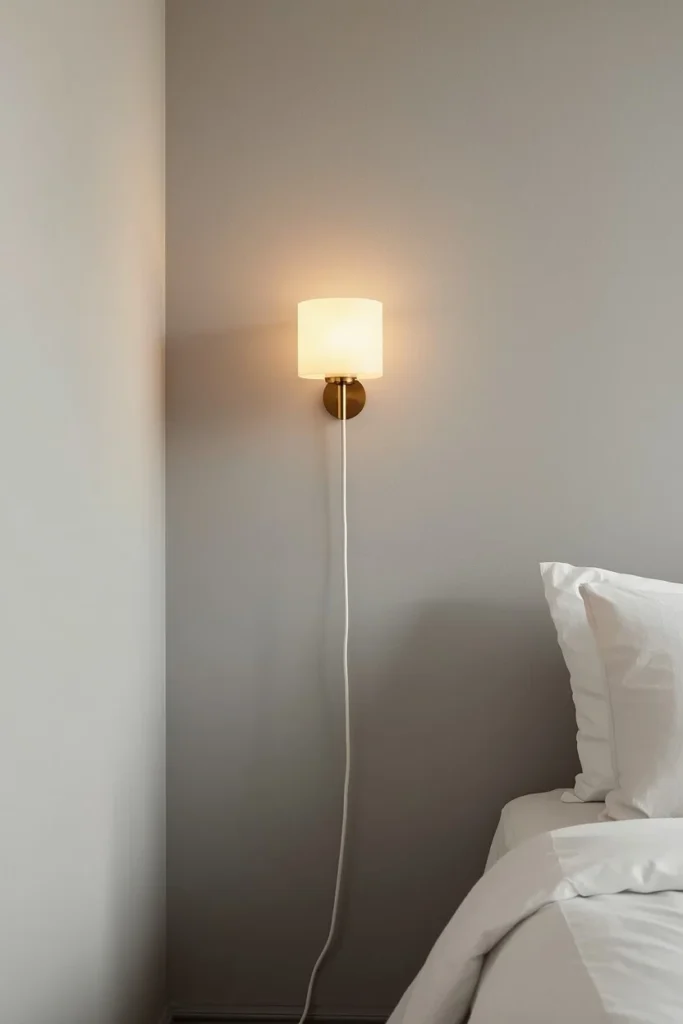
Not every sconce is going to help your small bedroom. Some designs actually close the space in rather than open it up. So let’s talk about what to look for and what to skip.
Go Slim and Streamlined
Bulky, ornate sconces can visually clutter a small wall. You want something with a slim profile and a clean silhouette.
Think minimalist arm sconces, simple drum shades, or even those sleek plug-in styles that sit nearly flush against the wall.
Good options to consider include:
- Swing arm sconces that fold flat when not in use and take up almost no visual space
- Tubular or cylinder designs that direct light up and out without spreading bulk across the wall
- Plug-in sconces for renters or anyone who doesn’t want to hardwire anything into the walls
Shop Wall Sconces For Small Bedrooms On Amazon
Opt for Upward-Facing or Diffused Light
The direction of the light matters just as much as the fixture itself. Sconces that direct light upward or diffuse it through a frosted shade create a soft glow that fills the room from the walls outward.
That kind of ambient light removes harsh shadows from corners and makes the walls recede visually, which tricks the eye into seeing more space.
Downward-facing spotlights are better for task lighting at a desk. In a small bedroom, they tend to shrink the feel of the room by darkening the upper half of the walls and ceiling.
Match the Finish to Your Wall Color
Here is something people overlook. A sconce that contrasts sharply with your wall color will draw attention to itself. Sometimes that is great design.
But in a small bedroom, you usually want the sconce to feel like part of the wall rather than a statement piece bolted onto it.
Matte black sconces on white or light grey walls create a modern, defined look without overwhelming the space.
Brass or gold tones on warm beige or terracotta walls add warmth while keeping things cohesive. If you want the room to feel expansive, choose finishes that complement rather than compete.
Where to Mount Your Sconces for Maximum Effect
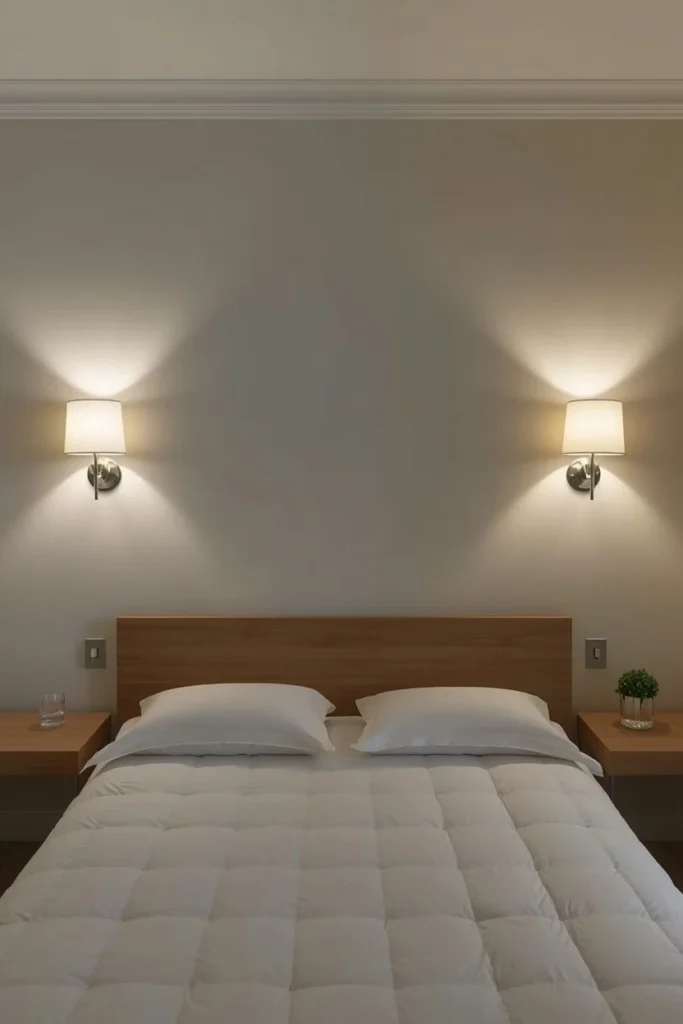
Placement is everything. You could have the most beautiful sconces in the world and still make your room feel smaller if you mount them in the wrong spot.
Flank the Bed, Not Just the Door
The most effective placement for bedroom sconces is on either side of the bed, mounted roughly 48 to 60 inches from the floor.
This keeps the light at a functional reading height and creates a balanced, symmetrical look that widens the visual field across the main wall.
Symmetry is one of those design tricks that makes a room feel intentional and spacious rather than chaotic and stuffed.
Two matching sconces on either side of the headboard also eliminate the need for bedside lamps, which frees up your nightstands entirely. Suddenly you have surface space back, and the room breathes.
Use Height to Your Advantage
Want to make the ceiling feel higher? Mount your sconces slightly above eye level, around 60 to 66 inches from the floor.
At that height, the upward-directed light travels toward the ceiling and makes the room feel taller.
This works especially well in bedrooms with standard 8-foot ceilings, which can feel oppressive without the right lighting strategy.
Avoid Clustering in One Corner
Putting all your artificial light in one area is the fastest way to make a small room feel lopsided and closed in. Spread your light sources across the room to give the space balance.
If budget allows, consider adding a third sconce on an adjacent wall to push light into a corner that typically sits in shadow.
The Role of Bulb Choice in Making Your Room Feel Bigger
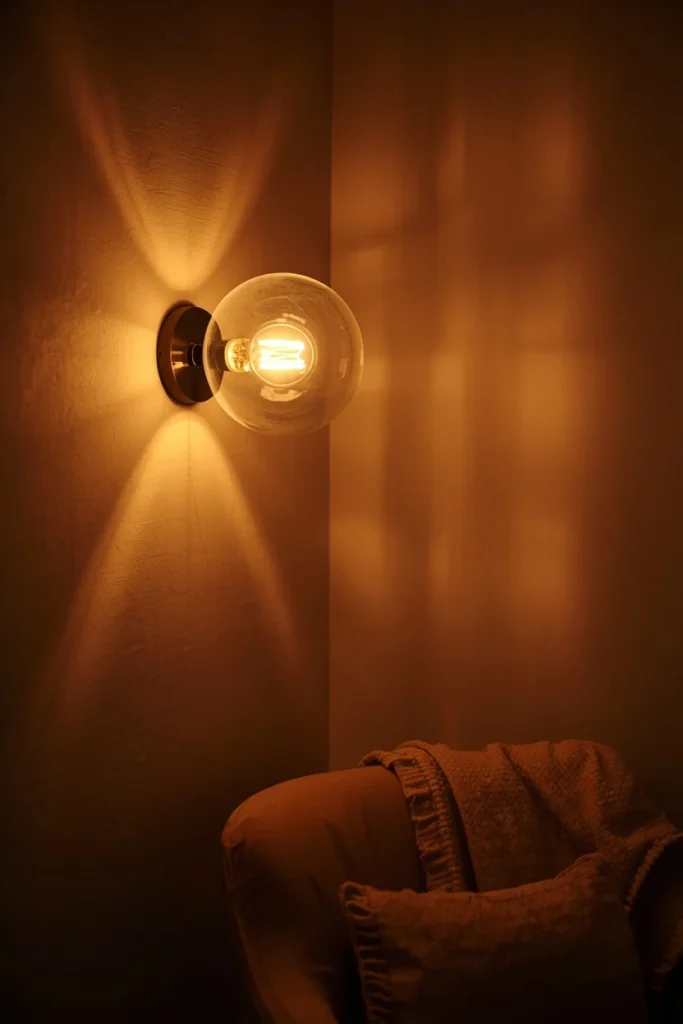
You could do everything else perfectly and still undermine the whole effort with the wrong bulb. This part does not get enough attention, honestly.
Warm vs. Cool Light
Warm white bulbs, in the 2700K to 3000K range, create a cozy and expansive feel in a bedroom setting. Cool white or daylight bulbs, which run above 4000K, tend to feel clinical and stark.
They work great in a home office or bathroom, but in a small bedroom they can make the space feel harsh and closed rather than open and inviting.
Stick with warm white for your sconces. The soft golden tone relaxes the eye and makes the room feel like it has more depth.
Find Warm White Bulbs For Bedroom Sconces On Amazon
Dimmable Bulbs Are Not Optional
If your sconces are hardwired, install a dimmer. If they are plug-in, look for dimmable models or use smart bulbs that allow you to control brightness through an app.
The ability to dim your sconces at night transforms the entire atmosphere of a small bedroom.
Bright light in the evening keeps the room looking sharp and intentional.
Dimmed light in the late evening creates layers of shadow that add depth and make the walls feel further away than they are. That is a simple trick with a massive visual payoff.
Design Styles That Work Best in Small Bedrooms
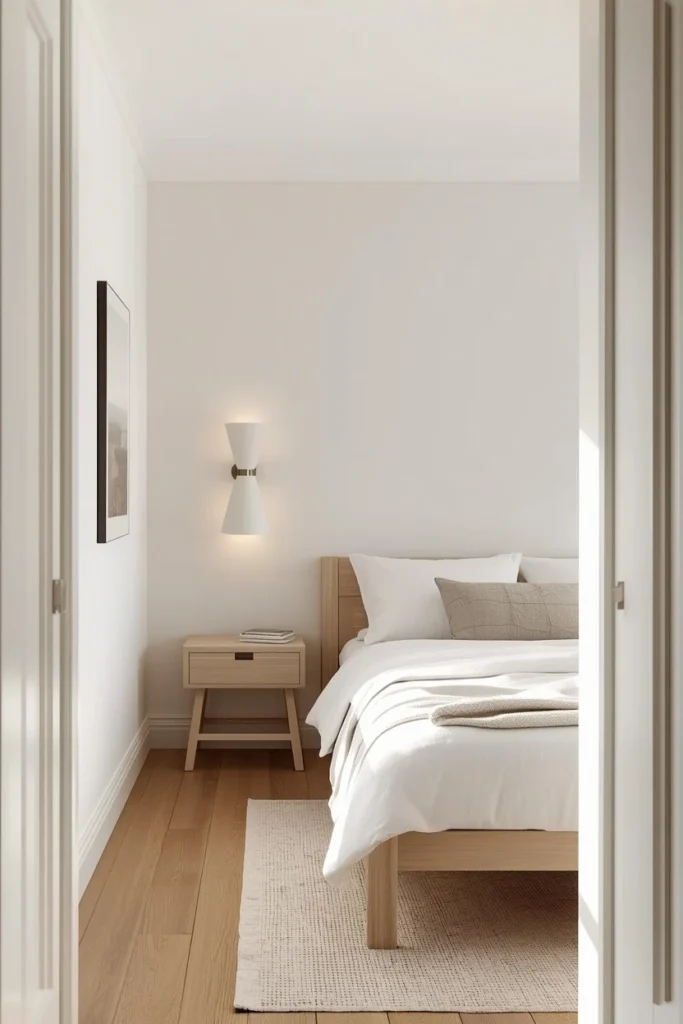
You don’t have to sacrifice style to get function. Some sconce styles are practically built for small spaces.
Minimalist and Scandinavian Styles
Clean lines, neutral tones, and uncluttered silhouettes are the hallmarks of Scandinavian design, and they work brilliantly in small bedrooms.
A matte white or light wood sconce with a simple shade disappears into the room rather than competing with it. Less visual noise means more perceived space.
Mid-Century Modern
Swing arm sconces with brass or walnut accents and simple shades check every box for small bedrooms.
They are slim, functional, and visually interesting without being overwhelming. They also add a warmth that makes a small room feel curated rather than cramped.
Industrial Style
Black metal pipe sconces or cage-style fixtures work surprisingly well in small spaces, especially if the room has an urban or modern feel. The key is keeping the scale small and the design open rather than heavy.
Practical Tips Before You Buy
Before you order anything, run through this checklist:
- Measure your wall space and the height from your mattress to where you want the sconce mounted
- Decide between hardwired and plug-in based on your rental situation or renovation budget
- Check the shade material since opaque shades focus light while frosted or open shades diffuse it
- Consider cord management for plug-in models so the wall stays clean and uncluttered
- Look for sconces with adjustable arms to give yourself flexibility in directing the light exactly where you need it
Browse Top-Rated Wall Sconces On Amazon
Final Thoughts
Wall sconces are one of those upgrades where the before and after genuinely surprises you.
A bedroom that felt tight and closed off can feel completely transformed just by moving the light off the floor or ceiling and onto the walls.
The trick is in the details: slim profiles, upward-directed light, warm bulbs, symmetrical placement, and a finish that works with your existing wall color.
Get those things right and your small bedroom will feel like it gained square footage without a single structural change.
So the next time someone tells you that your bedroom just needs better furniture, go ahead and show them what two well-placed sconces can do. Sometimes the walls have more to say than the floor plan ever did.
What Type of Wall Sconce Makes a Small Bedroom Look Bigger?
Slim, streamlined sconces with upward-facing or diffused light work best in small bedrooms.
Styles like swing arm sconces, cylinder designs, and frosted-shade fixtures push light outward toward the ceiling and walls, which visually expands the room.
Avoid bulky or heavily ornate designs since they add visual clutter that makes a small space feel more cramped.
Where Should You Mount Wall Sconces in a Small Bedroom?
Mount wall sconces on either side of the bed at roughly 48 to 60 inches from the floor for functional reading height and a balanced, symmetrical look.
If you want to make the ceiling feel higher, push the mounting height up to 60 to 66 inches. This draws the eye upward and creates the perception of a taller, more open room.
Can Plug-In Wall Sconces Work as Well as Hardwired Ones in a Small Bedroom?
Absolutely. Plug-in wall sconces are a practical and budget-friendly alternative, especially for renters who cannot hardwire fixtures into their walls.
Many plug-in models offer the same slim profiles and upward-directing light as hardwired options.
The key is managing the cord neatly along the wall so it does not create visual clutter that undermines the clean, spacious look you are going for.
What Bulb Color Temperature Is Best for Making a Small Bedroom Feel Bigger?
Warm white bulbs in the 2700K to 3000K range are the best choice for small bedrooms. This color temperature creates a soft, golden glow that relaxes the eye and adds visual depth to the space.
Avoid cool white or daylight bulbs above 4000K in a bedroom setting since they produce a harsher light that can make a small room feel clinical and closed in rather than open and airy.
How Many Wall Sconces Do You Need in a Small Bedroom?
Two sconces, one on each side of the bed, is the most effective and practical starting point for a small bedroom.
This symmetrical placement balances the light across the main wall and eliminates the need for bedside lamps, freeing up nightstand space.
If your room has a particularly dark corner, adding a third sconce on an adjacent wall can push light into that area and make the entire room feel more evenly lit and spacious.