
Eggs Benedict often seems like a “restaurant-only” dish. Many think you need a chef’s skills to make it at home.
Spoiler alert: you don’t! Once you grasp how the parts fit together, you’ll wonder why you ever paid brunch prices. You can easily make it in your own kitchen on a lazy Sunday morning.
This guide covers everything. You’ll learn to poach eggs without stress. Plus, you’ll whip up a hollandaise so smooth and buttery that it’ll spoil you for other sauces. Let’s dive in!
What Exactly Is Eggs Benedict?

Before we start cracking eggs, let’s quickly cover what we’re actually making.
Eggs Benedict is a classic American brunch dish made up of four main components: a toasted English muffin, Canadian bacon (or ham), a perfectly poached egg, and hollandaise sauce draped generously over the top.
The combination sounds simple, but the magic is in the execution.
Each element needs to be done right, and when they all come together at the same temperature at the same time, you’ve got yourself something genuinely special.
Getting there is the fun part.
The Ingredients You’ll Need
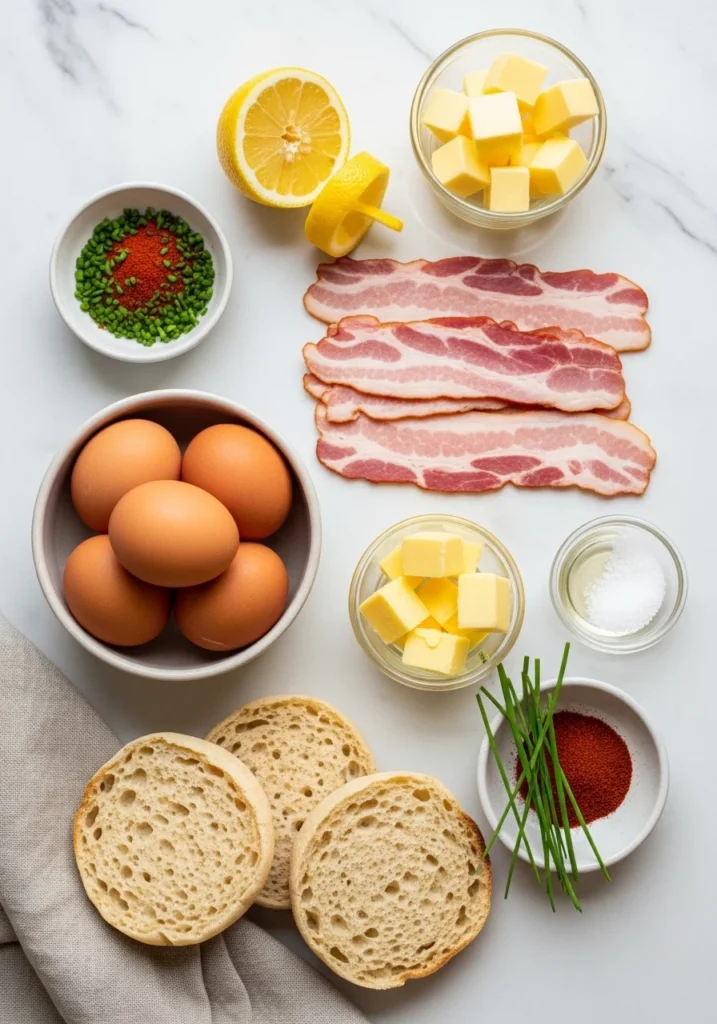
Here’s the full lineup for two servings of Eggs Benedict:
For the Eggs Benedict:
- 2 English muffins, split and toasted
- 4 slices of Canadian bacon or ham
- 4 large eggs
- 1 tablespoon white vinegar (for poaching)
- Salt and black pepper to taste
- Fresh chives or paprika for garnish
For the Hollandaise Sauce:
- 3 large egg yolks
- 1 tablespoon cold water
- 1 tablespoon fresh lemon juice
- 115g (about half a cup) unsalted butter, melted and warm
- A pinch of cayenne pepper
- Salt to taste
That’s it. Nothing exotic, nothing that requires a specialty grocery run. Just solid, quality ingredients doing what they do best.
Shop Eggs Benedict Essentials On Amazon
Making the Hollandaise Sauce

Here’s the truth about hollandaise: it has a reputation for being finicky, and honestly, that reputation is a little earned.
But once you understand what you’re doing and why, it stops being scary and starts being genuinely satisfying to make.
Why Hollandaise Can Go Wrong
Hollandaise is an emulsion sauce, which means you’re combining fat (butter) and water-based ingredients (egg yolks, lemon juice) into a stable, creamy mixture.
The enemy here is too much heat. Too hot and your egg yolks scramble. Too cold and the butter solidifies. You’re aiming for that sweet middle ground.
Step-by-Step Hollandaise
Step 1: Set up a double boiler. Fill a saucepan with about an inch of water and bring it to a gentle simmer.
Place a heatproof bowl on top, making sure the bottom of the bowl doesn’t touch the water. This indirect heat is what keeps your eggs from scrambling.
Step 2: Whisk the egg yolks. Add your egg yolks, cold water, and lemon juice to the bowl. Whisk constantly until the mixture thickens and nearly doubles in volume.
You’re looking for a pale, fluffy consistency that falls off your whisk in thick ribbons. This takes about 3 to 4 minutes.
Step 3: Add the butter slowly. Remove the bowl from the heat. Start adding your warm melted butter in a very slow, thin stream while whisking continuously.
This is where the emulsification happens. Rush this step and the sauce breaks. Take it slow and you’ll get something wonderfully silky.
Step 4: Season and adjust. Add cayenne, salt, and a little extra lemon juice if you feel it needs more brightness.
Give it one final whisk and cover it loosely to keep it warm while you work on the rest.
What to Do If Your Hollandaise Breaks
It happens to the best of us. If your sauce separates into a greasy, curdled mess, don’t panic.
Whisk one egg yolk with a teaspoon of warm water in a fresh clean bowl, then slowly whisk in your broken sauce.
It often comes back together beautifully. Consider it a second chance, not a failure.
Find Kitchen Tools For Sauce Making On Amazon
How to Poach Eggs Perfectly
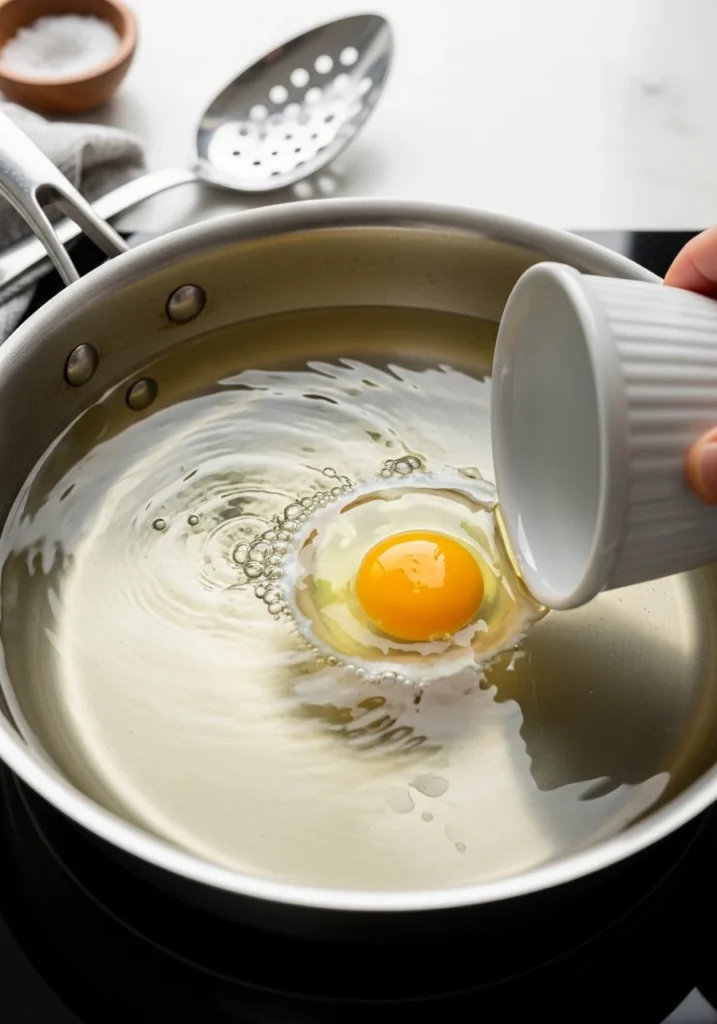
Poached eggs are the cornerstone of Eggs Benedict, and yes, they do require a little technique. But once you’ve poached a few, you’ll do it almost on autopilot.
Getting the Water Right
Fill a wide, shallow pan with about 3 inches of water. Bring it to a gentle simmer, not a rolling boil. Add your tablespoon of white vinegar.
The vinegar helps the egg white hold together instead of spreading out into a wispy, ghostly mess across the bottom of the pan. Does it affect the flavor? Barely noticeable, and well worth it.
The Poaching Process
Crack each egg into a small ramekin or cup first. This gives you control over how gently the egg enters the water.
Create a gentle swirl in the water with a spoon, then slide the egg in from just above the surface. The swirl helps wrap the white around the yolk.
Cook the egg for 3 to 4 minutes for a runny yolk, or closer to 5 minutes if you prefer it a little firmer. Use a slotted spoon to lift it out and drain it on a paper towel. Repeat for each egg.
If you’re making multiple portions, you can poach your eggs in advance and keep them in a bowl of warm water until you’re ready to assemble.
Just give them 30 seconds back in simmering water before serving.
Browse Egg Poaching Essentials On Amazon
Preparing the Canadian Bacon and English Muffins

This part is wonderfully uncomplicated, which you’ll appreciate after the hollandaise workout.
Toast your English muffins in a toaster or under the broiler until they’re golden and slightly crispy on the cut side.
That toasted surface is what keeps the whole structure from turning soggy under the egg and sauce.
Cook your Canadian bacon in a dry skillet over medium heat for about 1 to 2 minutes per side until it’s lightly browned and heated through.
Canadian bacon is already cured and cooked, so you’re really just warming it up and adding a little color. Some people skip this step entirely. Those people are wrong.
Assembling Your Eggs Benedict
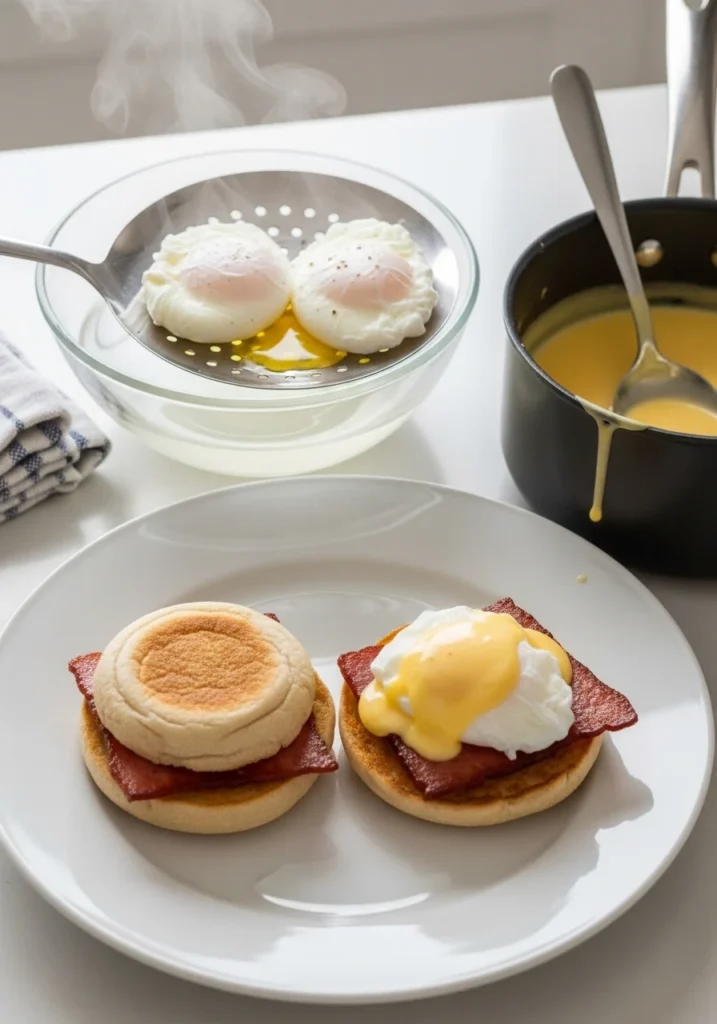
Now comes the satisfying part. Assembly is all about timing and working quickly so everything stays warm.
Follow this order:
- Place your toasted English muffin halves on a warm plate.
- Layer one slice of Canadian bacon on each muffin half.
- Set a poached egg gently on top of the bacon.
- Spoon a generous amount of hollandaise over each egg.
- Finish with a sprinkle of freshly cracked black pepper, a pinch of paprika, or some finely chopped chives.
Cut into it immediately and watch that yolk break over everything. That’s the moment. That’s what all the effort is for.
Fun Variations Worth Trying

Once you master the classic version, the world is your oyster. Literally, if you want.
- Eggs Florentine: Swap the Canadian bacon for sauteed fresh spinach.
- Eggs Royale: Replace the bacon with smoked salmon for something a little more elegant.
- Eggs Blackstone: Use crispy streaky bacon and add a slice of fresh tomato.
- Avocado Benedict: Skip the meat entirely and pile on sliced avocado for a vegetarian twist that genuinely works.
Each variation keeps the same hollandaise and poached egg structure, so once you’ve got those down, you can mix and match endlessly.
Explore Specialty Brunch Ingredients On Amazon
Tips for Getting It Right Every Time
A few things that make a real difference:
- Use the freshest eggs you can find. Fresh eggs hold together better when poaching because the whites are thicker and less watery.
- Keep your hollandaise warm, not hot. Set the bowl over a pan of warm (not simmering) water if you need to hold it.
- Warm your plates. A cold plate kills the temperature of your food fast. Rinse them with hot water and dry them right before plating.
- Don’t salt the poaching water. Salt can actually weaken the egg white structure. Save the seasoning for after.
- Work in batches if you’re cooking for a crowd. Trying to poach six eggs simultaneously is a recipe for chaos.
Final Thoughts
Making Eggs Benedict at home is genuinely one of those kitchen accomplishments that feels bigger than it actually is.
You’ve got a silky, buttery hollandaise, perfectly poached eggs with golden runny yolks, crispy toasted muffins, and smoky Canadian bacon all working together on one plate.
Is it a little effort? Sure. But it’s also the kind of breakfast that makes a completely ordinary morning feel like something worth remembering.
Make it for yourself, make it for someone you love, or make it just because you can. Either way, your brunch game just leveled up significantly.
Can You Make Hollandaise Sauce Ahead of Time?
Yes, you can make hollandaise sauce up to one hour ahead. Keep it warm by placing the bowl over a pan of warm water. Whisk it occasionally to keep a smooth texture.
Avoid reheating it on the stove. High heat can break the sauce or scramble the yolks. If the sauce thickens too much, whisk in a teaspoon of warm water to loosen it.
What Is the Best Substitute for Canadian Bacon in Eggs Benedict?
The most popular substitutes for Canadian bacon are regular crispy bacon, smoked salmon, sautéed spinach, or sliced avocado. Smoked salmon adds a refined, smoky flavor.
Crispy bacon gives a satisfying crunch. For a vegetarian option, sautéed spinach pairs well with hollandaise sauce.
Ultimately, the choice depends on your preference and what you have on hand.
Why Does My Hollandaise Sauce Keep Breaking?
Hollandaise sauce breaks if the heat is too high or if you add butter too quickly. Use gentle, indirect heat with a double boiler.
Pour the melted butter in a slow, steady stream while whisking constantly. If your sauce breaks, you can often fix it.
Whisk one fresh egg yolk with a teaspoon of warm water in a clean bowl. Then, slowly mix the broken sauce into it. Patience is the most important ingredient for a successful hollandaise.
How Do You Keep Poached Eggs Warm for a Large Batch?
Poach your eggs ahead of time and place them in a bowl of warm water. They can stay at this temperature for up to 30 minutes without overcooking.
When you’re ready to serve, use a slotted spoon to return them to simmering water for about 30 seconds to reheat.
This method is great for making Eggs Benedict for a group, ensuring everything is ready at once.
Can You Use a Blender to Make Hollandaise Sauce?
Many home cooks prefer this method. It’s faster and more forgiving than stovetop hollandaise. To make blender hollandaise, blend egg yolks and lemon juice first.
Then, slowly pour in hot melted butter while the blender runs on low speed. The friction and heat from the butter gently cook the yolks and create a stable emulsion.
The texture is a bit less refined than the classic double boiler method, but the flavor is just as rich and delicious.