
Your dining room does a lot. It hosts holiday dinners, weeknight chaos, board game nights, and late-night snacks. So why does it feel incomplete? Often, the answer lies on the floor.
A great farmhouse rug can tie the room together better than new chairs or wall art.
If you’ve been looking at your bare dining room floor and wondering why it feels cold, you’re in the right spot.
This guide will help you choose, style, and care for a farmhouse rug that suits your dining room perfectly.
Why a Farmhouse Rug Changes Everything
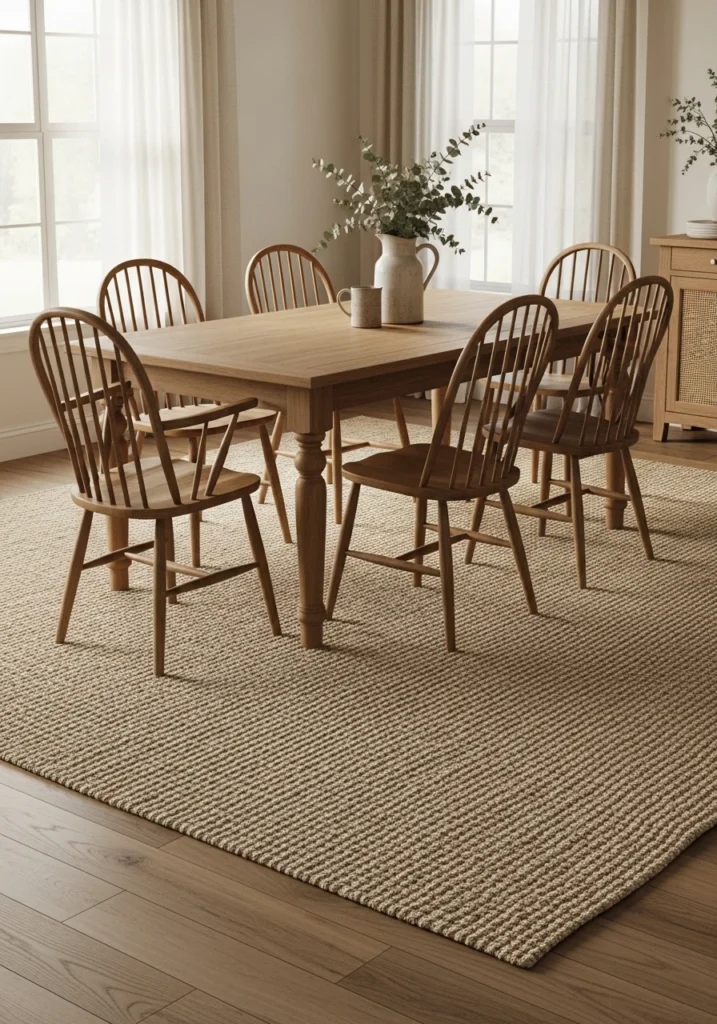
Let’s be honest. A dining room without a rug feels a little like a living room without a couch. Functional? Sure. Welcoming? Not quite.
A farmhouse rug does more than just look good. It anchors your dining table and chairs so the furniture does not feel like it is floating in the middle of the room.
It also adds warmth, softens hard flooring sounds, and gives the space a sense of intentionality that a bare floor simply cannot achieve.
The right rug signals that this room was designed, not just furnished. And in a farmhouse aesthetic, that layered, lived-in feel is exactly what you are going for.
What Makes a Rug “Farmhouse Style”?
Not every rug belongs in a farmhouse dining room.
Walk into any big-box store and you will see plenty of rugs that are perfectly fine for other styles but would completely clash with the warm, grounded vibe of farmhouse decor.
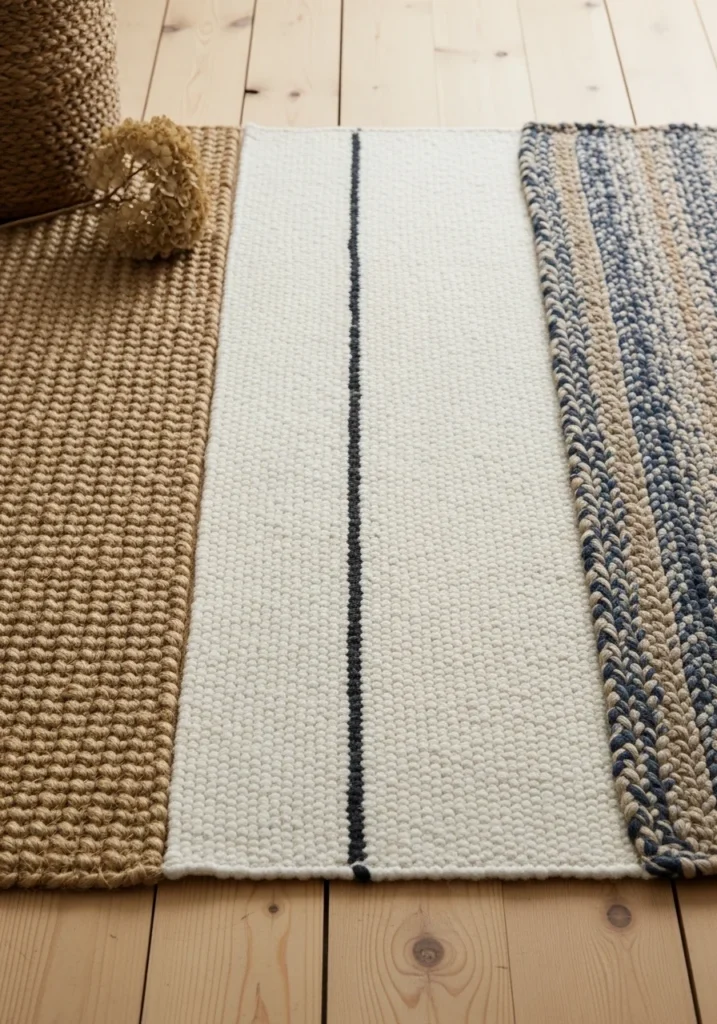
So what actually defines a farmhouse rug? Here is what to look for:
- Natural materials: Jute, sisal, cotton, and wool are the gold standard. They feel organic and unpretentious, which is the whole point of farmhouse style.
- Neutral or muted tones: Think cream, beige, warm gray, navy, black, and rust. Bold neons need not apply.
- Simple, classic patterns: Stripes, plaids, geometric weaves, and distressed prints all work beautifully. Anything overly ornate or shiny tends to fight the aesthetic.
- Textural interest: A flat-woven or braided rug brings depth without screaming for attention.
Farmhouse style is about warmth and authenticity, not perfection. A rug that looks slightly worn or has a handwoven texture actually reads as more farmhouse than a pristine, glossy alternative.
Browse Farmhouse Rugs On Amazon
Choosing the Right Size: Get This Wrong and Nothing Else Matters
You could find the most beautiful farmhouse rug on the planet, but if the size is off, the whole room will look awkward.
Rug sizing in dining rooms is one of those things that sounds simple until you get it wrong and realize your chairs are half on and half off the rug every time someone sits down.
The Golden Rule of Dining Room Rug Sizing
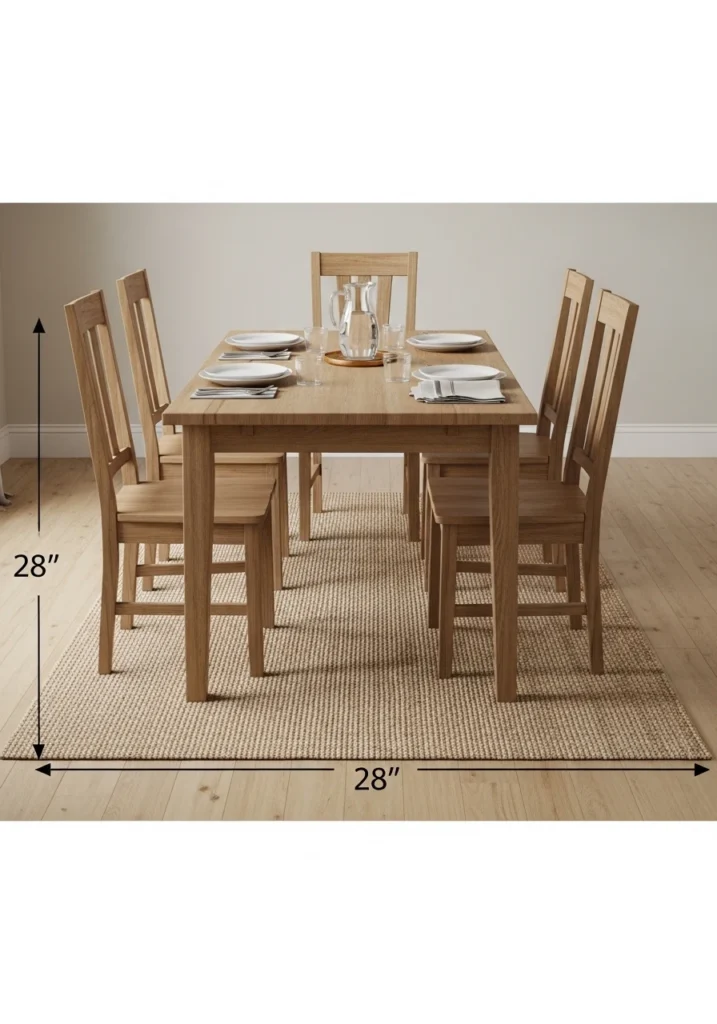
The rug should extend at least 24 to 30 inches beyond each side of the dining table. This ensures that when someone pulls their chair out to sit down, all four legs of the chair stay on the rug.
Nothing disrupts the visual flow of a space like chairs sitting half on a rug and half on the bare floor.
For a standard six-person rectangular dining table, a 8×10 foot rug is usually the minimum. For larger tables or open-plan dining areas, a 9×12 foot rug often works better.
Round Tables Have Their Own Rules
If you have a round dining table, a round rug can look stunning and keeps things feeling cohesive.
The diameter of your rug should be large enough to accommodate pulled-out chairs all the way around. For most round tables, a rug that is at least 4 feet wider than the table diameter works well.
Shop Dining Room Rugs By Size On Amazon
The Best Materials for a Dining Room Farmhouse Rug
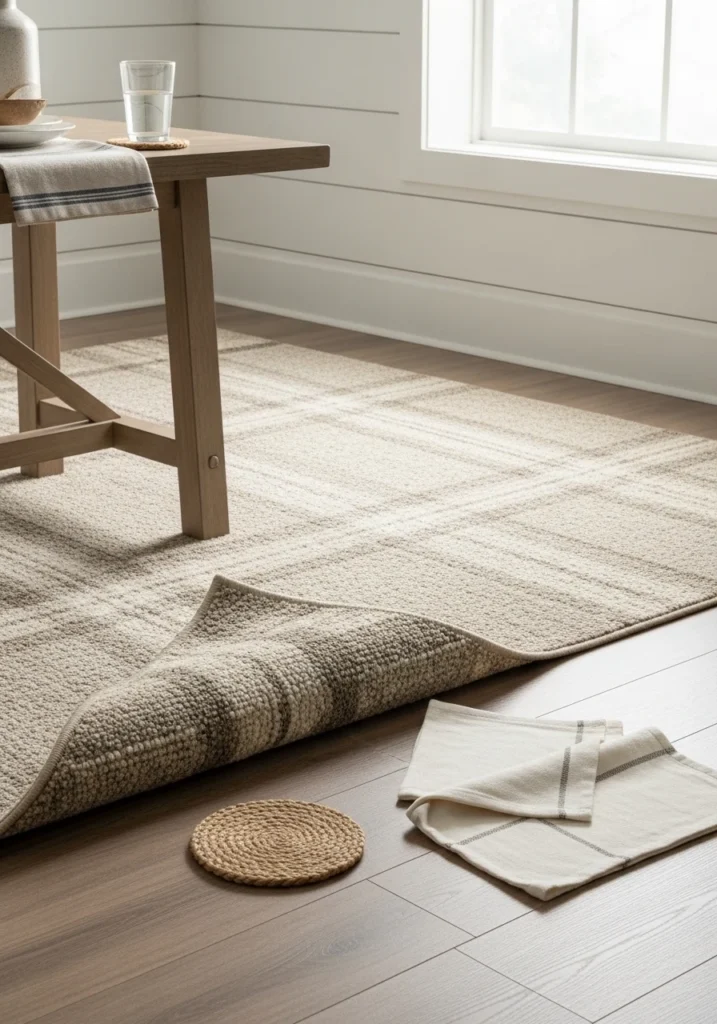
Here is where people often make a decision they regret later. The dining room is a high-traffic, high-spill zone.
Choosing a rug material purely based on looks without thinking about practicality is a recipe for frustration.
Jute and Sisal
Jute and sisal are arguably the most popular farmhouse rug materials, and for good reason. They are natural, durable, and bring that classic earthy texture that farmhouse decor is known for.
The trade-off is that they can be rough underfoot and are not the easiest to clean when something spills.
Jute, in particular, does not love moisture, so a dedicated spot-clean routine is important.
If you have young children or particularly enthusiastic dinner guests, a jute rug might require a little more maintenance than you bargained for.
Wool
Wool rugs are the reliable workhorse of the rug world. They are naturally stain-resistant, soft underfoot, and they hold their shape exceptionally well over years of use.
A well-made wool rug in a classic farmhouse pattern can genuinely last decades.
The only downside? Wool rugs tend to cost more upfront. But consider it an investment. A quality wool rug will outlast three cheaper alternatives with far less effort on your part.
Cotton
Cotton rugs are often flat-woven, which makes them easy to clean and lighter than wool or jute options.
Many cotton farmhouse rugs are even machine washable, which is a genuinely life-changing feature in a dining room.
If easy maintenance is your top priority, cotton is your best friend.
The texture is softer than jute, and many cotton rugs come in beautiful striped or plaid patterns that are quintessentially farmhouse.
Polypropylene (Indoor-Outdoor Rugs)
Before you roll your eyes, hear this out. Indoor-outdoor polypropylene rugs have come a long way.
Many of them now mimic the look of natural fiber rugs closely enough that guests cannot tell the difference. They are essentially indestructible in high-traffic areas and wipe clean with very little effort.
If you have a busy household and practicality genuinely has to win, a quality indoor-outdoor rug in a farmhouse pattern is a completely valid choice.
Find Your Perfect Farmhouse Rug Material On Amazon
Farmhouse Rug Patterns That Work in the Dining Room
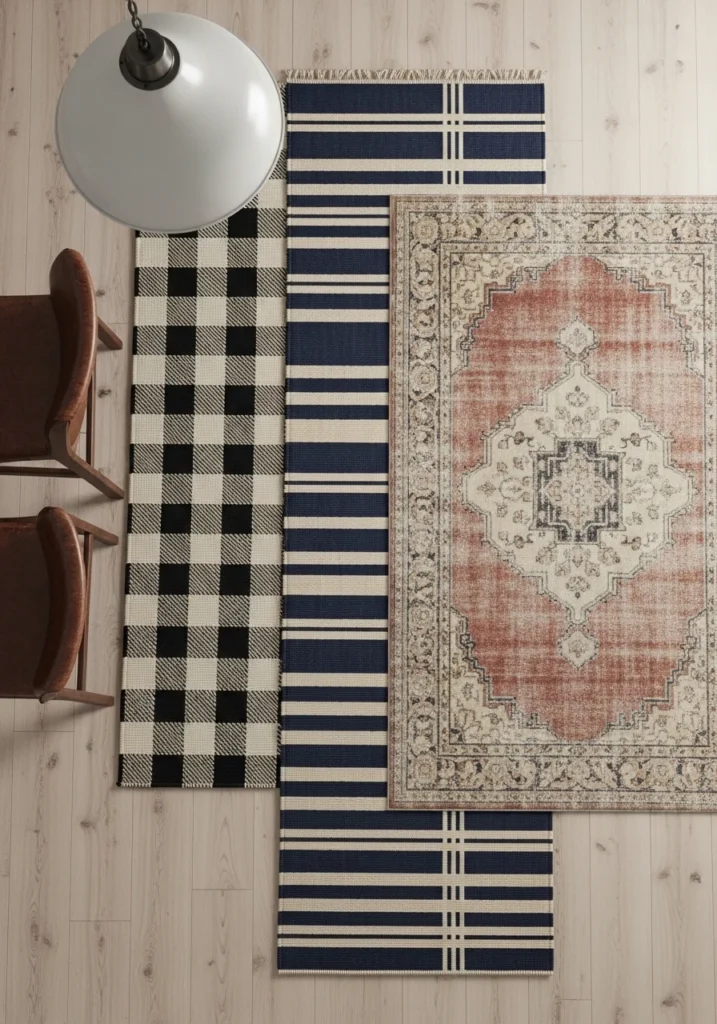
Pattern selection is where personal style really comes into play. The good news is that farmhouse style is broad enough to accommodate several different looks without losing its identity.
Striped Rugs
Stripes are a farmhouse classic. A simple two-tone stripe in black and cream, or navy and natural, brings structure to the space without overwhelming it.
Striped rugs also have the bonus of making a narrow room look wider when placed horizontally.
Distressed or Vintage-Look Rugs
A rug that looks gently worn carries a sense of history that feels completely at home in a farmhouse dining room.
These are often printed to look aged, with faded center medallions or softened borders. The result is a room that feels collected and curated rather than straight off a showroom floor.
Geometric Weaves
Diamond patterns, hexagons, and simple grid weaves all carry a handcrafted quality that suits the farmhouse look.
These work especially well in jute or wool because the texture of the material adds to the geometric interest.
Plaid and Buffalo Check
If you want maximum farmhouse impact, a buffalo check rug delivers it confidently.
The classic two-color grid pattern is bold enough to anchor the room but simple enough to play well with other patterns in your space, like a plaid tablecloth or striped curtains.
Shop Farmhouse Rug Patterns On Amazon
How to Style Your Farmhouse Rug in the Dining Room
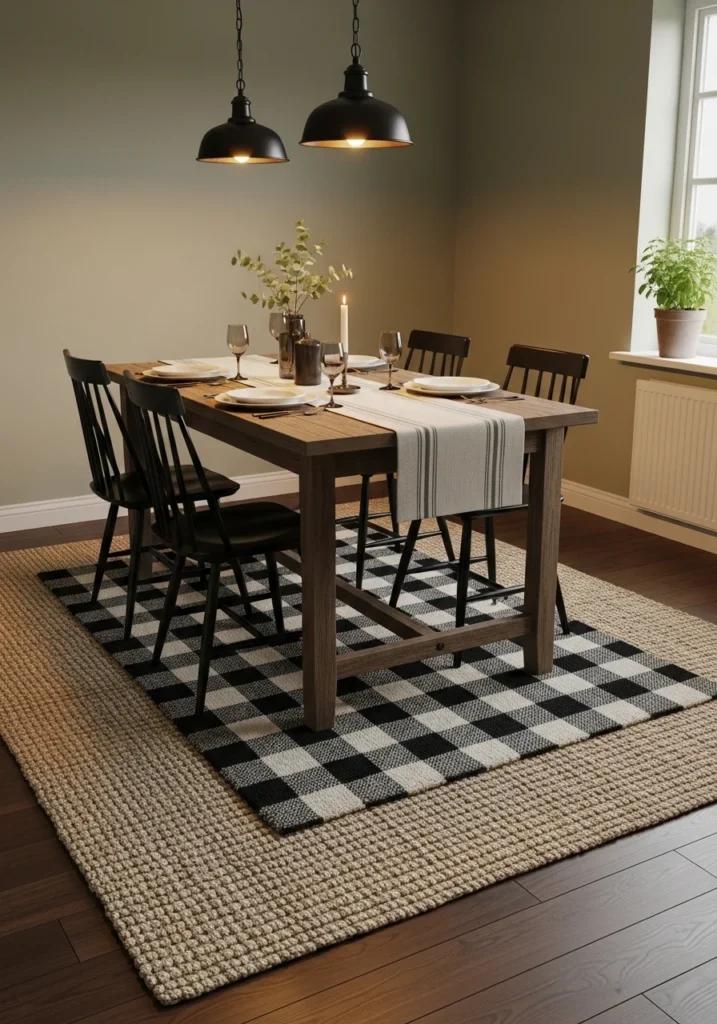
Getting the rug right is one thing. Styling the full room around it is where the magic really happens.
Pair the Rug With Your Table’s Tone
A natural jute rug pairs beautifully with a warm wood farmhouse table.
A cream or white cotton rug works especially well under a darker painted or reclaimed wood table, creating contrast that makes both the table and the rug look more intentional.
Layer When You Want Extra Depth
Layering a smaller woven rug over a larger jute base creates a look that is rich with texture. This works particularly well in open-plan spaces where the dining area needs some visual definition.
Place the larger jute rug as the base, then layer a smaller patterned rug in the center where it peeks out from beneath the table.
Match the Rug Tone to Your Wall Color
If your dining room walls are white or a soft warm white, nearly any neutral rug works.
If you have gone with a bolder wall color like a deep sage green or navy, a cream or natural jute rug grounds the space without competing.
The rug should complement your walls, not argue with them.
Maintenance Tips That Will Save Your Sanity
A farmhouse rug in the dining room is a commitment. Between crumbs, spills, and chair legs constantly dragging across the surface, you need a maintenance routine that actually works.
- Vacuum regularly, but gently: High pile and natural fiber rugs do not love aggressive vacuuming. Use a low-suction setting and avoid the beater bar on jute or sisal.
- Rotate your rug every six months: This prevents uneven wear, especially under heavy chair legs.
- Address spills immediately: Blot, do not scrub. Scrubbing pushes the spill deeper into the fibers. Work from the outside of the spill inward.
- Use a rug pad: A good non-slip rug pad protects your floors, keeps the rug in place, and adds a little cushioning underfoot. It also extends the life of the rug significantly.
- For jute or sisal, avoid soaking: These materials can shrink or develop mold if they get too wet. Spot cleaning with a barely damp cloth is the safest approach.
Common Mistakes to Avoid
Even with the best intentions, it is easy to make a few missteps when choosing a dining room rug. Here are the ones worth avoiding:
- Going too small: As mentioned, under-sizing a rug is one of the most common mistakes in dining rooms. When in doubt, size up.
- Choosing a high pile in a high-traffic area: A plush, thick pile rug sounds luxurious until chair legs are catching on it every time someone sits down. In dining rooms, low to medium pile is almost always the better practical choice.
- Ignoring the rug pad: Skipping the rug pad might feel like a small saving, but a rug that slides around under your dining chairs is a safety issue and an annoyance.
- Matching everything too precisely: Farmhouse style thrives on a slightly eclectic mix. If every element in the room perfectly matches, it starts to look more like a staged photo than a real home.
Final Thoughts
A farmhouse rug in your dining room is one of those changes that seems small but genuinely transforms how the space feels.
It brings warmth, defines the area, ties the furniture together, and adds that layered, lived-in quality that farmhouse decor does so well.
The key is choosing the right size, a material that suits your lifestyle, and a pattern that works with what you already have.
Do those three things and you will wonder how you ever ate dinner without one. Now go measure your floor, because that bare patch under your dining table is not going to solve itself.
What Size Rug Do I Need for My Dining Room Table?
Your rug should extend at least 24 to 30 inches beyond each side of your dining table. For a standard six-person rectangular table, an 8×10 foot rug is the minimum size.
If you have a larger table, a 9×12 foot rug offers better coverage. This way, chair legs stay on the rug when pulled out.
What Is the Best Material for a Farmhouse Dining Room Rug?
The best material depends on your lifestyle. Wool is durable and naturally stain-resistant, so it’s great for busy homes. Cotton is lightweight, machine washable, and easy to care for.
Jute adds a lovely natural texture but needs careful spot cleaning. It doesn’t handle moisture well.
Can I Use an Indoor-Outdoor Rug in My Farmhouse Dining Room?
Sure! High-quality polypropylene rugs look just like natural fiber rugs. They are much easier to clean. These rugs stand up well to heavy dining room traffic.
You can wipe them clean with little effort. This makes them a practical and stylish choice for busy homes.
How Do I Keep My Dining Room Rug From Sliding Around?
Always place a non-slip rug pad under your dining room rug.
A rug pad holds the rug in place, protects your floors from scratches, adds cushioning, and helps the rug last longer by reducing friction and wear.
What Farmhouse Rug Patterns Work Best in a Dining Room?
Stripes, buffalo check, distressed vintage prints, and geometric weaves fit well in a farmhouse dining room. Striped rugs can make a narrow space look wider.
Buffalo check adds bold farmhouse style. Distressed or vintage rugs bring a layered, collected vibe that matches the relaxed farmhouse look.