
They Changed My Weekend Mornings Forever
You know that moment when you bite into a pancake and it tastes amazing? You pause and stare at your plate. That’s what happened to me the first time I made this blueberry buttermilk pancake recipe.
I’m talking about cloud-soft, blueberry-filled, golden-edged perfection on my kitchen table at 9 a.m. on a Saturday.
These aren’t the flat, rubbery discs from your childhood. These blueberry buttermilk pancakes truly deserve the title “fluffiest.”
Why Buttermilk Is the Real Star of This Recipe
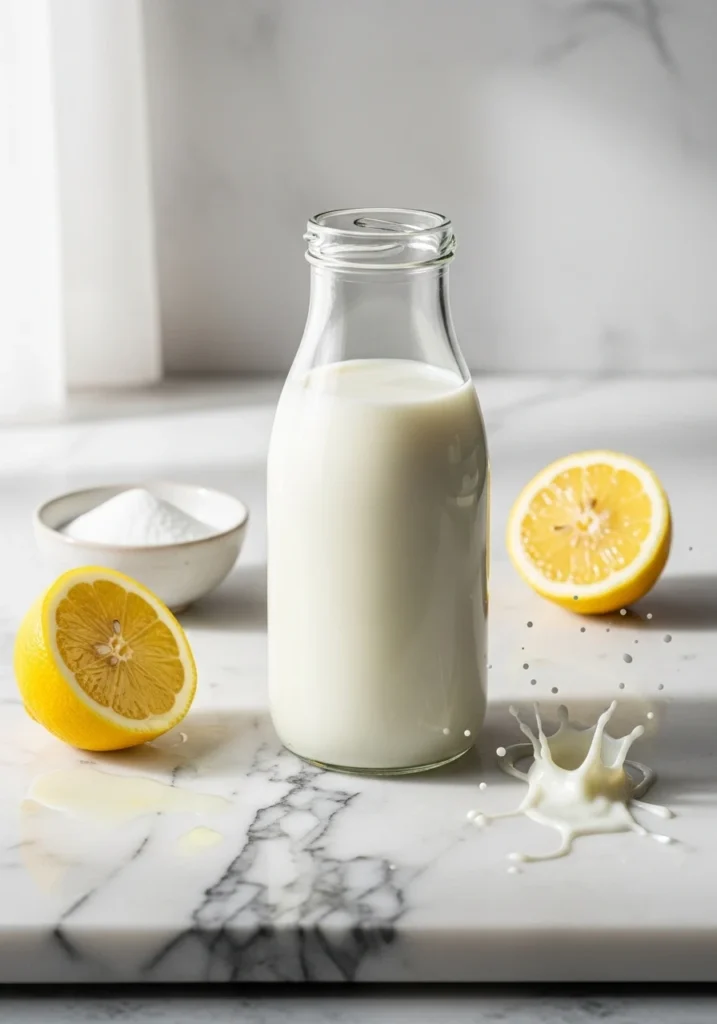
The Science Behind the Fluff
Here is a question worth asking: why does every great pancake recipe insist on buttermilk? The answer is chemistry, and it is genuinely exciting stuff.
Buttermilk is acidic, and when it meets baking soda in your batter, it creates a carbon dioxide reaction that puffs your pancakes up beautifully from the inside out.
That reaction means your pancakes rise faster and hold their structure better than pancakes made with regular milk ever will.
The result is a tender, airy crumb that practically melts on your tongue. Once you bake with buttermilk, going back feels like a genuine downgrade.
What If You Do Not Have Buttermilk?
No buttermilk in the fridge? No problem. You can make a solid buttermilk substitute by adding one tablespoon of white vinegar or fresh lemon juice to one cup of whole milk and letting it sit for five minutes.
It curdles slightly, and that is exactly what you want. It will not be identical to store-bought buttermilk, but it does the job remarkably well and saves you a trip to the store.
Find Fresh Buttermilk And More On Amazon
The Ingredients That Make These Pancakes Exceptional
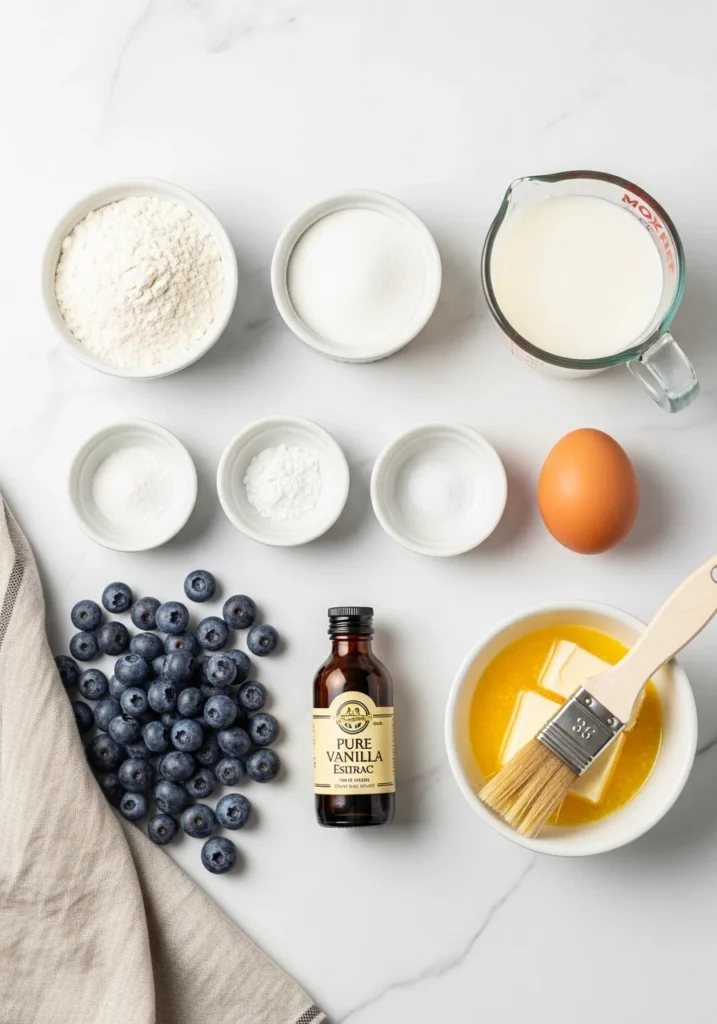
Great pancakes start with intentional ingredients. Every single item in this list plays a role, so resist the urge to skip anything.
Here is what you need for about 10 to 12 pancakes:
- 1.5 cups all-purpose flour (spooned and leveled, not packed)
- 2 tablespoons granulated sugar
- 1.5 teaspoons baking powder
- 0.5 teaspoon baking soda
- 0.5 teaspoon fine salt
- 1.25 cups full-fat buttermilk
- 1 large egg, room temperature
- 3 tablespoons melted unsalted butter (plus more for the pan)
- 1 teaspoon pure vanilla extract
- 1 cup fresh blueberries (frozen work too, but fresh are better in summer)
The room temperature egg matters more than most people think. A cold egg tightens the batter and works against that fluffy texture you are chasing. Pull it out of the fridge about 20 minutes before you start.
Shop These Ingredients On Amazon
How to Mix the Batter Without Ruining Everything
The Golden Rule: Stop Stirring
This is the single most important technique in pancake making, and it sounds almost too simple. Do not overmix your batter.
Most people stir until the batter looks smooth and lump-free, and that is exactly where they go wrong.
Overmixing develops the gluten in the flour, which makes your pancakes dense and chewy instead of light and tender. Stir your wet and dry ingredients together just until they come together.
You want to see lumps in the batter, and that is completely fine. Those lumps cook out in the pan, and your pancakes will thank you for the restraint.
Wet Ingredients and Dry Ingredients: Keep Them Separate
Whisk your dry ingredients together in one bowl and your wet ingredients in a second bowl before combining them.
This ensures even distribution of your leavening agents, which means consistent rise across every pancake. Pouring wet into dry (not the other way around) also gives you better control over the mixing process.
Once combined, let the batter rest for five minutes. This short rest allows the buttermilk reaction to get going and gives you a head start on that fluffy interior.
The Blueberry Strategy Nobody Talks About
Fresh vs. Frozen Blueberries
Both work, but they behave differently in the pan. Fresh blueberries hold their shape and burst cleanly when you bite into them.
Frozen blueberries tend to bleed purple into your batter, which does not affect flavor but can make your pancakes look a little tie-dyed.
Neither option is wrong, but if you want picture-perfect golden pancakes with vivid blue pockets, go fresh.
If you use frozen, do not thaw them first. Drop them straight from the freezer into the batter or onto the wet side of the pancake in the pan. Thawed blueberries release too much moisture and turn mushy fast.
When to Add the Blueberries
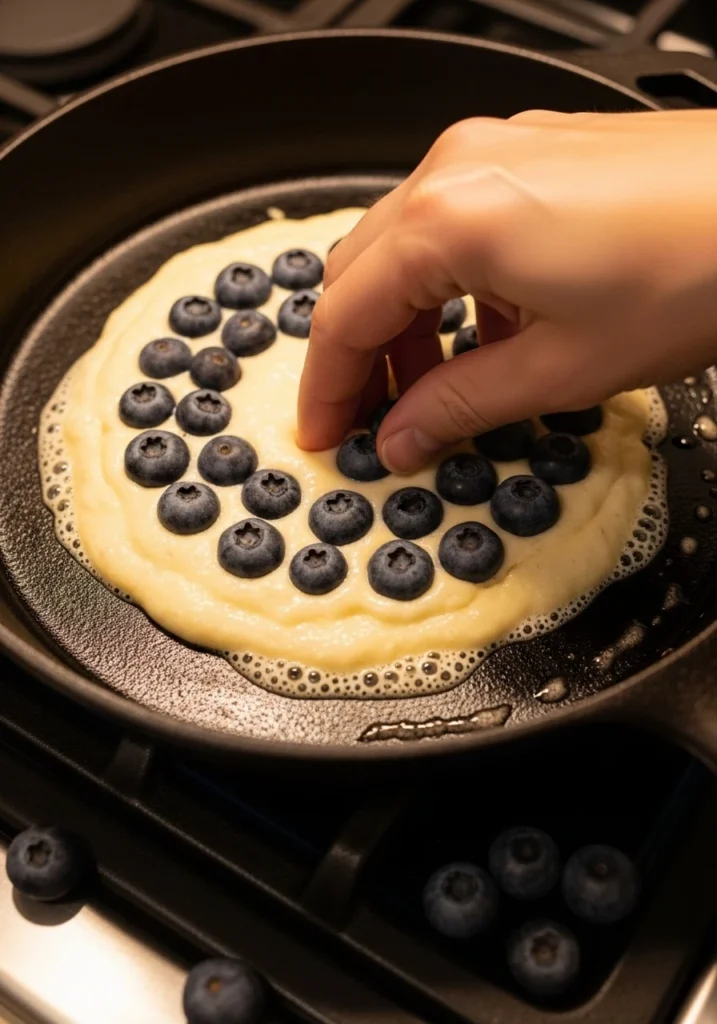
Here is a technique that changes everything: add the blueberries after you pour the batter into the pan, not while mixing. Gently press a handful of berries into the wet surface of each pancake before it sets.
This keeps the berries evenly distributed, prevents them from sinking to the bottom of the bowl, and stops the batter from turning blue before it even hits the heat.
Cooking Technique: Getting That Perfect Golden Edge
Temperature Is Everything
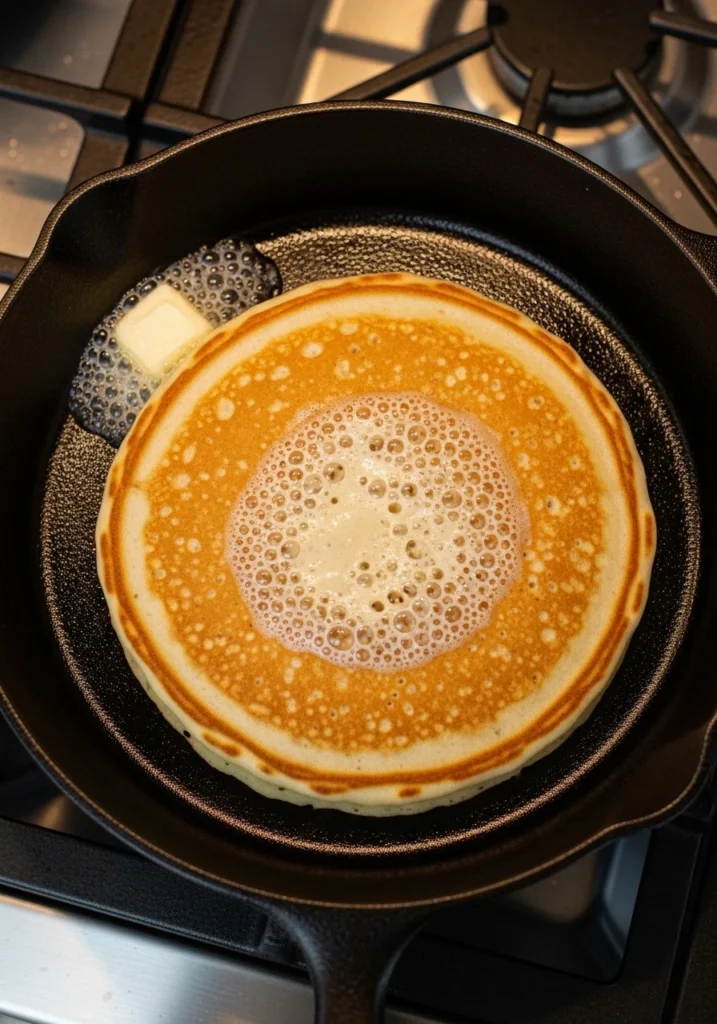
A pan that is too hot burns the outside before the inside cooks through. A pan that is too cool gives you pale, sad pancakes with no crust.
The sweet spot is medium to medium-low heat, and the easiest way to test it is the water drop trick. Flick a few drops of water onto the pan. If they dance and evaporate immediately, you are ready.
Use a knob of butter or a neutral oil like avocado oil to coat the pan lightly between each batch. Butter adds flavor, but it can brown quickly, so watch the heat carefully.
A combination of butter and a neutral oil gives you the best of both worlds.
The Flip: Only Once, Only When Ready
Flip each pancake once and only once. You will know it is time when you see bubbles forming across the surface and the edges look set and matte rather than glossy and wet.
Slide your spatula fully under the pancake and flip it decisively. A hesitant flip is a sloppy flip, and nobody wants a folded pancake.
After flipping, cook for another minute and a half until the second side is golden. Resist pressing down on the pancake with your spatula. That move squashes all the air you worked so hard to build in.
How to Keep Pancakes Warm While You Cook the Rest
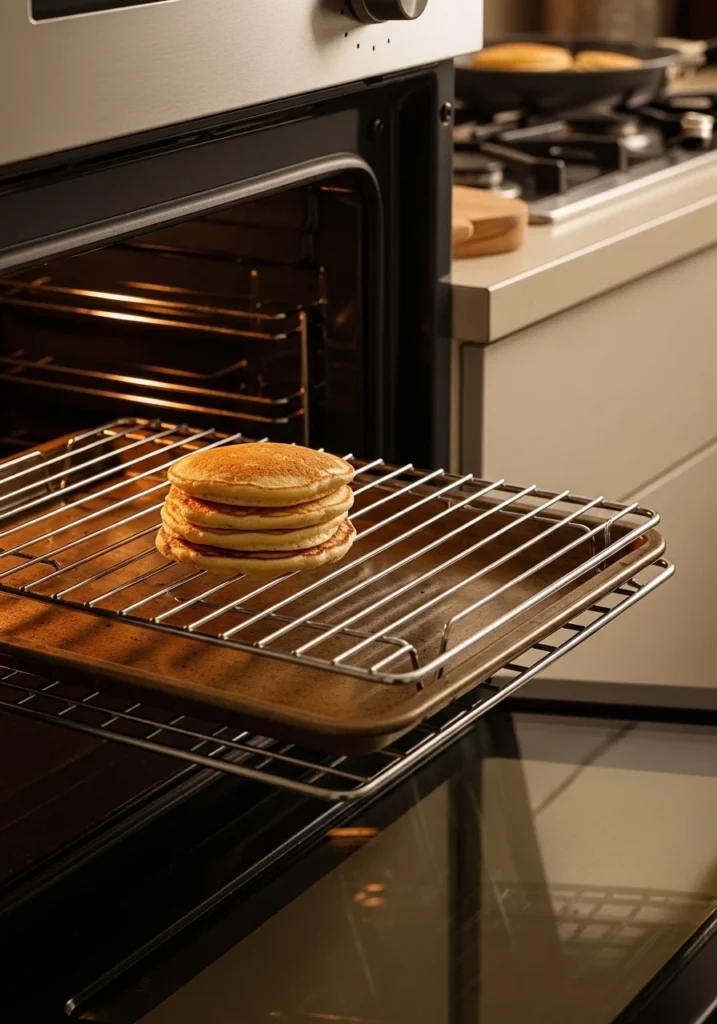
This is a problem every pancake maker faces. You want to serve a full stack, but the first batch goes cold while you cook the rest.
The fix is brilliantly simple: preheat your oven to 200 degrees Fahrenheit and place a wire rack on a baking sheet inside.
Stack your finished pancakes on the rack as you go. The wire rack allows air to circulate so the bottoms do not steam and go soggy.
Do not stack them on a plate covered with foil. That method traps steam, softens the edges, and turns your crispy golden crust into something closer to a wet towel.
The oven rack method keeps them warm and crisp for up to 30 minutes without any quality loss.
Shop Wire Racks And Baking Sheets On Amazon
Serving Ideas That Elevate the Whole Experience
Toppings Worth Trying
Plain maple syrup is always the right answer, but why stop there? These pancakes pair beautifully with:
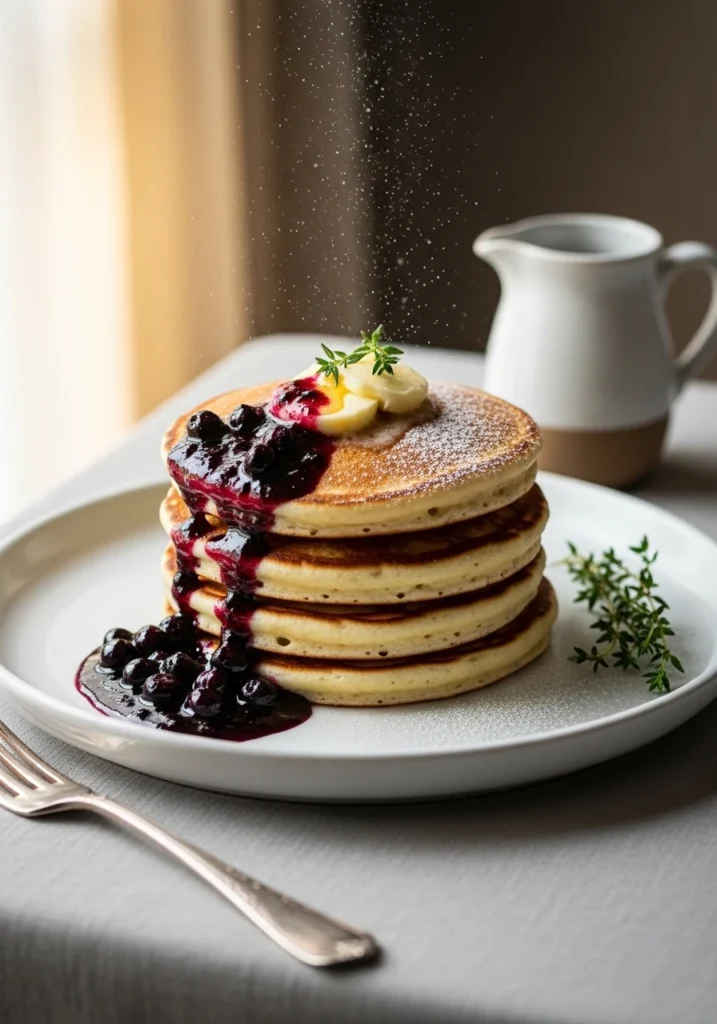
- Warm blueberry compote (simmer fresh blueberries with a tablespoon of sugar and a squeeze of lemon for five minutes)
- Whipped honey butter (mix softened butter with a drizzle of honey and a pinch of flaky sea salt)
- A dollop of Greek yogurt for a tangy, creamy contrast
- A light dusting of powdered sugar if you want the breakfast-as-dessert experience
The Stack Matters
Presentation does not affect taste, but it absolutely affects appetite. Stack your pancakes in threes or fours, let the blueberry compote drizzle down the sides, and add the butter on top so it melts into the crevices.
Your family will think you have been secretly attending culinary school on weekends.
Shop Pancake Toppings And Breakfast Essentials On Amazon
Common Mistakes and How to Fix Them
Even experienced cooks stumble on pancakes. Here are the most frequent issues and their straightforward fixes:
- Flat pancakes: Your baking powder or baking soda is expired. Check the date and replace them.
- Burnt outside, raw inside: Your heat is too high. Lower it and be patient.
- Gummy texture: You overmixed. Stir less next time, even if the batter looks lumpy.
- Blueberries sinking to the bottom of the pan: Add them to the pancake after pouring, not in the batter.
- Pancakes sticking: Your pan is not hot enough, or you need more fat. Let the pan heat properly before you pour.
The Final Word on Fluffy Blueberry Buttermilk Pancakes
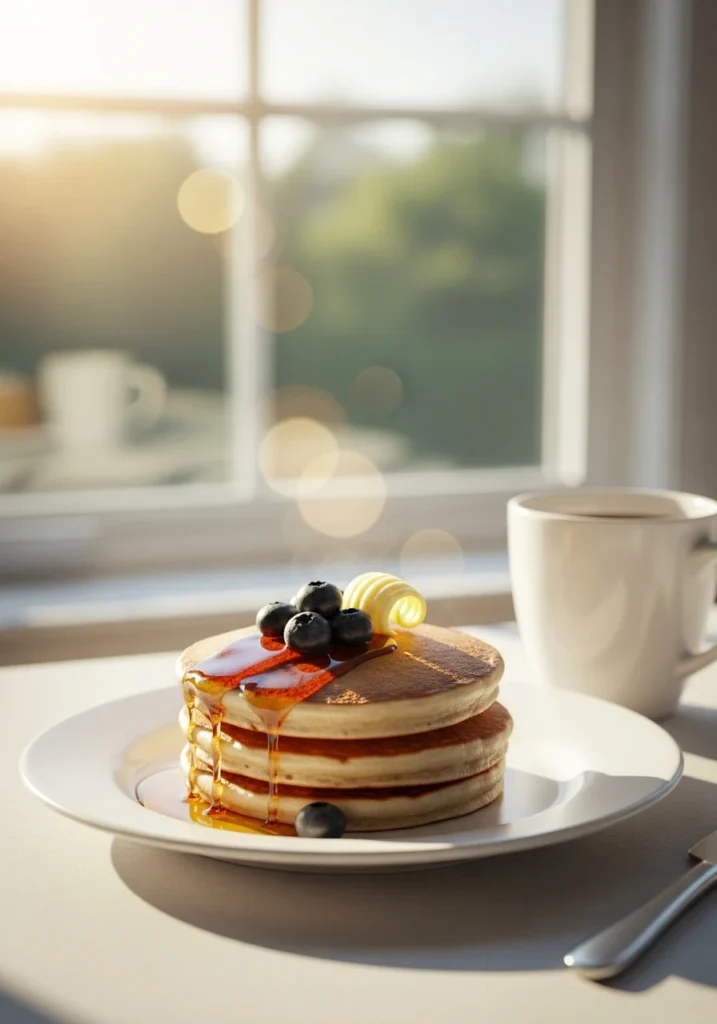
Making the fluffiest blueberry buttermilk pancakes is not about luck or some restaurant secret you will never crack.
It comes down to a few consistent habits: quality buttermilk, minimal mixing, proper heat management, and the patience to let each pancake tell you when it is ready to flip.
Get those fundamentals right, and you will make a stack that genuinely impresses people every single time.
The blueberries add a pop of sweetness and acidity that keeps each bite interesting from the first forkful to the last.
This recipe has earned a permanent spot in my Saturday morning rotation, and there is a very good chance it will earn one in yours too.
Can I Make Blueberry Buttermilk Pancakes Without a Buttermilk Substitute?
You can skip store-bought buttermilk and make your own. Just add one tablespoon of white vinegar or fresh lemon juice to one cup of whole milk. Stir briefly and let it sit for five minutes.
The milk will curdle slightly, which is what you want. This mimics the acidity of real buttermilk, giving your pancakes a good rise and a tender crumb.
Why Are My Blueberry Buttermilk Pancakes Flat Instead of Fluffy?
Flat pancakes often result from three main issues. First, check the dates on your baking powder or baking soda. They might be expired. Second, overmixing the batter can be a problem.
This develops gluten, which keeps pancakes from rising well. Finally, pouring batter onto a pan that isn’t hot enough can also cause flatness.
This prevents the leavening reaction from working during those crucial first moments.
Can I Use Frozen Blueberries in This Buttermilk Pancake Recipe?
Yes, frozen blueberries work well in this recipe, but there’s one key tip. Don’t thaw them first. Thawed blueberries release extra moisture, making the batter watery and the pancakes mushy.
Add them directly from the freezer onto each pancake after you pour the batter into the pan. This keeps the blueberries whole and stops the batter from turning an unappetizing purple-grey before it cooks.
How Do I Store and Reheat Leftover Blueberry Buttermilk Pancakes?
Store leftover pancakes in an airtight container or zip-lock bag in the fridge for up to three days. For longer storage, lay them flat on a baking sheet.
Freeze them for one hour until solid. Then, transfer them to a freezer bag. They will keep well for up to two months.
To reheat, use a toaster or a 350-degree oven for five minutes. This restores the edges and prevents sogginess, which often happens in a microwave. The toaster method is the fastest and gives the best results.
What Is the Best Pan to Use for Fluffy Blueberry Pancakes?
A cast iron skillet or a heavy non-stick griddle gives the best results. These surfaces hold heat evenly. This means your pancakes cook at a steady temperature from the first batch to the last.
A lightweight pan loses heat too quickly when you add cold batter. This inconsistency leads to uneven browning and undercooked centers.
If you use a non-stick pan, keep the heat at medium or medium-low. This protects the coating and helps achieve that perfect golden crust without burning the butter.