
Mornings can be tough. You barely have time to brush your teeth before the day begins. Still, everyone expects a hot breakfast ready to go.
That’s where a make-ahead sausage egg breakfast casserole becomes your best friend. You prepare it the night before, pop it in the oven in the morning, and you look like a breakfast pro with no effort.
This isn’t just a recipe. It’s a guide to mastering one of the easiest, crowd-pleasing dishes you’ll ever make.
Whether you’re feeding a hungry family, hosting guests, or prepping for a busy week, this casserole has you covered without any stress.
Why a Make-Ahead Breakfast Casserole Is a Total Game-Changer
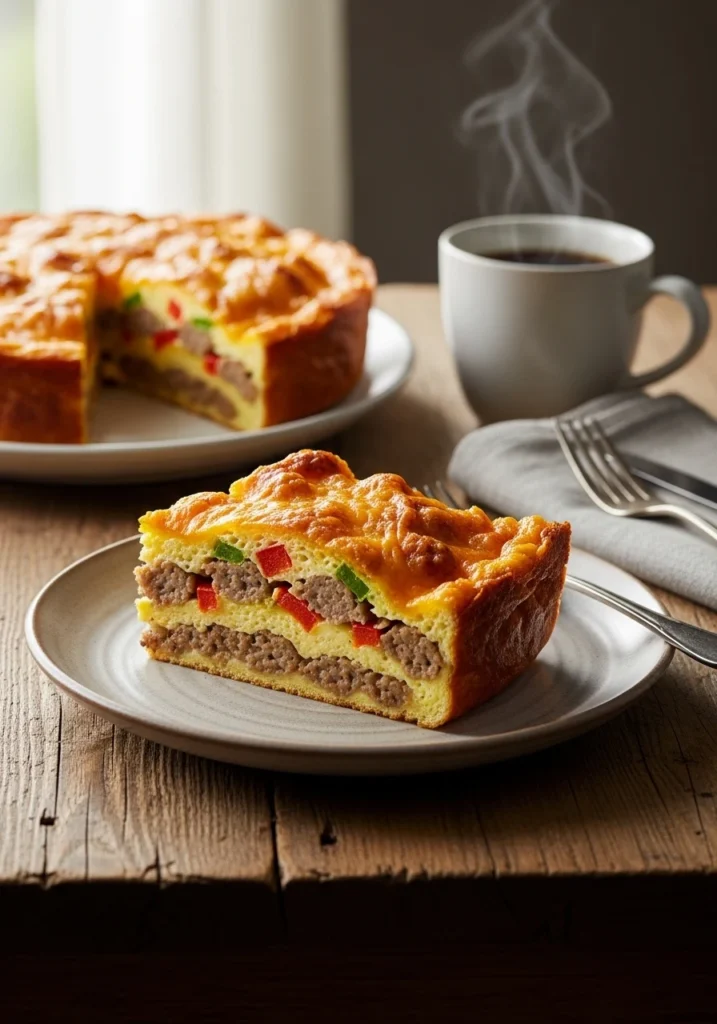
Let us be real for a second. Who actually has the energy to cook a full breakfast from scratch every morning? Unless you are some kind of morning superhero, the answer is probably nobody.
A make-ahead breakfast casserole flips the script entirely.
You do the heavy lifting the evening before, and the next morning, your oven does the work.
The result? A hot, hearty, protein-packed meal that tastes like you put in way more effort than you actually did. It is the culinary equivalent of looking dressed up in sweatpants.
The Benefits Go Beyond Convenience
Beyond saving time, the overnight rest is actually what makes this dish so good.
When the egg mixture soaks into the bread and sausage overnight, every single bite becomes deeply flavored and custardy. You get layers of taste rather than just a scrambled egg situation thrown into a pan.
- Feeds a crowd without the stress of standing over a hot stove
- Reheats beautifully, so leftovers are just as good the next day
- Customizable to fit different taste preferences and dietary needs
- Budget-friendly, using simple pantry staples and affordable proteins
What You Need: Ingredients for Sausage Egg Breakfast Casserole
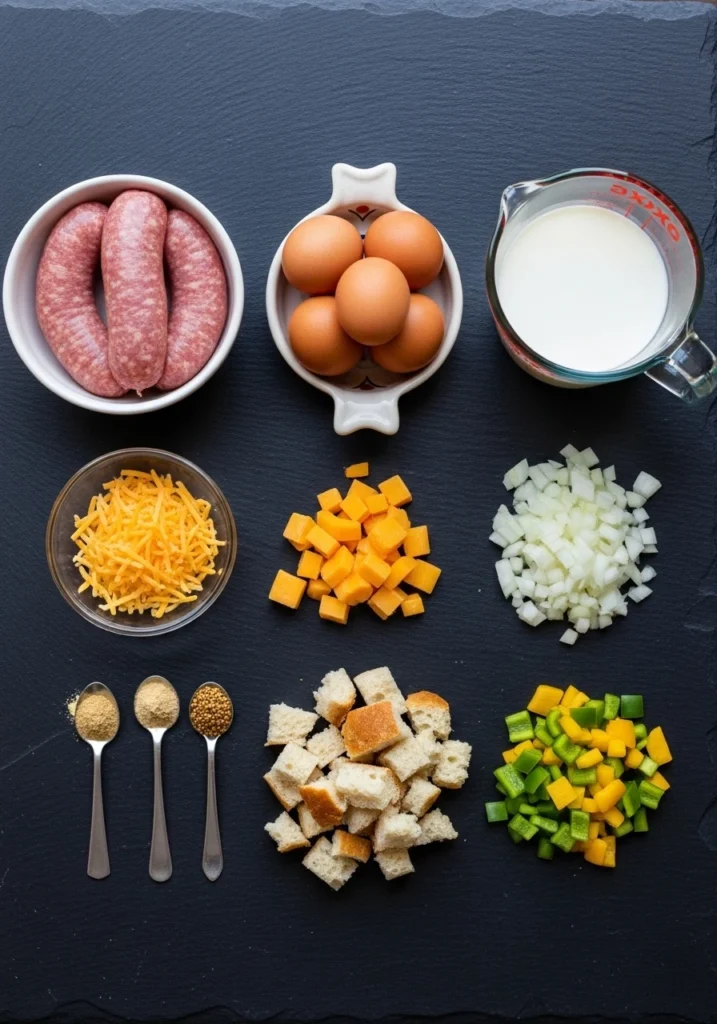
Before you start assembling, let us talk ingredients. The good news is that everything here is easy to find at any grocery store.
No fancy specialty items, no obscure spices. Just solid, reliable ingredients that work together like they were born to.
The Core Ingredients
- 1 pound of breakfast sausage (pork, turkey, or chicken all work great)
- 8 large eggs
- 2 cups of whole milk (for that rich, creamy custard base)
- 1 teaspoon of dry mustard powder (trust the process on this one)
- 1 teaspoon of garlic powder
- Salt and black pepper to taste
- 6 slices of day-old bread, cubed (white, sourdough, or brioche all shine here)
- 2 cups of shredded cheddar cheese, divided
- 1/2 cup of diced onion
- 1/2 cup of diced bell pepper (any color you like)
Optional Add-Ins Worth Considering
Want to take it up a notch? A handful of extras can make this casserole feel brand new every time you make it.
- Sliced mushrooms for an earthy, savory depth
- Diced jalapenos if you want a little kick in the morning
- Sun-dried tomatoes for a slightly tangy, rich note
- Fresh herbs like chives or parsley sprinkled on top before serving
Shop All Breakfast Casserole Ingredients On Amazon
How to Make a Make-Ahead Sausage Egg Breakfast Casserole
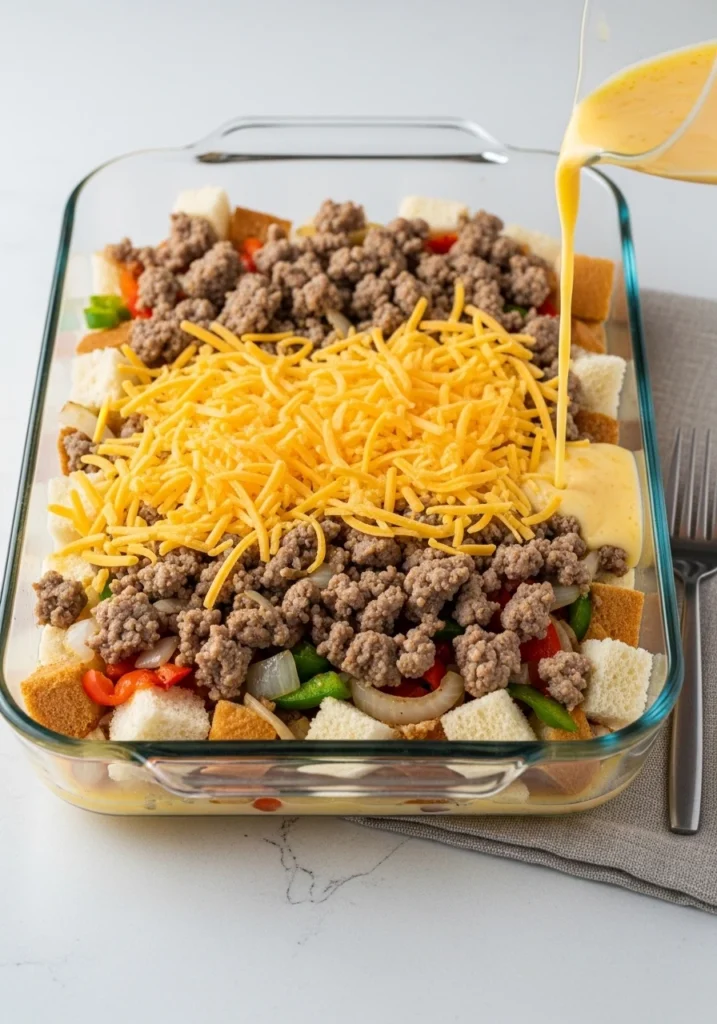
Here is where the magic happens. The process is straightforward, but a few key techniques will make the difference between a good casserole and a great one.
Step 1: Cook the Sausage
Start by browning your breakfast sausage in a skillet over medium heat. Break it into crumbles as it cooks.
You want it fully cooked through with some golden-brown edges because those caramelized bits bring serious flavor. Once it is done, drain any excess grease and set it aside to cool slightly.
Step 2: Saute the Vegetables
In the same skillet (why dirty another pan?), cook the diced onion and bell pepper for about 3 to 4 minutes until they soften.
You are not trying to fully cook them here. The oven will finish the job. This step just gets rid of that raw, sharp bite.
Step 3: Layer the Casserole Dish
Grease a 9×13-inch baking dish generously. Spread the cubed bread evenly across the bottom of the dish.
Then scatter the cooked sausage and sauteed vegetables over the bread. Sprinkle 1 cup of the shredded cheddar over everything.
Shop Casserole Dishes And Baking Pans On Amazon
Step 4: Make the Egg Custard
In a large bowl, whisk together the eggs, milk, dry mustard, garlic powder, salt, and pepper. Whisk until everything is fully combined and the mixture looks smooth and uniform.
This custard is what binds the whole casserole together, so do not rush this step.
Step 5: Pour and Refrigerate Overnight
Pour the egg custard evenly over the layered ingredients in the baking dish. Press the bread down gently with the back of a spoon so every piece soaks up some of that liquid.
Sprinkle the remaining cup of cheese on top. Cover tightly with plastic wrap or foil and refrigerate for at least 8 hours, or overnight.
This overnight rest is non-negotiable. It is the secret to that luscious, custardy texture that separates a truly great breakfast casserole from a mediocre one.
Step 6: Bake to Golden Perfection
When you are ready to bake, pull the casserole out of the fridge and let it sit at room temperature for about 20 to 30 minutes.
This prevents the cold dish from shocking your oven and helps it cook more evenly. Preheat your oven to 350 degrees Fahrenheit.
Bake uncovered for 45 to 55 minutes, until the top is golden brown, the edges are set, and the center no longer jiggles when you gently shake the dish.
If the top starts to brown too quickly, tent it loosely with foil for the last 10 minutes.
Let it rest for 5 to 10 minutes before cutting and serving.
Tips for the Best Make-Ahead Sausage Egg Casserole Every Time
Even a foolproof recipe has a few insider tricks that separate the good from the truly memorable. Here are the ones that make a real difference.
Use Day-Old or Slightly Stale Bread
Fresh bread gets mushy fast. Day-old bread holds its structure better and absorbs the egg mixture without turning into a soggy mess.
If your bread is fresh, cube it and toast it in the oven at 300 degrees for about 10 minutes to dry it out a bit.
Find The Right Baking Dish For Your Casserole On Amazon
Do Not Skip the Dry Mustard
It sounds unusual, but dry mustard powder does something subtle and important. It does not make the casserole taste like mustard.
Instead, it adds a quiet depth that enhances the savoriness of the eggs and cheese. Think of it as a flavor amplifier rather than a flavor on its own.
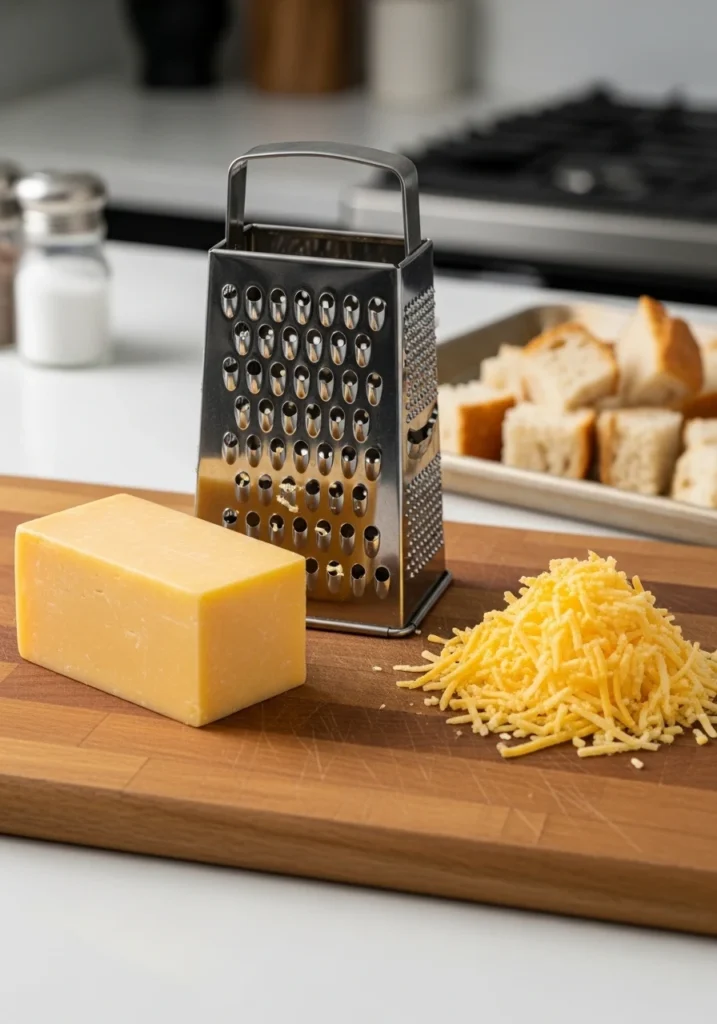
Shred Your Own Cheese
Pre-shredded cheese is convenient, but it comes coated in anti-caking agents that prevent it from melting as smoothly.
When you shred cheese fresh from the block, it melts into silky, gooey perfection. It takes an extra two minutes and is absolutely worth it.
Grab A Cheese Grater Or Box Grater On Amazon
Cover Properly Before Refrigerating
Make sure the casserole is fully covered before it goes into the fridge. You want to prevent a skin from forming on the egg mixture and keep the casserole from absorbing other fridge odors.
Plastic wrap pressed directly against the surface works well.
How to Customize Your Breakfast Casserole
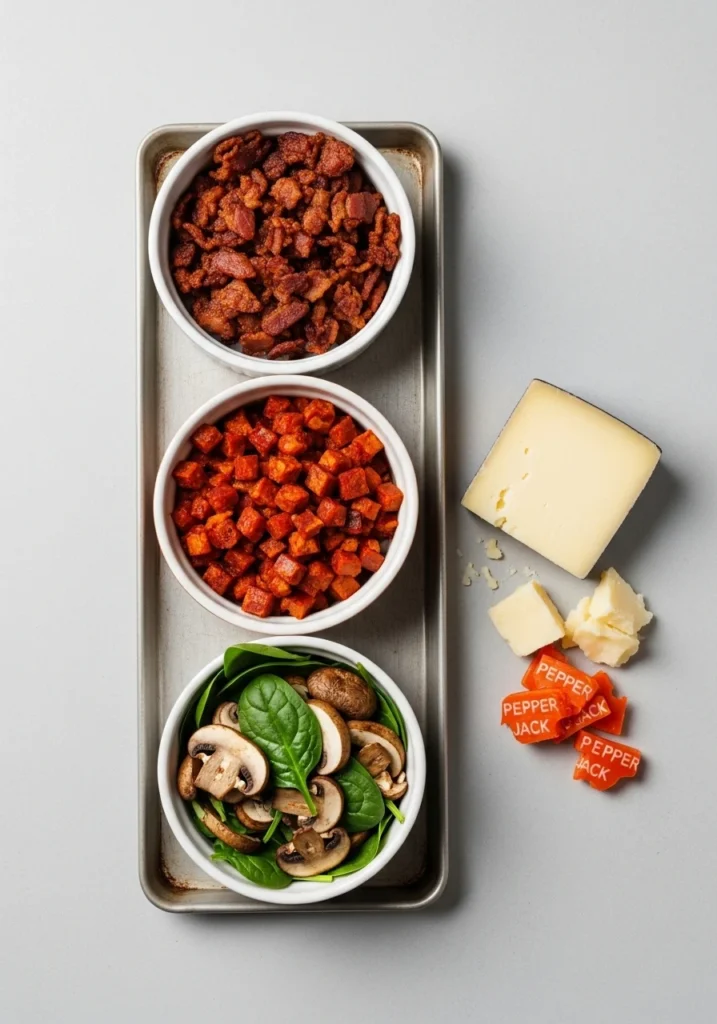
One of the best things about this recipe is how easy it is to make your own. Once you understand the basic formula, you can swap ingredients in and out based on what you have on hand or what sounds good that week.
Swap the Protein
- Bacon: Cook and crumble it just like the sausage
- Ham: Diced leftover ham works wonderfully and adds a slightly smoky sweetness
- Chorizo: For a spicier, more assertive flavor profile
- Plant-based sausage: Works just as well for a meatless version
Change Up the Cheese
- Gruyere adds a sophisticated, nutty flavor
- Pepper jack brings heat and creaminess in one move
- Smoked gouda adds a subtle smokiness that pairs beautifully with sausage
- Feta gives a tangy, briny note that cuts through the richness
Add Vegetables for Nutrition and Color
A handful of baby spinach, some diced zucchini, or even roasted sweet potatoes mixed into the layers adds color, nutrition, and variety. Do not be afraid to clean out the veggie drawer with this one.
How to Store and Reheat Breakfast Casserole
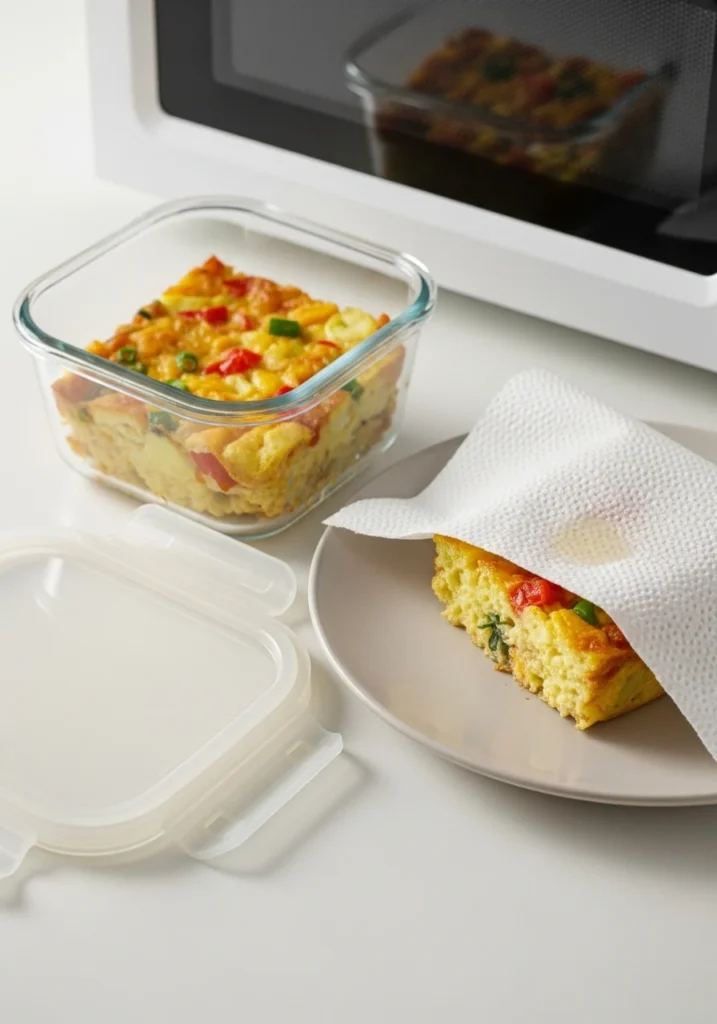
A big batch of this casserole does not just solve breakfast once. It solves breakfast for days.
Storing Leftovers
Once the casserole cools completely, cover the dish tightly or transfer individual portions to airtight containers. It keeps well in the refrigerator for up to 4 days.
Freezing for Later
This casserole freezes well, which makes it perfect for meal prep. Cut it into individual portions, wrap each one tightly in plastic wrap, and then place them in a freezer-safe bag or container.
Frozen portions stay good for up to 2 months.
Reheating Without Drying It Out
- Oven method: Cover with foil and reheat at 325 degrees for 20 to 25 minutes. This is the best method for keeping the texture close to freshly baked.
- Microwave method: Heat individual portions in 60-second intervals, covering loosely with a damp paper towel to retain moisture.
Shop Food Storage Containers And Freezer Bags On Amazon
Serving Suggestions to Round Out the Meal
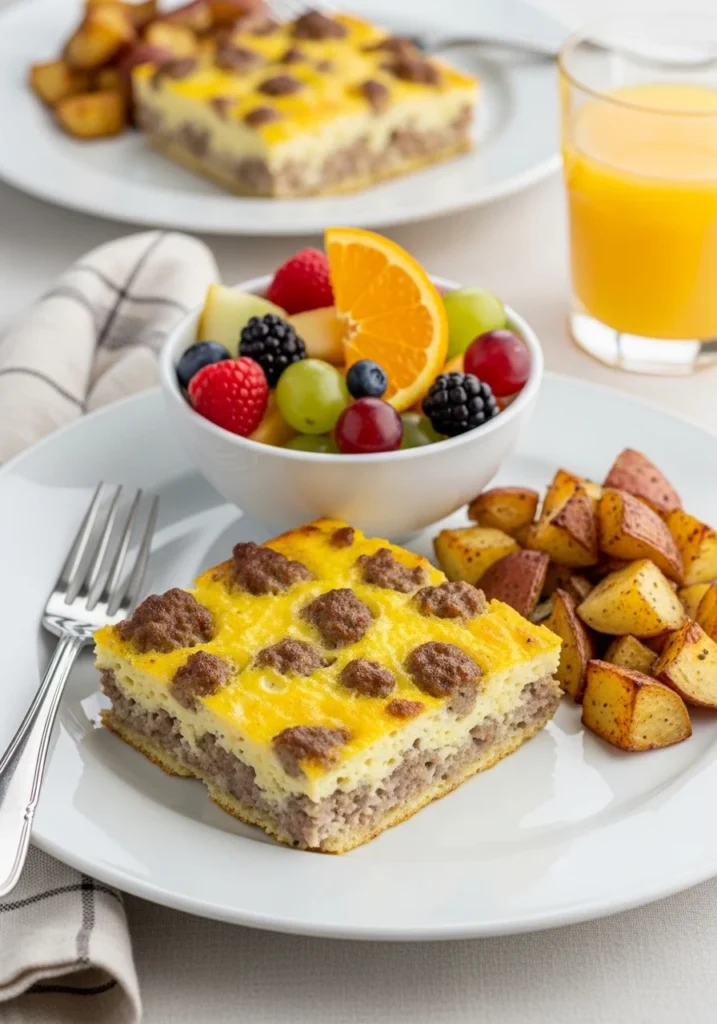
A hearty sausage egg breakfast casserole is a complete meal on its own, but a few simple sides can turn it into a proper spread.
- Fresh fruit salad adds brightness and a refreshing contrast to the rich, savory casserole
- Roasted potatoes or hash browns if you want to double down on that classic breakfast feel
- A simple green salad works surprisingly well for brunch gatherings
- Hot sauce or salsa on the side for anyone who likes a little heat with their eggs
The Bottom Line on Make-Ahead Sausage Egg Breakfast Casserole
Here is the truth about this dish: it is one of those recipes that sounds simple and delivers big every single time.
The combination of savory sausage, creamy eggs, melted cheese, and soft bread creates something genuinely satisfying in a way that a bowl of cereal simply cannot compete with.
The make-ahead element is what really makes it special.
You spend maybe 20 minutes of active work the night before, and the next morning you get to serve something that tastes like you actually tried. That is a pretty solid trade.
Whether you make it for a lazy Sunday, a holiday morning, or just a regular Tuesday when you want something better than toast, this sausage egg breakfast casserole will deliver.
Make it once, and it will absolutely become a permanent fixture in your breakfast rotation.
Can You Assemble a Sausage Egg Breakfast Casserole the Night Before?
Yes, that’s the best way to do it. Assembling the casserole the night before lets the bread soak in the egg and milk mixture. This gives it a richer, creamier texture after baking.
Cover the dish tightly and refrigerate it for at least 8 hours. Take it out of the fridge 20 to 30 minutes before baking. This helps it bake evenly from edge to center.
How Long Does a Make-Ahead Breakfast Casserole Last in the Fridge?
A fully baked breakfast casserole can last in the fridge for up to 4 days. Store it in an airtight container or tightly cover the baking dish. For best results, let it cool completely before refrigerating.
Reheat individual portions in the microwave for 60 to 90 seconds. You can warm the whole dish in a 325-degree oven covered with foil for about 20 to 25 minutes.
Can You Freeze a Sausage Egg Breakfast Casserole?
Sure! This casserole freezes well, making it great for meal prep. After baking and cooling, cut it into portions. Wrap each piece in plastic wrap and store them in a freezer-safe bag or container for up to 2 months.
You can thaw it overnight in the fridge before reheating. You can also freeze the casserole unbaked, but the bread’s texture may become a bit softer when baked after freezing.
What Type of Bread Works Best for a Breakfast Casserole?
Day-old or slightly stale bread is best. It soaks up the egg custard without getting mushy. White sandwich bread, sourdough, French bread, and brioche work well.
Brioche adds a sweet, buttery texture that complements savory sausage. If your bread is fresh, cube it and dry it in a 300-degree oven for about 10 minutes before using it.
How Do You Know When a Breakfast Casserole Is Done Baking?
A fully baked breakfast casserole should have a golden-brown top, set edges, and a center that doesn’t jiggle when you shake the dish.
Use an instant-read thermometer in the center; it should read at least 160 degrees Fahrenheit to ensure the eggs are cooked through.
If the top browns too fast before the center sets, tent the dish loosely with foil and keep baking. Let the casserole rest for 5 to 10 minutes before slicing and serving.