
You finally have the nursery, and now you face a blank room. You might wonder, “Do I really need seventeen throw pillows shaped like woodland creatures?” Spoiler: you do not.
A minimalist baby room isn’t about removing all the fun. It’s about creating a calm, intentional space where you and your baby can breathe.
The good news? Minimalist nursery design is trending right now, and for good reason. Less clutter means less visual noise.
Less visual noise leads to a calmer baby, and a calmer parent. That should be the real selling point here.
Why Minimalism Works Brilliantly in a Nursery
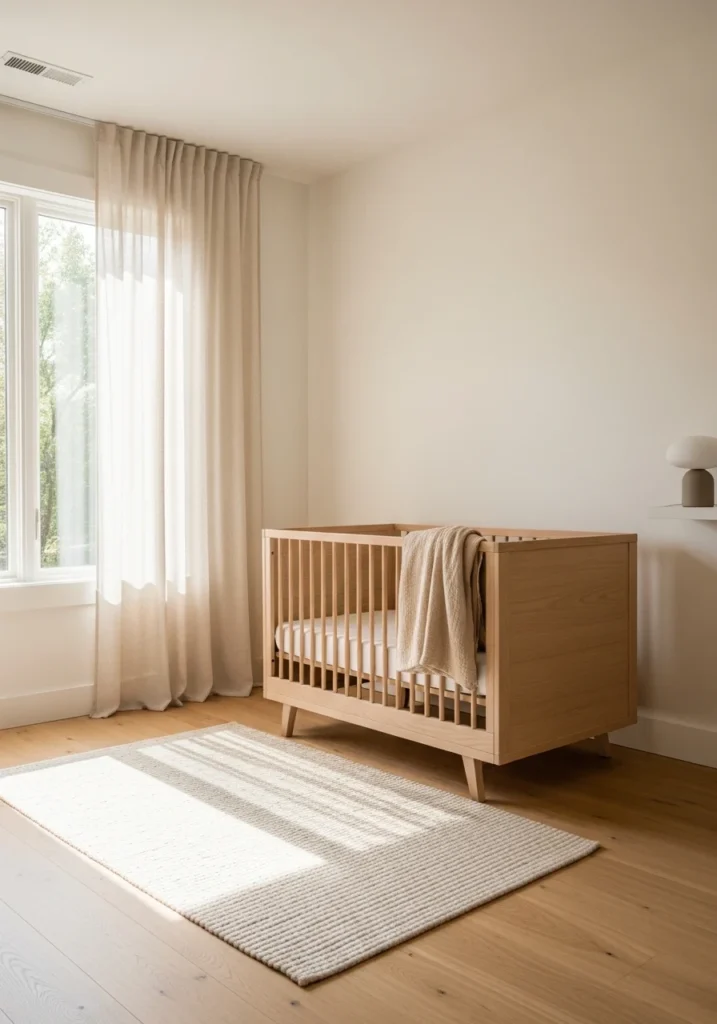
Here is something nobody tells you before the baby arrives: babies do not care about decor.
They care about warmth, comfort, and whether you remembered to do the 2 a.m. feeding. So who is all that elaborate decor really for?
A minimalist approach puts function first. Every piece of furniture, every color on the wall, and every textile in the room earns its place.
The result is a space that grows with your child, stays organized effortlessly, and looks genuinely beautiful without trying too hard.
There is also a real developmental argument for it. Research consistently shows that calm, low-stimulation environments support better sleep for infants.
A room that is not visually overwhelming helps regulate a newborn’s nervous system. So going minimal is not just an aesthetic choice. It is actually a smart parenting choice.
Choosing the Right Color Palette
Stick to Soft Neutrals
The foundation of any minimalist nursery is the color palette, and this is where most people overthink things spectacularly.
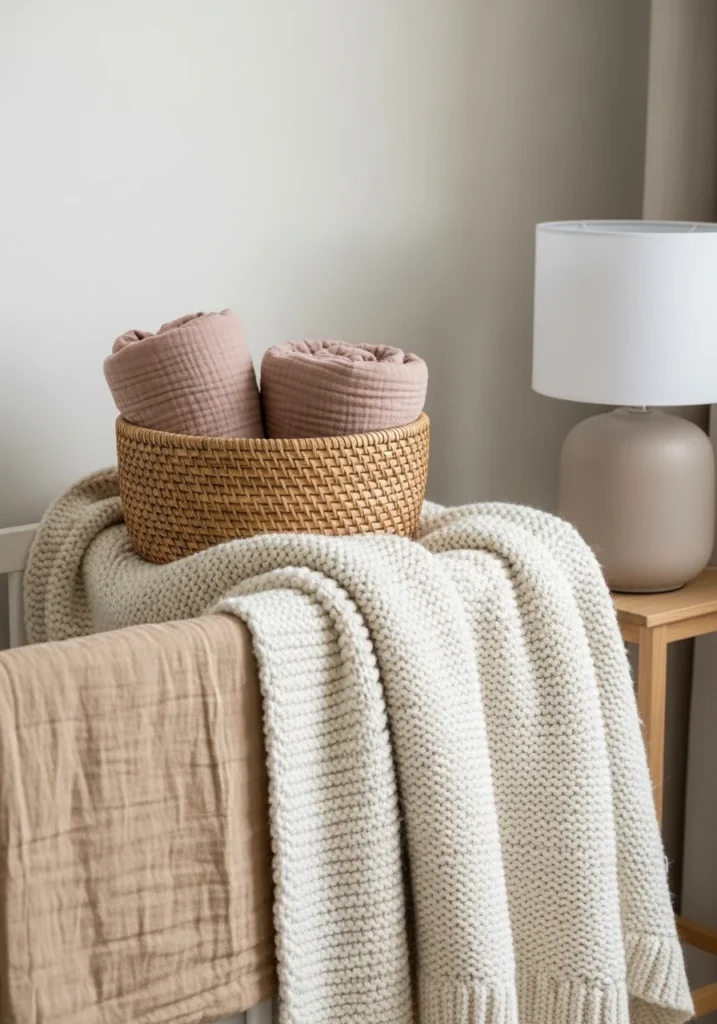
You do not need to spend three weekends debating 47 shades of beige. Soft neutrals like warm white, oat, sand, sage, and dusty blush are your best friends here.
These tones create a serene backdrop that does not compete with natural light or overwhelm small eyes.
They also make it incredibly easy to add or swap out accent pieces as your baby grows without needing to repaint every six months.
Monochrome Does Not Mean Boring
One of the biggest misconceptions about minimalist design is that monochrome equals dull.
A room done entirely in warm whites and natural wood tones can feel incredibly rich when you play with texture.
Think a linen crib sheet, a chunky knit throw, a rattan storage basket, and a matte ceramic lamp. Texture is the secret weapon of minimalist nursery design.
Furniture: Choose Less, Choose Well
The Crib Is Your Anchor Piece
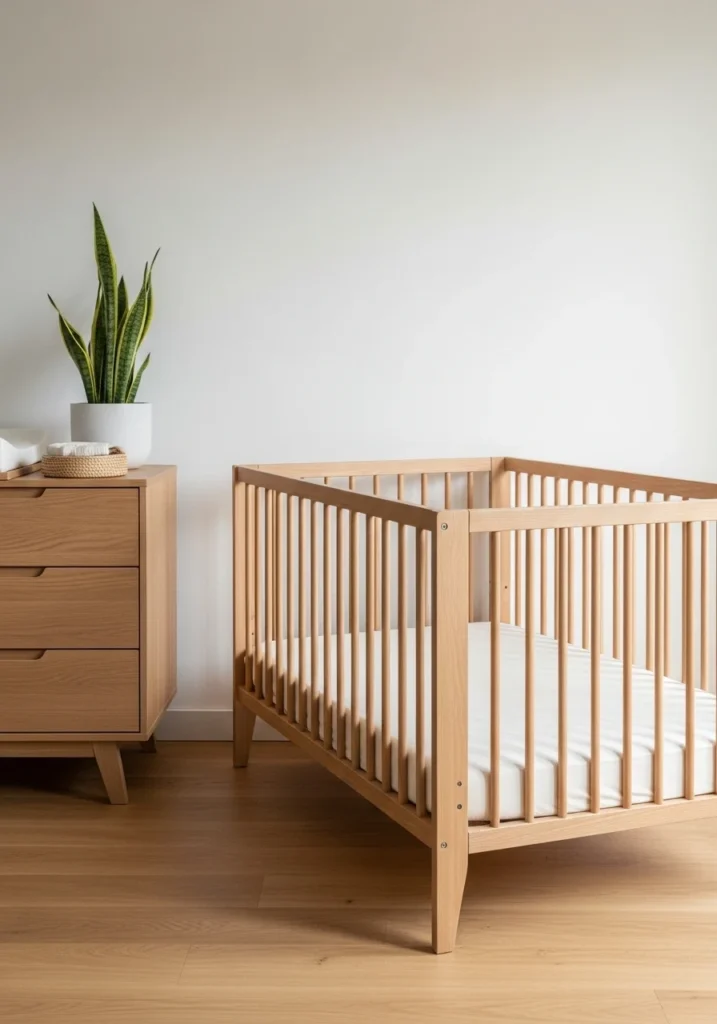
In a minimalist nursery, the crib is the star of the show. Choose a simple, clean-lined design in white, natural wood, or a muted solid color.
Avoid ornate headboard details or busy carvings.
A convertible crib that grows into a toddler bed is the ultimate minimalist move because it eliminates the need to buy another piece of furniture in two years.
Some popular and well-loved options feature slatted sides in natural beech or pine, which keep the room feeling airy rather than heavy.
Keep the crib positioned away from windows and direct heat sources for practical safety reasons, but also because it simply looks cleaner against a plain wall.
Shop Convertible Cribs On Amazon
Do You Actually Need a Changing Table?
Let’s be honest here. A dedicated changing table sounds essential until you realize you end up changing the baby on every flat surface in your house anyway.
A dresser with a changing topper is a far smarter solution for a minimalist nursery because it pulls double duty without eating up floor space.
Look for a dresser with clean lines, recessed handles, and a solid build.
Wide, shallow drawers work better than deep ones for organizing tiny baby clothes, which, by the way, are criminally small and adorable.
Browse Nursery Dressers With Changing Toppers On Amazon
Keep Seating Simple
You will spend a lot of time in that nursery chair. A lot. So choose something comfortable first and stylish second.
A simple upholstered glider or a low-profile armchair in a neutral linen or boucle fabric hits both marks without cluttering the room.
Skip the footrest if the room is on the smaller side. A small side table or a floating shelf nearby handles the practical needs without adding bulk.
Find A Minimalist Nursery Glider On Amazon
Smart Storage That Disappears Into the Design
Built-In and Floating Shelves
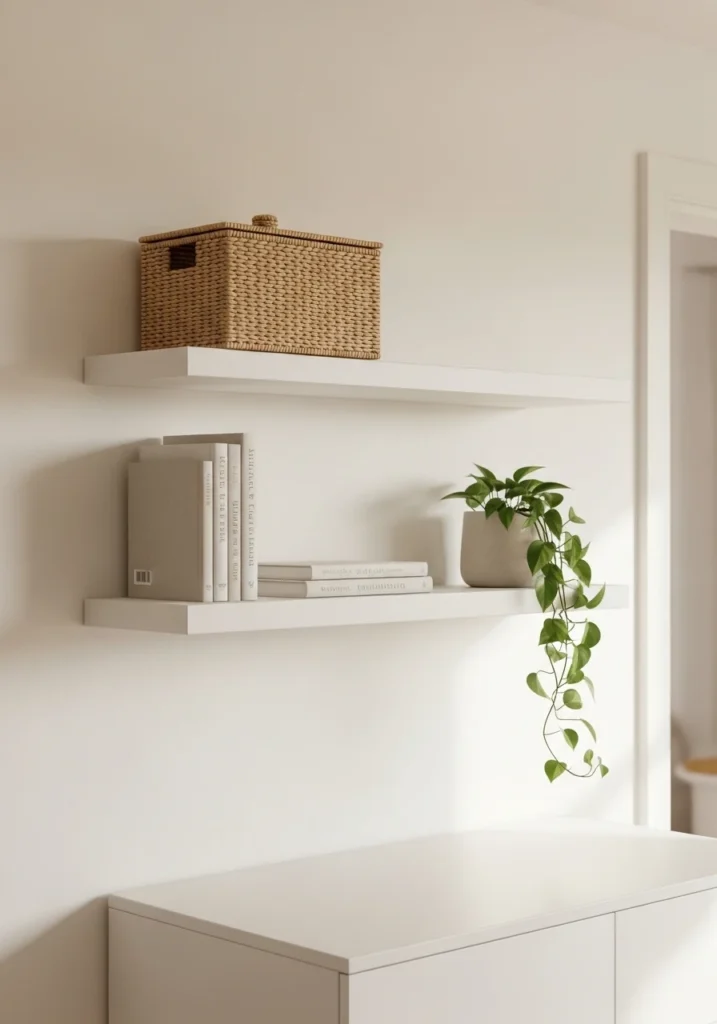
One of the sneakiest ways to keep a minimalist nursery looking clean is to move storage off the floor and onto the walls.
Floating shelves in white or natural wood keep things organized and visually light.
Use them for a few curated books, a small plant, and one or two meaningful decorative objects. Resist the urge to fill every inch.
A general rule that works really well is this: if you cannot see negative space on the shelf, you have too much on it.
Baskets and Bins Over Open Toy Storage
Open toy storage looks great in photos and chaotic in real life.
Closed or semi-closed storage, like woven baskets, canvas bins, or simple wooden boxes with lids, keeps the room looking neat without requiring you to tidy up every six minutes.
Label them with simple tags and you have a system that actually works as the toy collection grows.
Shop Nursery Storage Baskets And Bins On Amazon
Lighting That Sets the Mood
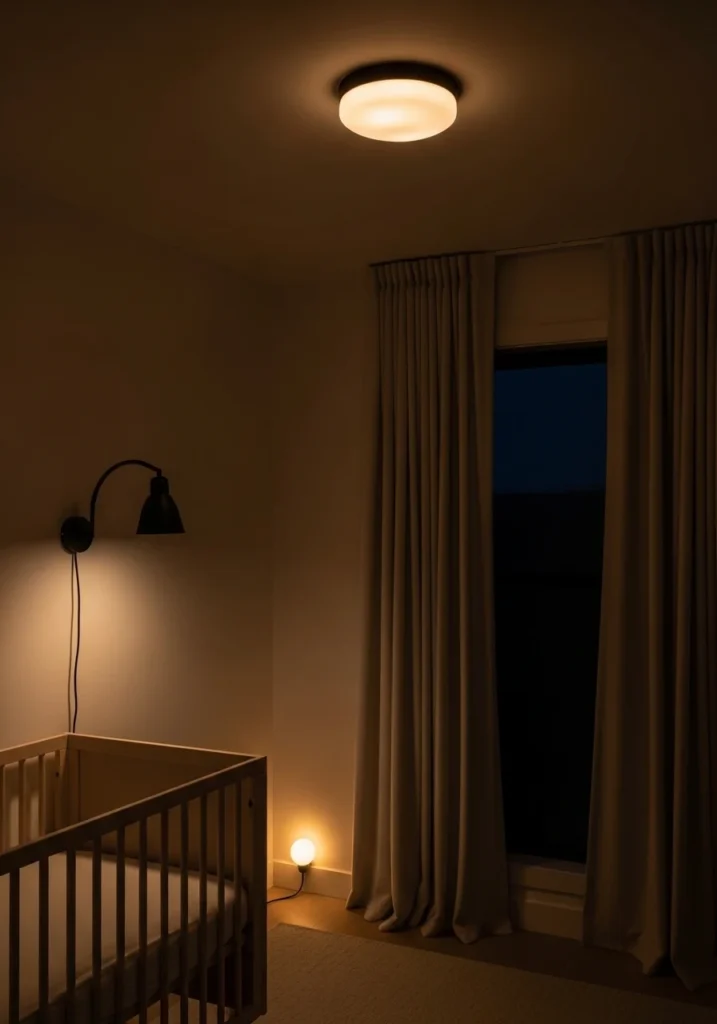
Layered Lighting Is Non-Negotiable
A single overhead light does not work in a nursery. You need to be able to control the mood, whether that is bright enough for a nappy change at midnight or soft enough for a bedtime feed.
A dimmer switch on the main light combined with a warm-toned nightlight is the minimalist nursery lighting formula that actually works.
Wall-mounted reading lights or arc floor lamps in brushed brass or matte black add a modern touch without taking up much visual real estate.
Avoid novelty shaped lights unless you are genuinely prepared to look at a glowing moon for the next three years.
Natural Light and Blackout Curtains
Never underestimate the power of natural light in a nursery during the day, or the power of complete darkness during nap time.
Simple, floor-length curtains in a linen or cotton fabric with a blackout lining behind them give you both.
Skip the valance, skip the tie-backs, and definitely skip the curtains with cartoon characters on them.
Browse Nursery Nightlights And Lamps On Amazon
Decor That Does the Heavy Lifting
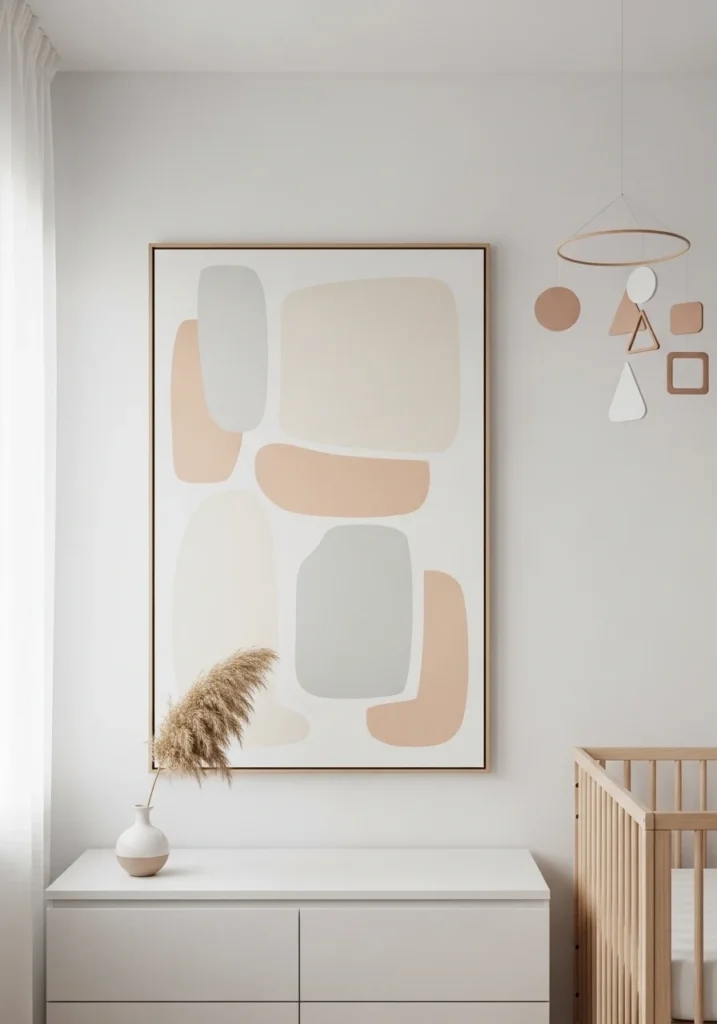
One Statement Piece Over Many Small Ones
Here is where minimalist nursery design diverges from “just an empty room” territory.
Choose one or two intentional statement pieces rather than scattering thirty small decorations around the room.
A large-scale piece of abstract art, a beautiful mobile above the crib, or a single oversized woven wall hanging creates visual interest without creating chaos.
A quality mobile is particularly worth the investment. Babies spend enormous amounts of time on their backs staring upward, so what hangs above the crib actually matters.
Choose something with gentle movement, soft contrasting colors, and simple shapes.
Plants Add Life Without Clutter
A single plant in a clean ceramic pot does more for a nursery than a shelf full of knick-knacks. Choose low-maintenance, non-toxic varieties like a pothos, spider plant, or rubber plant.
They add color, texture, and a sense of calm without requiring a weekly maintenance schedule you will definitely not keep during those early newborn weeks.
Shop Minimalist Baby Mobiles On Amazon
Flooring and Rugs
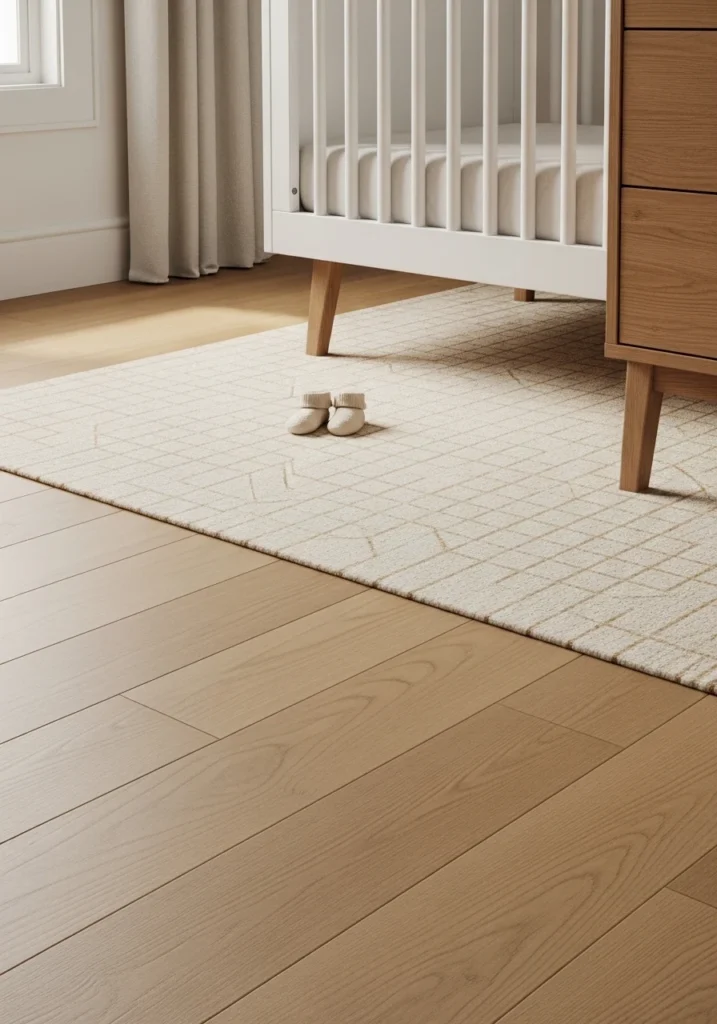
Keep the Floor Light and Open
If you have hardwood or light-toned flooring, show it off. A single area rug anchors the room without overwhelming the space.
Choose something with a low pile in a neutral tone with maybe a subtle geometric pattern or simple texture.
Avoid anything too busy or too high-pile, since these are harder to clean and harder to look at for an extended period.
A rug also serves a practical purpose: it softens the sound in the room and adds warmth underfoot during those barefoot middle-of-the-night trips you will soon know intimately.
Pulling It All Together
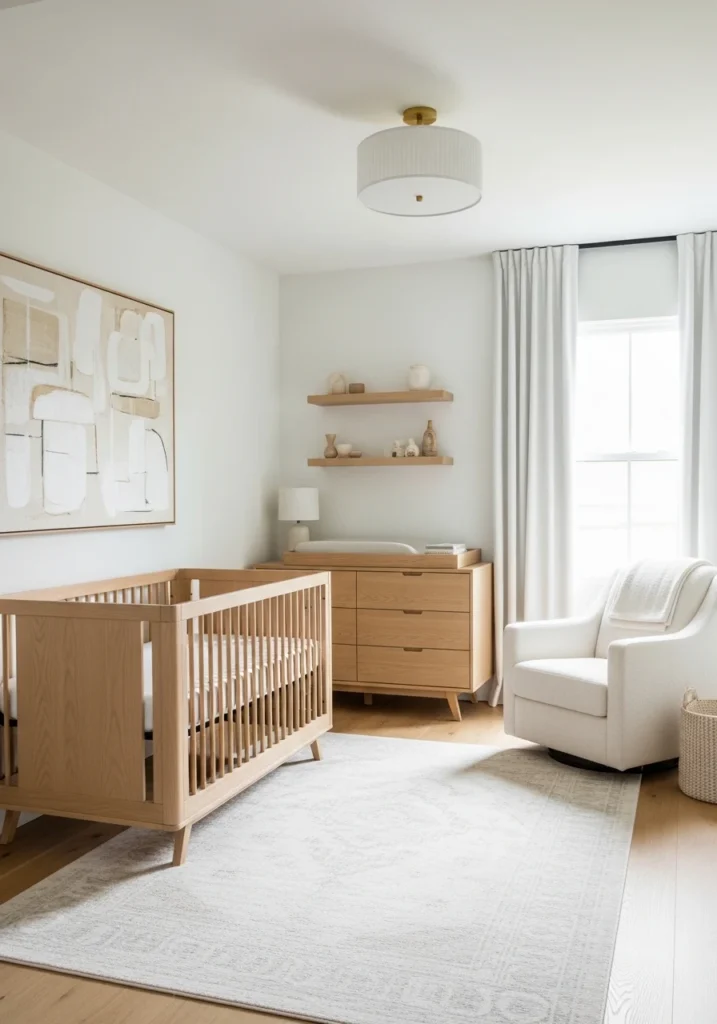
Designing a minimalist baby room is genuinely one of the most rewarding design projects you can take on because the constraints are freeing rather than limiting.
When everything in the room has a clear purpose and earns its place, the result feels effortless. And more importantly, it functions beautifully.
The core principles to carry with you are simple. Choose a soft, cohesive color palette. Invest in fewer, better-quality furniture pieces.
Use texture to add depth. Prioritize smart storage. Layer your lighting. And resist the overwhelming cultural pressure to fill every corner with something new.
Your baby does not need a maximalist wonderland. Your baby needs you, a safe crib, and a room calm enough for both of you to actually get some sleep.
And honestly, after the first few weeks, sleep is the only design feature that truly matters.
What Are the Best Colors for a Minimalist Baby Room?
The best colors for a minimalist baby room are soft neutrals. Think warm white, oat, sage, sand, and dusty blush. These shades create a calming space that helps infants sleep.
They also look great with natural materials like wood and linen. Plus, they let you easily change accent pieces as your child grows, without needing to repaint.
How Do I Make a Small Nursery Look Minimalist and Spacious?
To make a small nursery feel open, keep furniture low-profile. Choose pieces that serve multiple purposes, like a dresser with a changing topper instead of a separate changing table.
Mount shelves on the wall to save floor space. Use light colors on the walls and avoid overcrowding surfaces with decorations.
A single area rug in a neutral tone can help define the space without making it feel cramped.
What Furniture Do I Actually Need in a Minimalist Nursery?
In a minimalist nursery, focus on these essentials: a quality convertible crib, a multi-purpose dresser, and a comfortable feeding chair. Everything else is optional.
A simple side table or floating shelf near the chair meets practical needs without adding bulk. Include only what you will use daily and leave out the rest.
How Do I Add Personality to a Minimalist Baby Room Without Adding Clutter?
The best way to add personality without clutter is to choose one or two statement pieces. This is better than scattering many small decorations around the room.
A large wall art piece, a well-designed mobile above the crib, or a single woven wall hanging can create visual character.
Using materials like linen, boucle, rattan, and chunky knit adds warmth and personality without making the space feel busy.
Are Minimalist Nurseries Actually Better for Baby Development?
Yes, there is a strong case for it. Research shows that calm, low-stimulation environments help newborns regulate their nervous systems and sleep better.
A room that isn’t visually overwhelming gives a baby’s developing brain less input to process.
However, gentle visual contrast, like a simple mobile with basic shapes, can benefit early visual development.