
If you live in a small apartment or compact home, you’ve likely seen a bare windowsill or empty corner and thought, “Something green should go here.” You’re right!
Limited space isn’t a reason to skip indoor plants. With the right small indoor planters, you can turn any tiny nook into a lush sanctuary.
You don’t need a big garden or a Pinterest-perfect home to make this work. All you need is a smart way to choose planters, a touch of creativity, and maybe a bit of plant love. Let’s dive in.
Why Small Space Planters Are Worth the Fuss
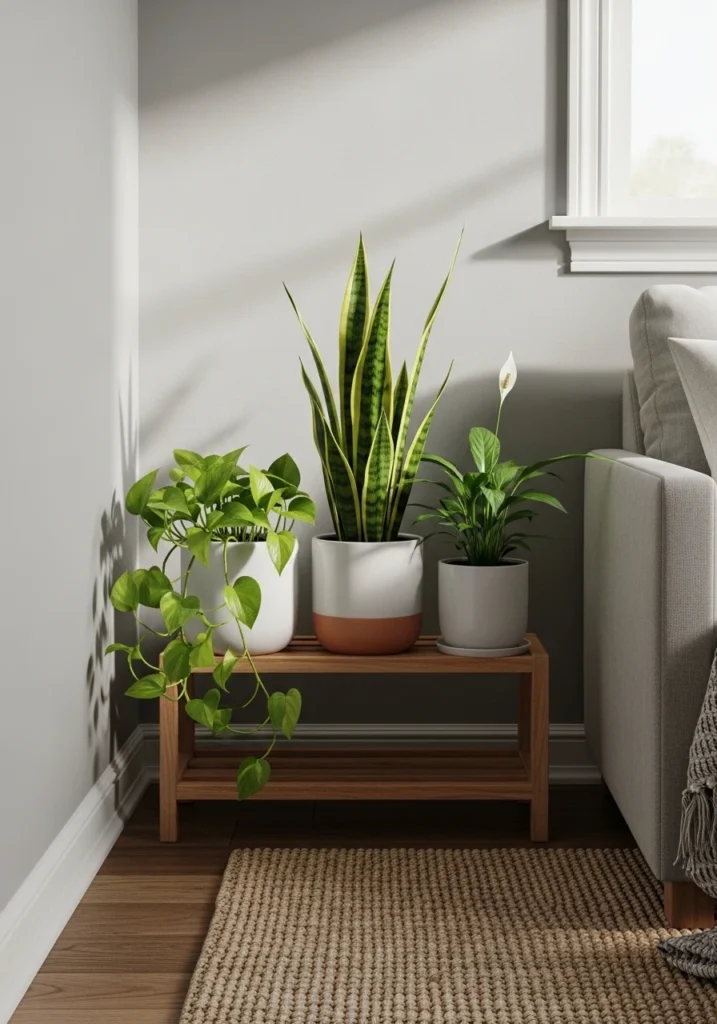
People tend to think that plants are a luxury reserved for those with wide countertops and sprawling balconies.
But indoor planters designed for small spaces actually do a whole lot more than just look pretty.
They clean the air, reduce stress, boost your mood, and make a room feel more alive and intentional.
The science backs this up too. Research from NASA’s Clean Air Study found that common houseplants can remove toxins like formaldehyde and benzene from indoor air.
So yes, your little pothos is basically working overtime for you, rent-free.
Beyond function, small space planters let you add personality to a room without committing to a major renovation.
A couple of well-placed hanging planters or a sleek wall-mounted setup can completely transform the energy of a room. That is not exaggeration. That is just what plants do.
The Best Types of Small Space Indoor Planters
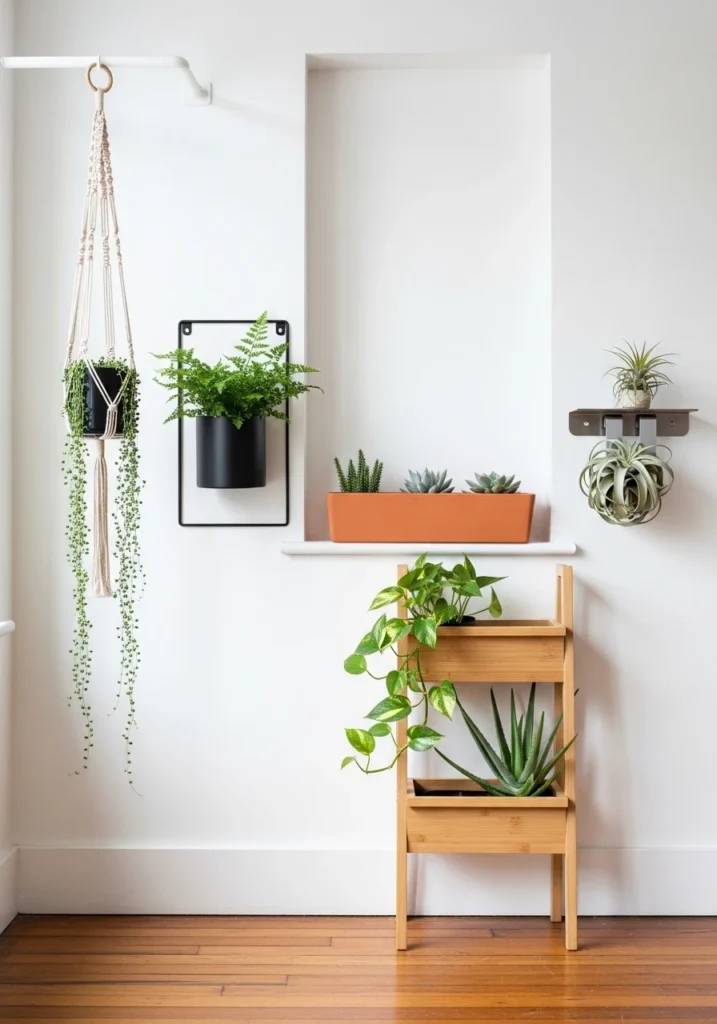
Not all planters are created equal, especially when space is at a premium. Here is a breakdown of the best options and what makes each one worth considering.
Hanging Planters
Hanging planters are hands-down one of the smartest choices for small spaces because they use vertical space instead of precious counter or floor real estate.
You mount them from the ceiling, a curtain rod, or a wall hook, and suddenly you have greenery without sacrificing a single surface.
Best plants for hanging planters:
- Pothos (trails beautifully and is nearly impossible to kill)
- String of Pearls (dramatic and visually interesting)
- Boston Ferns (lush and full)
- Spider Plants (fast-growing and great for beginners)
The key is to use lightweight planters, especially if you are mounting them into drywall.
Macrame hangers with small terracotta or plastic pots work beautifully and add a boho texture to the room.
Shop Hanging Planters on Amazon
Wall-Mounted Planters
Wall-mounted planters are exactly what they sound like, and they are one of the most underrated small space indoor planter solutions out there.
You install them directly onto the wall, and they hold individual pots or a series of pockets for plants to grow in.
Why they work so well:
- They free up all your surfaces
- They create a vertical garden effect even in tiny spaces
- They work in kitchens, bathrooms, living rooms, and hallways
- They turn a blank wall into a genuine focal point
Modular wall planter systems let you arrange pots in any configuration you like.
You can go minimalist with three small pots in a row, or go all-out with a grid of succulents that covers an entire wall. Your call.
Shop Wall-Mounted Planters on Amazon
Windowsill Planters
The windowsill is arguably the most underused real estate in any home.
A long, narrow windowsill planter lets you line up herbs, succulents, or trailing plants right where they get the most natural light. It is practical, efficient, and genuinely attractive.
Best plants for windowsill planters:
- Herbs like basil, thyme, rosemary, and mint (useful and fragrant)
- Aloe vera (doubles as a natural first-aid kit)
- Succulents and cacti (love the direct light)
- African Violets (bloom beautifully in indirect light)
If your windowsill is especially narrow, look for elongated planters with drainage holes, or use a tray beneath smaller individual pots lined up in a row.
The drainage is important. Nobody wants a soggy windowsill.
Shop Windowsill Planters on Amazon
Tiered and Ladder Planters
A tiered plant stand or ladder-style planter is one of the best investments you can make for a small indoor space.
It gives you multiple levels of display without taking up more than a couple of square feet of floor space.
Ladder planters lean against the wall and hold pots on each rung. Tiered stands usually come in two or three levels and sit freestanding in a corner or beside a piece of furniture.
Both options let you group plants together for a more dramatic visual effect.
What to look for when buying a tiered or ladder planter:
- Sturdy construction (wobbly stands are a disaster waiting to happen)
- A finish that matches your existing furniture
- Enough spacing between levels for taller plants
- Water-resistant or sealed wood if you plan to water in place
These work especially well in living rooms and bedrooms, where you want that lush, layered plant display without dedicating an entire side table to a single pot.
Shop Tiered and Ladder Plant Stands on Amazon
Magnetic and Clip-On Planters
Here is where things get a little more creative. Magnetic planters attach to metal surfaces, which makes them brilliant for refrigerators, metal shelving units, or even magnetic boards mounted on walls.
Clip-on planters clamp onto shelves, desk edges, or railings without any tools or permanent fixtures.
These are particularly great for renters who cannot drill into walls.
If you are renting a small apartment and your landlord has made it very clear that you are not touching those walls, magnetic and clip-on planters are genuinely your best friends.
They tend to hold smaller plants like air plants, mini succulents, and small herbs. But for a compact space, that is often exactly what you need.
How to Choose the Right Planter for Your Space
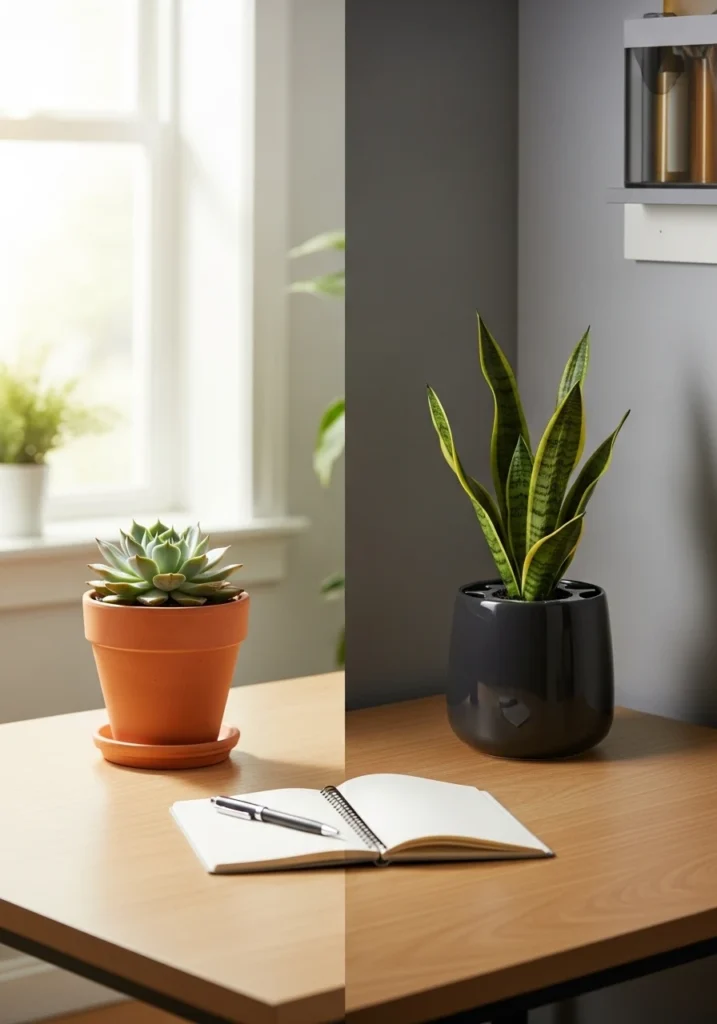
Choosing a small space indoor planter is not just about what looks good on Instagram. You need to think practically about your space, your lifestyle, and the needs of the plants you want to grow.
Consider Your Light Conditions
Before you even think about which planter to buy, figure out your light situation.
Do you have bright, direct sunlight streaming through south-facing windows? Or are you working with a dim north-facing room that barely gets a glow?
High-light spaces can support a wide range of plants, from succulents to tropical specimens. Low-light spaces call for more forgiving plants like pothos, ZZ plants, snake plants, and peace lilies.
Match the plant to the light, and then choose the planter style that fits the location where that plant will actually thrive.
A gorgeous hanging planter near a window with no direct light is not doing your sun-loving succulent any favors.
Think About Watering Habits
Be honest with yourself here.
Are you the kind of person who waters plants diligently on a schedule, or are you the kind of person who “means to” water them for three weeks and then panics when the leaves start drooping?
There is no judgment here. Both types of people can have thriving indoor plants with the right setup.
- Frequent waterers do well with terracotta planters, which allow moisture to evaporate through the walls and help prevent overwatering.
- Forgetful waterers should look for self-watering planters, which have a reservoir at the bottom that slowly feeds water to the roots as needed.
Self-watering planters are genuinely one of the best inventions for small spaces because they also reduce the risk of water damage to surfaces and floors.
Shop Self-Watering Planters on Amazon
Match the Planter to Your Decor Style
A planter is a decorative object as much as it is a functional one. Choosing something that clashes with your existing furniture and color palette is going to bother you every single time you look at it.
Some general style pairings to consider:
- Minimalist and modern spaces: Clean-lined concrete, matte ceramic, or geometric metal planters
- Bohemian and eclectic spaces: Macrame hangers, woven baskets, terracotta pots with colorful glazes
- Scandinavian-inspired spaces: Simple white or light wood planters with clean proportions
- Industrial or urban spaces: Dark metal, raw concrete, or salvaged wood planter boxes
The planter should feel like it belongs in the room, not like it arrived by accident.
Small Space Planter Ideas That Actually Work
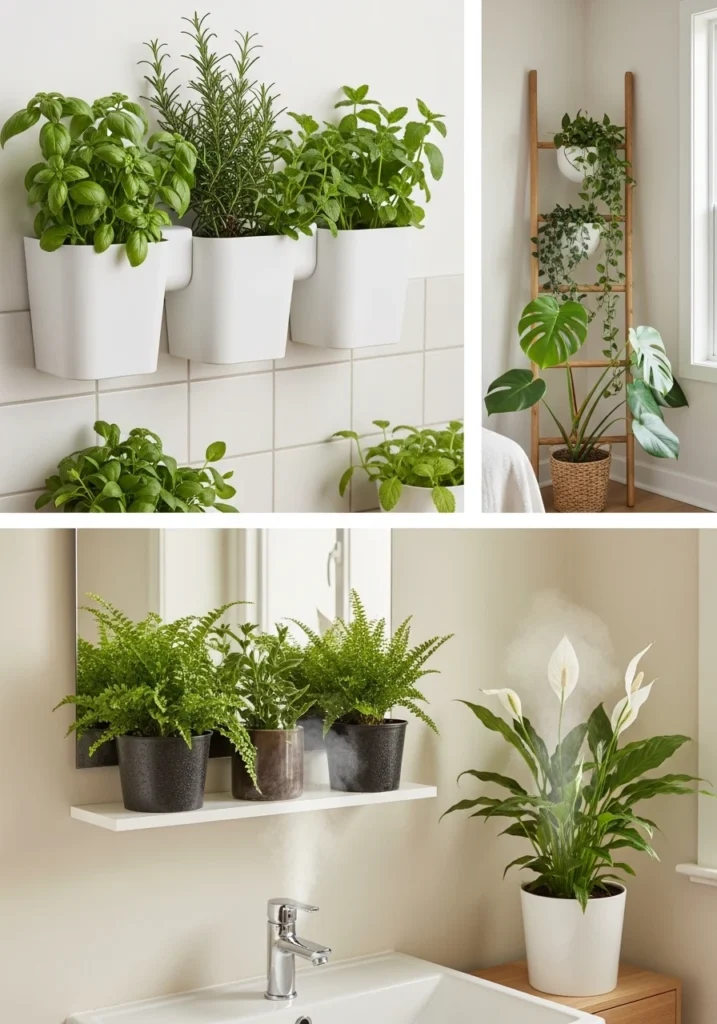
Sometimes the best way to find inspiration is to see how real ideas play out in practice. Here are a few arrangements that work brilliantly for small spaces.
The Kitchen Herb Wall
Mount three or four small wall planters in a row near your kitchen window and fill them with herbs.
Basil, mint, rosemary, and chives all grow happily in small containers and get enough light from a kitchen window.
You get fresh herbs within arm’s reach while cooking, and the wall comes alive with texture and color. It is functional design at its finest.
The Bathroom Shelf Display
Bathrooms tend to be humid, which makes them surprisingly good environments for certain tropical plants.
A small floating shelf with two or three small planters holding ferns, peace lilies, or orchids turns a utilitarian bathroom into something that feels genuinely spa-like.
The steam from showers keeps the plants happy, and the plants keep the space feeling fresh.
The Living Room Corner Stack
Take a tight living room corner and place a tall ladder planter there.
Fill each rung with a mix of trailing plants on the upper levels, mid-size leafy plants in the middle, and a statement plant in a slightly larger pot at the bottom.
The arrangement draws the eye upward, creates an illusion of height, and fills an otherwise dead corner with life.
Caring for Plants in Small Space Planters
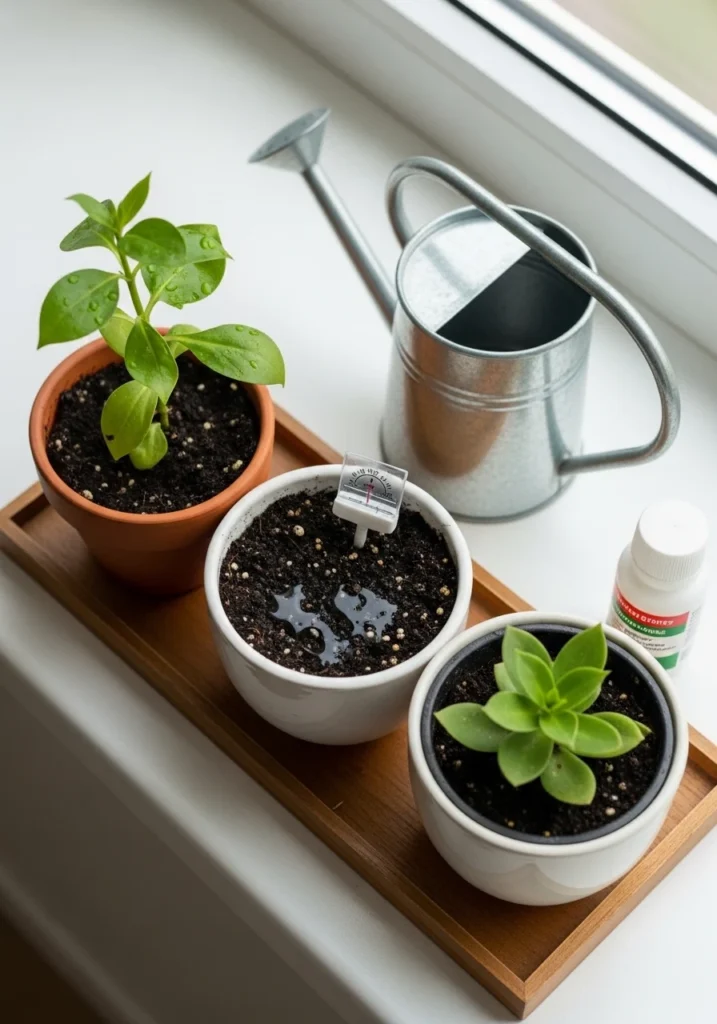
Planters designed for small spaces sometimes need a little extra attention when it comes to plant care.
Smaller containers dry out faster, have less soil volume to buffer nutrients, and can become root-bound more quickly than larger pots.
A few care tips to keep in mind:
- Water more frequently but in smaller amounts. Small planters have less soil to retain moisture, so check them every couple of days rather than once a week.
- Fertilize regularly during the growing season. With less soil comes fewer nutrients, so a gentle liquid fertilizer every two to four weeks during spring and summer keeps plants healthy.
- Repot when roots start escaping the drainage holes. This is your plant telling you it has outgrown its home and needs more space.
- Use high-quality potting mix. Cheap soil compacts quickly in small containers and restricts root growth. A well-draining, quality mix makes a noticeable difference.
Small planters are not forgiving of neglect the same way a large floor pot might be. But if you pay a little more attention, your plants will reward you visibly and quickly.
Explore Indoor Planters on Amazon and Find Your Perfect Match
Final Thoughts
Small spaces and thriving indoor plants are not mutually exclusive ideas.
With the right planters, a smart approach to placement, and a bit of attention to plant care, you can bring genuine life and warmth into any home, regardless of how many square feet you are working with.
The best small space indoor planter is the one that fits your lifestyle, suits your space, and holds a plant you actually want to look at every day. Start small if you need to.
One hanging pothos or a trio of succulents on a windowsill is enough to change how a room feels. And once you see it, you will absolutely want more. That is not a warning. That is just how plants work.
What Are the Best Indoor Planters for Small Spaces?
The best indoor planters for small spaces use vertical or underused areas well. Hanging planters, wall-mounted systems, windowsill planters, and tiered ladder stands are great options.
They free up your floor and counter space while allowing you to grow a beautiful indoor garden. Choose the type that fits your light conditions, watering habits, and home style.
Which Plants Grow Best in Small Space Indoor Planters?
Plants that stay small, fit in limited containers, and adapt to indoor light are best.
Top choices are pothos, spider plants, succulents, snake plants, ZZ plants, peace lilies, and common kitchen herbs like basil, mint, and rosemary.
These plants thrive in small soil volumes and don’t need frequent repotting. This makes them perfect for small planters in apartments and compact homes.
How Do You Keep Plants Healthy in Small Indoor Planters?
Small planters dry out faster and hold fewer nutrients than larger pots. They need more attention. Water them more often, but in smaller amounts. Use a quality, well-draining potting mix.
Apply a gentle liquid fertilizer every two to four weeks during the growing season. Check the drainage holes regularly. Repot into a slightly larger container when roots push out of the bottom.
Are Self-Watering Planters Good for Small Apartments?
Self-watering planters are great for small apartments. They have a water reservoir that slowly feeds moisture to the roots. This means you water less often and lower the risk of overwatering.
They also prevent water damage since extra moisture stays in the reservoir, not on shelves or windowsills. For busy people or those who forget to water, they are a smart and dependable choice.
How Do You Choose the Right Planter Style for a Small Room?
First, check your light conditions. The planter placement should match where your plant will thrive. Next, think about your watering habits, available surfaces, and wall space.
Consider the room’s decor style too. A minimalist space suits concrete or matte ceramic planters. In contrast, a bohemian room looks great with macrame hangers and terracotta.
The goal is to pick a planter that blends naturally into the room, not just an afterthought in the corner.