
You know that feeling when you walk into a room and everything just breathes?
No clutter screaming at you from every corner, no seventeen picture frames fighting for attention, just clean walls and a sense of calm that makes you want to stay forever.
That is minimalist wall decor doing its quiet, powerful thing.
Here is the honest truth: decorating with less is actually harder than decorating with more. Anyone can throw a gallery wall together and call it a day.
But choosing one statement piece and letting it carry the whole room? That takes confidence, intention, and a little know-how.
Let me walk you through the best minimalist wall decor ideas that will make your space look effortlessly put together.
Start With the “One Anchor Piece” Rule
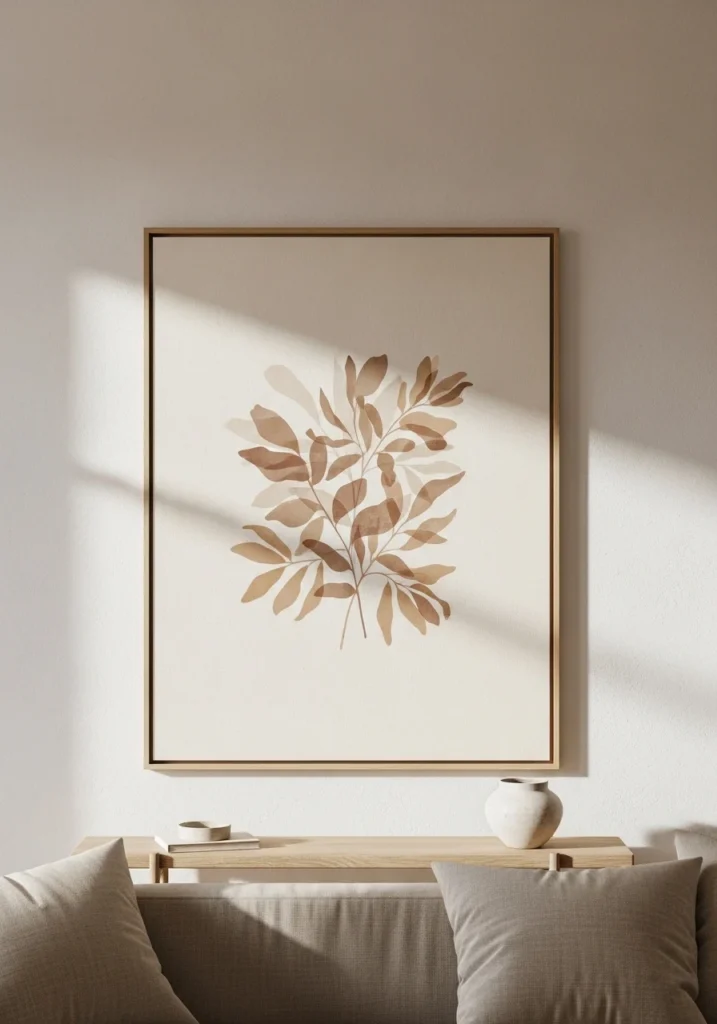
Most people overthink minimalist wall decor by trying to figure out how little they can add. Flip that thinking. Instead of asking “how do I keep it minimal,” ask “what one piece deserves to live on this wall?”
The anchor piece philosophy is the backbone of minimalist decorating. You pick one strong, meaningful item and build the room around it rather than cramming the wall full and hoping it works out.
This could be a large canvas print, a framed botanical illustration, or even an oversized clock.
Why Size Actually Matters Here
Going too small is the number one mistake people make with minimalist walls. A tiny 8×10 print floating on a large wall does not look minimal.
It looks forgotten. Choose pieces that are proportional to your wall space, and when in doubt, go bigger than you think you need.
A good rule of thumb: your wall art should cover roughly two-thirds of the available wall width in that space. It sounds like a lot, but it works every single time.
Shop Minimalist Wall Art On Amazon
Lean Into Neutral Tones and Natural Textures
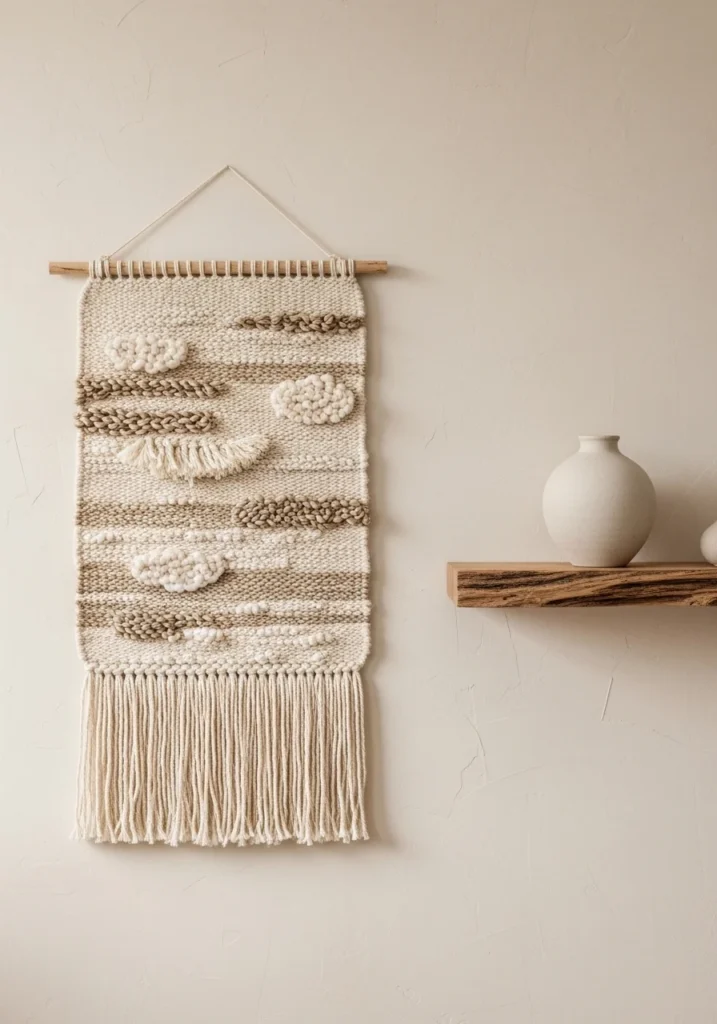
Minimalism does not mean boring. It means intentional. And one of the most effective ways to add visual interest without adding clutter is through texture and tone rather than color and pattern.
Think woven wall hangings in oatmeal and cream, unframed linen panels, raw wood shelves holding a single ceramic vase, or a textured plaster art piece.
These elements add warmth and depth to a space without competing with each other for attention.
The Power of a Monochromatic Palette
Sticking to one color family on your walls creates a cohesive, sophisticated look that feels curated rather than random. Soft whites, warm beiges, sage greens, and dusty blues all work beautifully as a base.
When your wall decor shares tones with your walls, everything blends together in a way that feels peaceful.
You stop noticing individual pieces and start experiencing the room as a whole. That is exactly the effect you are going for.
Try Floating Shelves as Functional Wall Decor
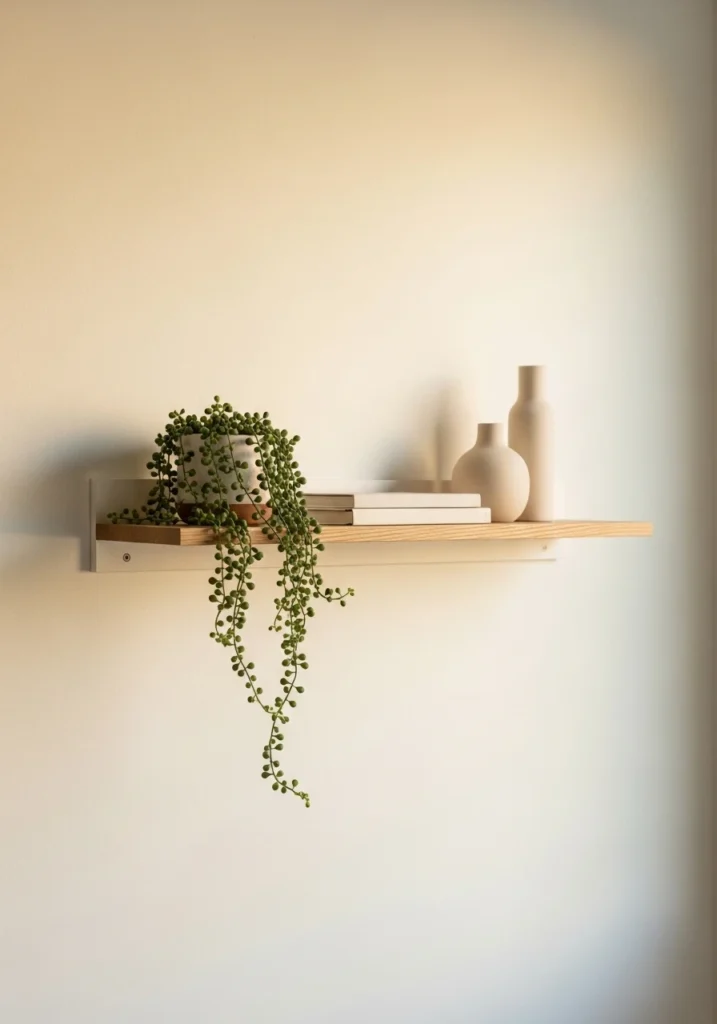
Here is a minimalist wall decor idea that pulls double duty: floating shelves. They add visual structure to a blank wall while giving you a surface to display a few carefully chosen objects.
The key word there is “few.” A floating shelf in a minimalist space should hold maybe three to five items maximum.
One small plant, one ceramic object, one book with a beautiful spine. That is a shelf. Anything more starts to look like a storage solution rather than a design choice.
What to Display on Minimalist Shelves
Keep your shelf styling grounded in these principles:
- Vary the height of objects so the eye has somewhere to travel
- Use odd numbers because they create more visual interest than even groupings
- Leave intentional empty space on the shelf; negative space is part of the design
- Choose objects in similar tones to avoid visual chaos
- Mix one organic element like a plant or stone with manufactured objects
Resist the urge to add more “just to fill it up.” Empty shelf space is not wasted space. It is breathing room, and breathing room is the whole point.
Browse Floating Shelves On Amazon
Use Line Art for Elegant Simplicity
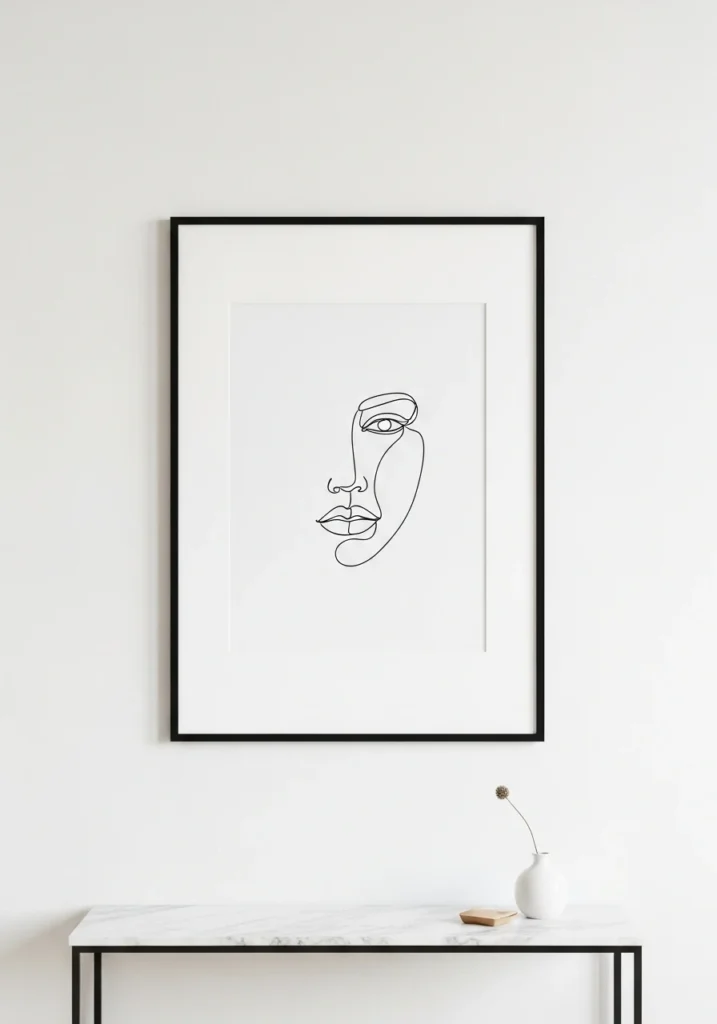
If you have not explored line art as wall decor yet, you are genuinely missing out.
Simple line drawings, whether abstract faces, botanical sketches, or architectural outlines, carry enormous visual impact while keeping things clean and understated.
Line art works because your brain does the heavy lifting. A minimal two-line face drawing suggests an entire emotion.
A single-stroke plant sketch implies a whole garden. You get maximum effect from minimum detail, which is the essence of minimalism.
Framing Makes or Breaks Line Art
The frame you choose for line art matters as much as the art itself. Thin black frames on white backgrounds create a crisp, editorial look.
Natural wood frames soften the piece and make it feel more organic. White frames on white walls create a subtle, tonal effect that is genuinely beautiful.
Avoid chunky ornate frames with line art. The contrast between maximalist framing and minimalist content looks confused rather than eclectic.
Let the simplicity of the art lead, and choose a frame that supports rather than competes.
Find The Right Frames On Amazon
Create a Curated Gallery Wall (The Minimalist Way)
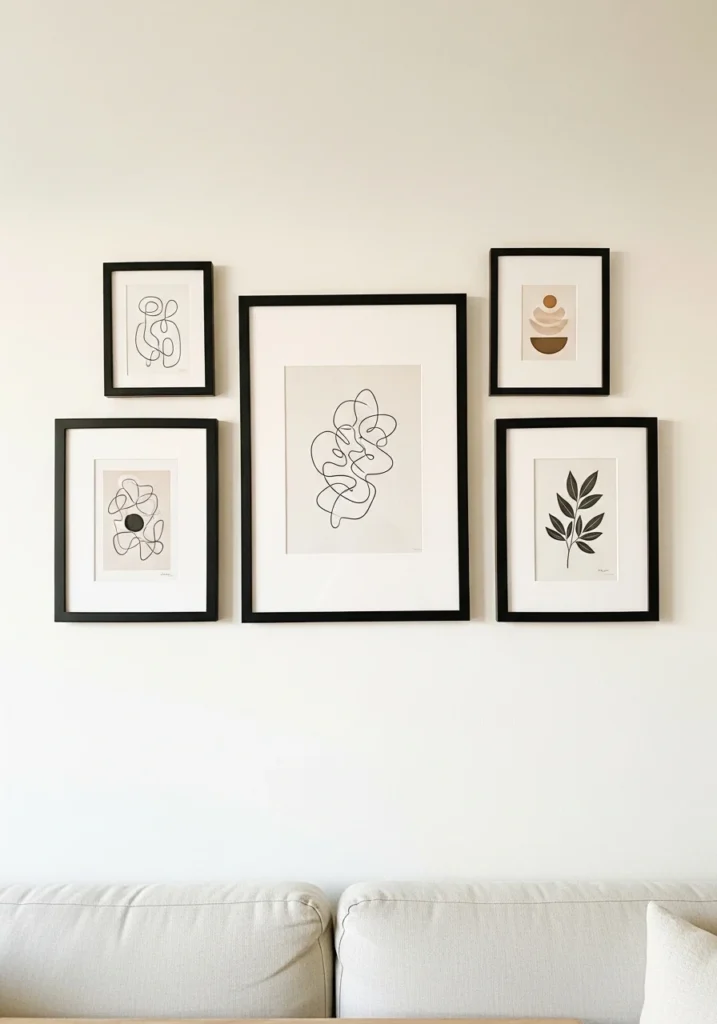
Yes, gallery walls can be minimalist. Before you roll your eyes, hear me out. A traditional gallery wall packs as many frames as possible onto a wall and hopes for visual cohesion.
A minimalist gallery wall uses intentional spacing and a limited number of pieces to create the same layered look without the chaos.
The difference is restraint. Three to five frames, maximum. Consistent frame styles. Generous spacing between each piece. And a clear focal point that anchors the arrangement.
How to Arrange a Minimalist Gallery Wall
Follow these steps for a gallery wall that looks deliberate and calm:
- Choose a unifying element such as frame color, art style, or subject matter
- Limit yourself to three to five pieces and resist adding more
- Space frames at least three inches apart to give each piece room to breathe
- Anchor with one larger piece and flank it with smaller ones
- Step back and edit before committing to any holes in the wall
If you lay your arrangement on the floor first, you can experiment without commitment. And if it looks busy on the floor, it will look busier on the wall. Simplify until it feels right.
Explore Sculptural and Three-Dimensional Wall Decor
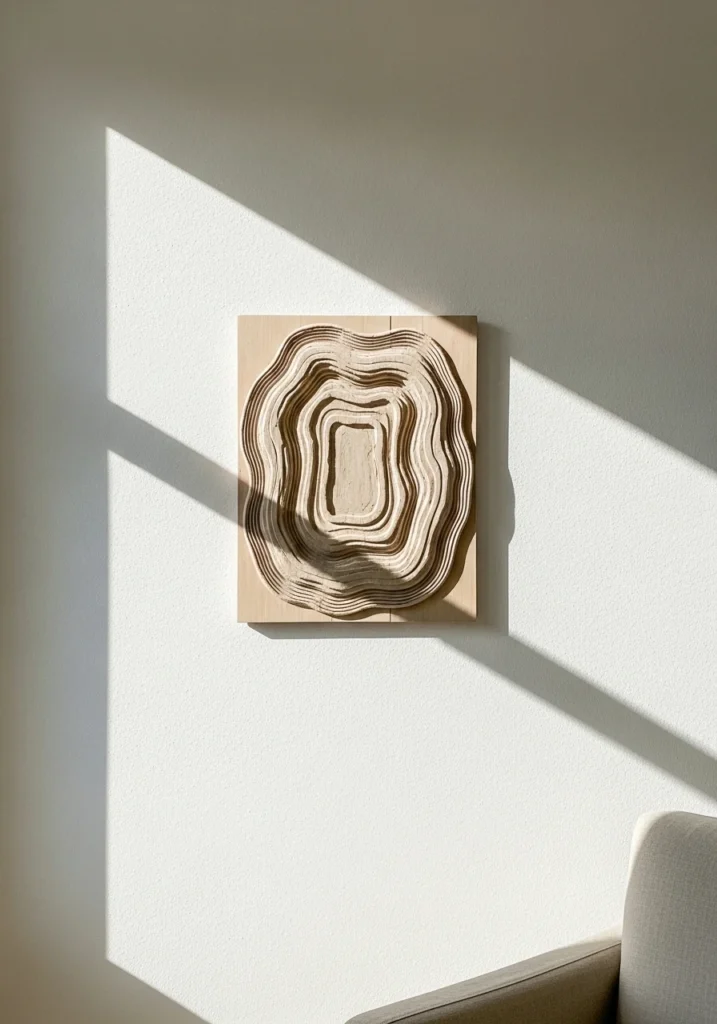
Flat art is not your only option. Sculptural wall decor adds dimension and shadow play that completely transforms a plain wall, and it fits beautifully within a minimalist aesthetic when you choose the right pieces.
Woven macrame in natural cotton, ceramic wall tiles in organic shapes, wooden relief panels, and metal sculptural pieces all work brilliantly.
They catch light differently throughout the day, which means your wall actually looks different in the morning versus the evening. That kind of dynamic quality is hard to achieve with flat art.
Materials That Work Best
Not all sculptural wall decor reads as minimalist. Stick to these material families for the cleanest results:
- Natural wood in raw or lightly stained finishes
- Unglazed ceramic in matte earth tones
- Raw cotton or linen in neutral colors
- Brushed or matte metals rather than shiny or polished finishes
- Stone or concrete for an architectural, grounded look
Avoid heavily embellished pieces with multiple colors or fussy details. The simpler the material palette, the more minimalist the impact.
Shop Sculptural Wall Decor On Amazon
Work With Your Wall Color as Part of the Decor
Here is a perspective shift that changes everything: your wall color is itself a form of wall decor. In a minimalist space, the wall is not just a backdrop. It is an active participant in the design.
A deeply saturated single-color wall in charcoal, terracotta, or forest green makes a bold statement all on its own.
Add one piece of carefully chosen art, and the combination is striking. You do not need ten pieces when the wall itself carries that much visual weight.
When to Let the Wall Speak for Itself
Sometimes the most powerful thing you can do is hang almost nothing. A textured limewash wall, a beautifully painted accent wall, or a wall with architectural detail like exposed brick already has personality.
Adding too much decor to a wall like this is decorating over the design, which undermines both elements.
Trust your instincts here. If you look at a wall and feel like it needs something, it probably does.
If you look at a wall and feel uncertain whether to add something, that uncertainty is often a sign that the wall is already doing its job.
Bring in Organic Elements for Warmth
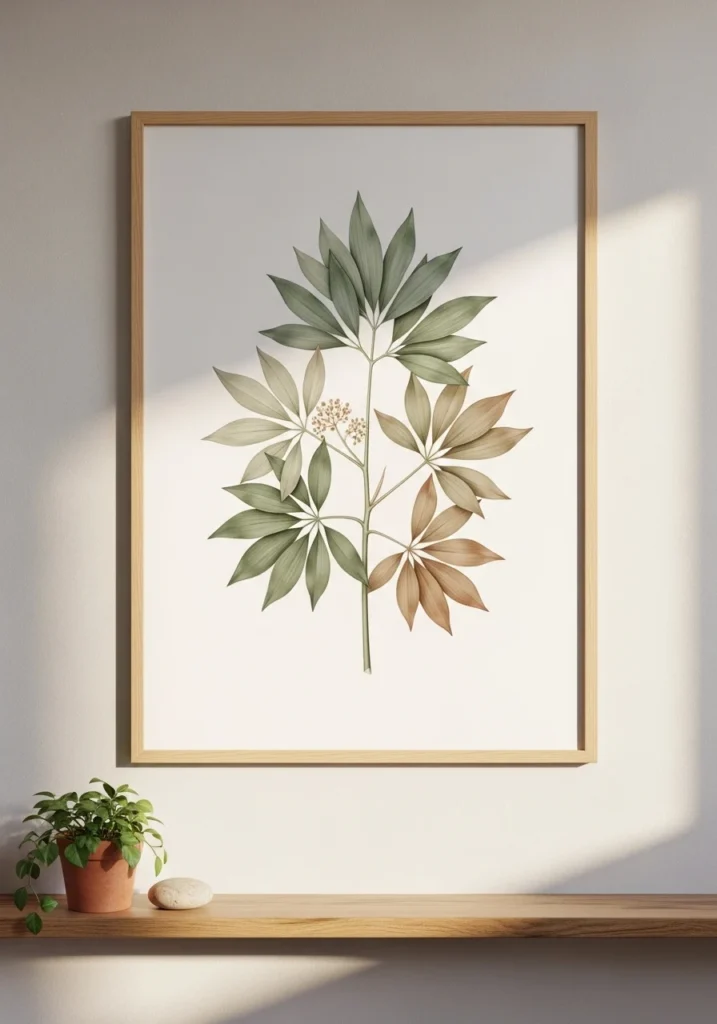
Minimalist spaces can sometimes feel cold if you are not careful. The fix is almost always organic, natural elements that introduce warmth without adding visual noise.
A single large framed botanical print, a pressed leaf arrangement under glass, or even a simple branch mounted horizontally on a wall all bring the organic quality that stops a minimalist room from feeling sterile.
Nature is inherently imperfect, and that imperfection is exactly what makes a minimalist space feel human and liveable.
Explore Organic Wall Decor On Amazon
Final Thoughts
Minimalist wall decor is not about having nothing on your walls. It is about being selective, intentional, and honest about what actually deserves a place in your space.
Every piece you choose should earn its spot, whether through beauty, meaning, or function.
Start with one anchor piece and build thoughtfully from there. Trust the empty space. Edit aggressively and resist the pull to fill every inch of wall.
Your future self, the one who walks into a calm, beautiful room every single day, will be very glad you did.
What Counts as Minimalist Wall Decor?
Minimalist wall decor refers to any wall decoration that prioritizes simplicity, intentionality, and clean visual lines over abundance.
This includes single large-format art prints, line art, sculptural pieces in natural materials, floating shelves with sparse styling, and neutral-toned textiles like macrame or linen panels.
The defining quality is not the absence of decor but the presence of only what genuinely adds value to the space.
How Do I Decorate a Large Wall Without Making It Look Cluttered?
The most effective approach for a large wall is to anchor it with one oversized piece of art or a carefully spaced set of three to five frames rather than filling every inch.
Choosing art that covers roughly two-thirds of the wall width creates a proportional, grounded look.
You can also use a large floating shelf arrangement, a single sculptural element, or a bold paint color to give the wall presence without overwhelming the room.
What Colors Work Best for a Minimalist Wall Decor Style?
Neutral and earthy tones work best for minimalist wall decor because they create visual cohesion without competing for attention.
Soft whites, warm beiges, muted sage greens, dusty blues, and terracotta shades are all strong choices.
Sticking to a monochromatic or tonal palette across both your wall color and your decor pieces ties the space together and reinforces that calm, intentional quality that minimalist design is known for.
Can a Gallery Wall Work in a Minimalist Space?
Yes, a gallery wall can absolutely work in a minimalist space as long as you apply strict restraint.
Limit your arrangement to three to five pieces, use consistent frame styles, and leave generous space between each frame. Choose art with a unifying theme, color, or subject matter.
The goal is for the arrangement to feel curated and deliberate rather than busy or random. When in doubt, remove one piece and see whether the wall looks better for it.
What Is the Biggest Mistake People Make With Minimalist Wall Decor?
The most common mistake is choosing pieces that are too small for the wall. A small print on a large wall does not read as minimal; it reads as an afterthought.
The second most common mistake is over-decorating in the name of minimalism by adding many small “simple” pieces that collectively create clutter.
True minimalist wall decor means fewer pieces chosen with greater care, sized appropriately for the space, and given enough room to breathe on the wall.