
Your living room should feel like a place you actually want to spend time in. Not a showroom. Not a waiting area at a dentist’s office.
A real, lived-in, “I could stay here all day” kind of space. And honestly, one of the easiest upgrades you can make to get there is adding floor cushions.
They are affordable, versatile, and incredibly effective at transforming a stiff, cold room into something warm and welcoming.
Whether you are hosting friends, setting up a movie night, or just want a comfortable spot to sit without fighting over the sofa, floor cushions earn their keep fast.
Why Floor Cushions Deserve a Spot in Your Living Room
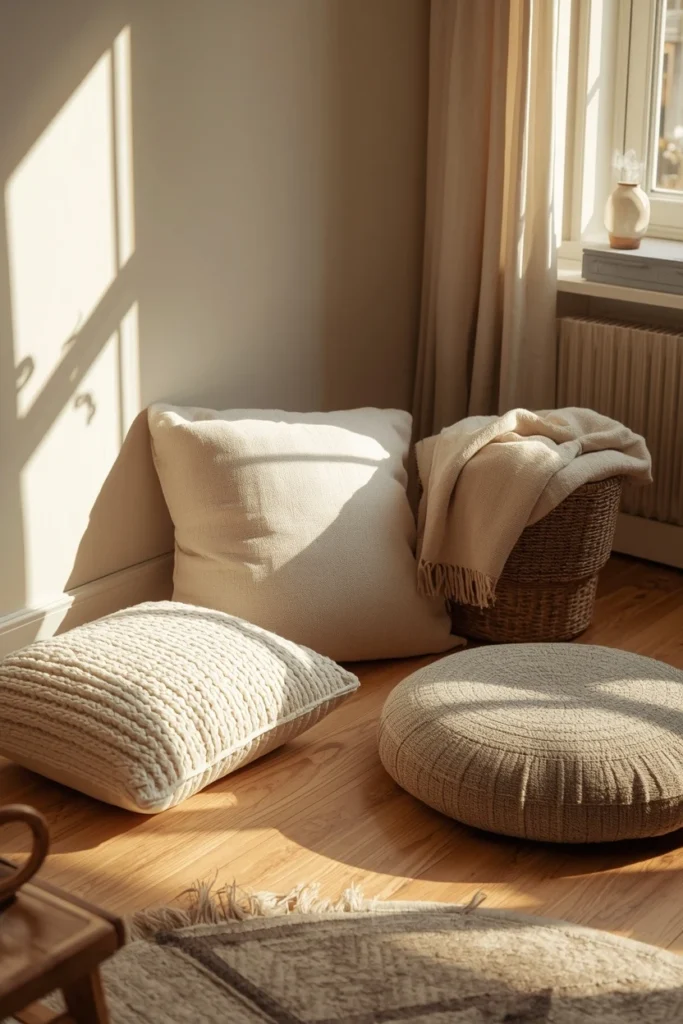
Here is something a lot of people overlook when decorating: seating flexibility.
Most living rooms have one couch, maybe two chairs, and that is it. Add a few more people and suddenly someone is perched on the armrest pretending it is totally fine.
Floor cushions solve that problem without costing you much.
They stack away when you do not need them, spread out beautifully when you do, and they do it without screaming “I ran out of furniture budget.”
They actually look intentional when you choose the right ones, which is exactly what we are getting to.
They Work in Small Spaces Too
Small living room? Good news. Floor cushions do not eat up your square footage the way extra chairs do.
You can tuck them against a wall, layer them in a corner, or slide them under a low coffee table when they are not in use.
They give you seating on demand without permanently occupying space you do not have to spare.
This makes them especially smart for studio apartments or open-plan layouts where every square meter counts.
Choosing the Right Floor Cushion for Your Space
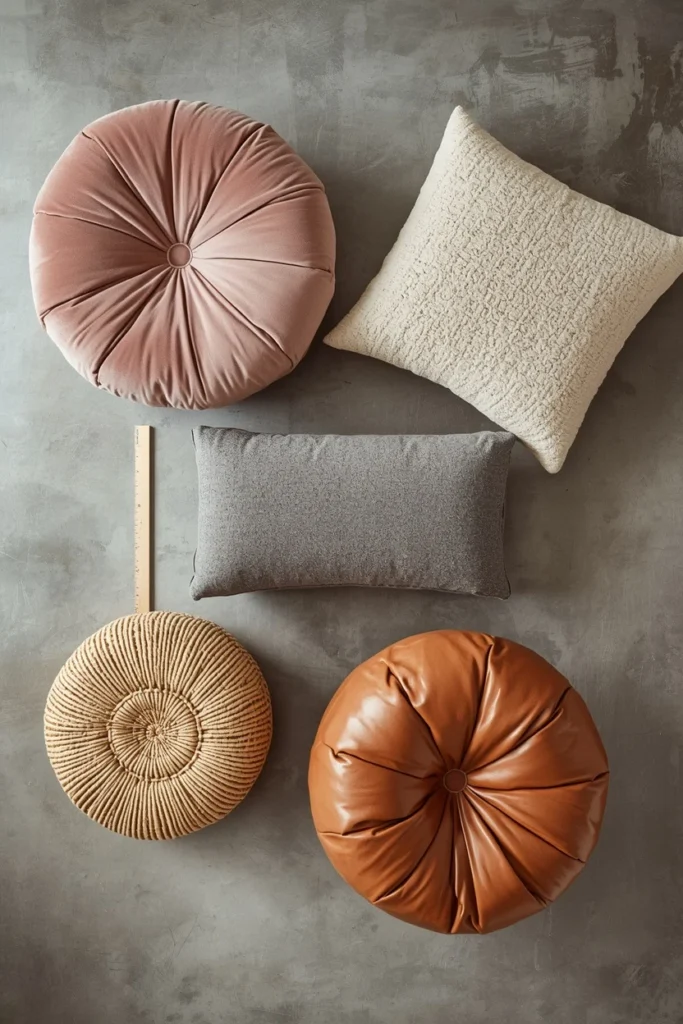
Not all floor cushions are created equal, and picking the wrong one is how you end up with something that looks great in the photo but feels like sitting on a hardcover book.
Here is what you actually need to think about before buying.
Filling Material Matters More Than You Think
The fill is what makes or breaks your cushion experience. The most common options are:
- Foam filling: Firm, holds its shape well, great for people who want solid support. Ideal if you sit upright on the floor a lot.
- Shredded memory foam: Softer and moldable, this gives you that sink-in comfort while still offering decent support. A solid middle ground.
- Polyester fiberfill: Lightweight and budget-friendly, though it tends to flatten faster. Fine for occasional use.
- Buckwheat or natural fill: Heavier and more structured. These mold to your body slowly and feel grounding rather than plush.
If you plan to use your floor cushions regularly, spend a little more on foam or memory foam. Cheap polyester fill feels great for a week and then deflates into a fabric pancake. You know what I mean.
Shop Quality Floor Cushions On Amazon
Size and Shape: Getting the Proportions Right
Floor cushions come in a surprising range of sizes and shapes, and the one you pick should match how you actually plan to use it.
- Round cushions (60 to 80 cm diameter): Great for single-person seating, cozy corners, or as statement pieces next to a coffee table.
- Square cushions (50 to 70 cm): Versatile and easy to arrange in rows or groups. The most popular choice for a reason.
- Rectangular or bolster styles: Better for lounging than sitting upright. These work well against walls as back support.
- Large floor poufs: More of a furniture-adjacent option. They feel substantial and double as footrests.
Match the size to the use. A tiny 40 cm cushion looks adorable but leaves most adults sitting half on, half off.
Materials and Covers: The Look and the Longevity
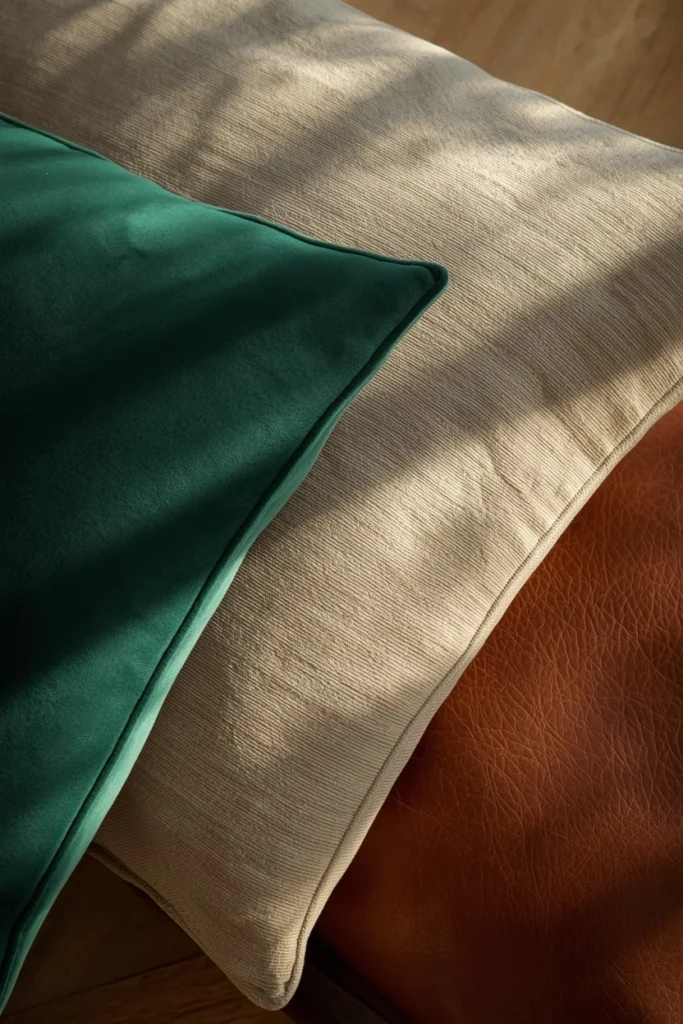
The cover material affects both the aesthetic of your room and how long the cushion stays presentable. This is where a lot of people make impulse decisions they regret.
Best Cover Materials for Living Rooms
- Cotton canvas: Durable, easy to wash, and casual-looking. Works well in relaxed, bohemian, or Scandinavian-style rooms.
- Velvet: Rich and luxurious in appearance, but requires more care. Velvet floor cushions elevate a space quickly. Just keep them away from pets with claws.
- Linen blends: Breathable, textured, and naturally stylish. One of the most popular choices for interior-conscious buyers.
- Leather and faux leather: Easy to wipe clean and durable. These lean modern or industrial in feel and hold up beautifully in high-traffic areas.
- Kilim or woven textiles: Bold patterns and global textures. These cushions act as decor pieces in their own right.
Always check if the cover is removable and washable. If it is not, you are one spilled coffee away from a permanent interior decision.
Browse Floor Cushion Cover Styles On Amazon
How to Style Floor Cushions Without Making It Look Chaotic
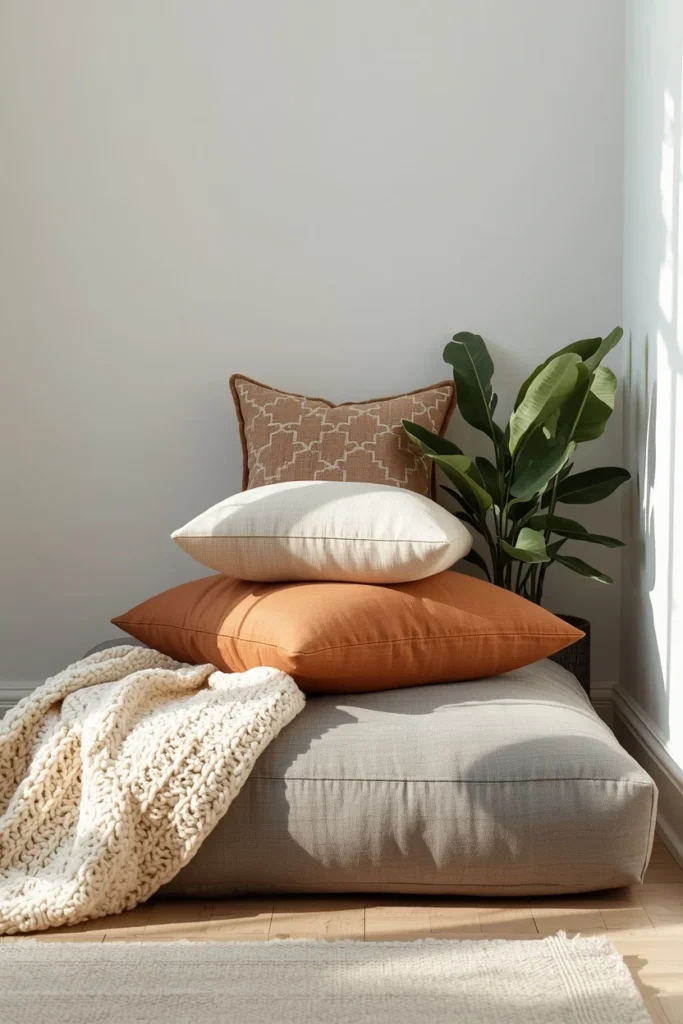
Here is where the fun starts. Floor cushions have a bit of a reputation for making spaces look messy if you just toss them around randomly.
But when you style them with a little intention, they pull a room together rather than pulling it apart.
The Layered Corner Look
Pick a corner of your living room and build a nesting area.
Start with a large rectangular cushion or pouf as the base, add one or two medium square cushions in complementary colors, and maybe a smaller accent cushion for visual interest.
Drape a lightweight throw blanket over the back. Done. That corner now looks like something out of a design magazine.
This works especially well under a shelving unit or beside a low media console. It turns dead space into a destination.
Find Floor Cushions For Your Living Room On Amazon
The Around-the-Coffee-Table Arrangement
Replace or supplement your sofa seating by arranging floor cushions around a low coffee table.
This works best with a Japanese-style or Moroccan-inspired low table, but it adapts to modern minimalist spaces too.
Use cushions of similar height but varied textures and colors to keep it cohesive without being boring.
The trick is to stick to a tight color palette of two or three tones. Go wild with textures. Stay disciplined with colors.
Stacking and Storing Like a Pro
When you have guests over, pull your cushions out and scatter them intentionally. When the night winds down, stack them neatly against a wall or in a basket.
A large woven storage basket filled with rolled or stacked floor cushions actually becomes a decor element on its own. It looks purposeful and makes cleanup effortless.
Floor Cushions for Different Living Room Styles
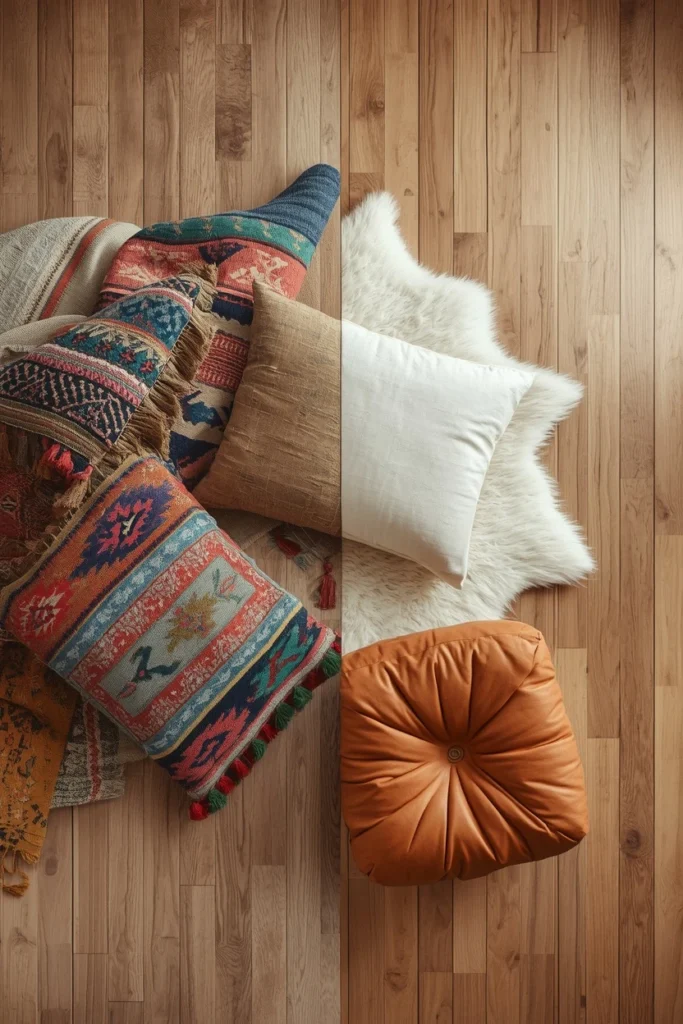
Not every cushion works in every room, and matching your cushions to your existing style makes the whole space feel more pulled together.
Bohemian and Eclectic Rooms
Go for layered textures, rich jewel tones, and global patterns like Moroccan prints or kilim weaves. Mix and match freely but keep the color family consistent. Tassels, fringe, and embroidery all belong here.
Scandinavian and Minimalist Spaces
Stick to neutral tones like cream, oat, grey, and muted sage. Linen and cotton covers in simple shapes work beautifully. The goal is to add warmth without adding visual noise.
Modern and Contemporary Living Rooms
Solid colors in bold, saturated tones make a statement. Think burnt orange, deep teal, or charcoal. Clean lines and leather or faux-leather covers complement modern furniture without competing with it.
Traditional and Transitional Rooms
Velvet cushions in deep burgundy, forest green, or navy add a sense of richness that pairs well with wood tones and classic furniture shapes.
Avoid overly casual materials here. The cushions should feel like a deliberate design choice, not an afterthought.
Shop Floor Cushions By Style On Amazon
Caring for Your Floor Cushions
You have invested in cushions you love. Now keep them in good shape.
- Fluff regularly: Cushions with fiberfill or shredded foam compress over time. Give them a good shake and punch after use to redistribute the fill.
- Rotate usage: If you always sit on the same cushion, it will wear faster than the others. Rotate them to distribute the use evenly.
- Spot clean promptly: Do not let spills sit. Blot them up immediately and treat the area before washing the whole cover.
- Store correctly: Stack or roll cushions rather than cramming them into tight spaces. Compressing them permanently affects the fill.
- Air them out occasionally: Especially if you live in a humid climate, letting cushions breathe in indirect sunlight keeps them fresh.
Making the Investment Worth It
Floor cushions are not a throwaway purchase if you treat them right. A well-made set lasts years and adapts to every phase your room goes through. New color scheme? Swap the covers.
Moving to a smaller space? The cushions come with you and still work. Hosting a crowd? Pull them all out and suddenly you have seating for ten.
The best floor cushion for your living room is the one that fits how you actually live, not just how your room looks in photos.
Think about who will use them, how often, and what kind of comfort they expect. That clarity makes the decision easy.
Final Thoughts
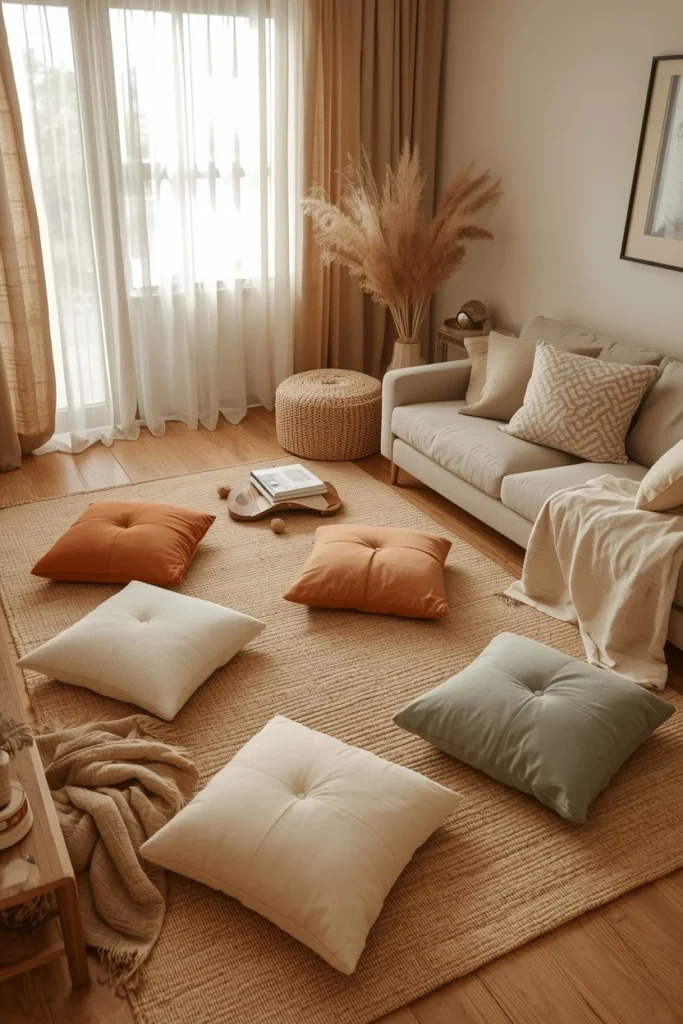
Adding floor cushions to your living room is one of those small changes that makes a surprisingly big difference.
You get extra seating, better ambiance, and a room that actually invites people to sit down, relax, and stay awhile. That is a rare combination at a price that does not require a second mortgage.
Start with one or two quality pieces in a style that suits your room. See how they transform the space. Chances are, you will wonder why you waited this long to try them.
Explore Floor Cushions On Amazon
What Are the Best Floor Cushions for a Small Living Room?
For small living rooms, the best floor cushions are compact square or round styles in the 50 to 60 cm range.
Choose covers in light, neutral tones like cream or oat linen, which make the space feel open rather than crowded. Look for cushions with removable covers so they are easy to store and maintain.
Stackable designs work especially well since you can tuck them out of the way when you need the floor space back.
How Do I Keep Floor Cushions From Going Flat?
The fill material determines how long your cushion holds its shape. Foam and shredded memory foam last significantly longer than polyester fiberfill, which compresses quickly with regular use.
Fluff your cushions after every use by shaking and punching them back into shape. Rotating between multiple cushions also helps distribute wear evenly, so no single cushion takes all the pressure day after day.
Can Floor Cushions Work as Permanent Seating in a Living Room?
Yes, floor cushions can absolutely serve as permanent seating, especially when you pair them with a low coffee table or use them alongside your existing sofa.
The key is investing in high-density foam filling and durable cover materials like canvas, linen, or faux leather.
Poufs and large floor cushions with structured fills handle daily use particularly well. Just make sure the height works for the adults and children who will use them most.
What Cover Material Is Easiest to Clean on Floor Cushions?
Faux leather and canvas covers are the easiest to clean because you can wipe down faux leather with a damp cloth and toss canvas covers in the washing machine.
Velvet and kilim-style covers need more careful spot treatment and are better suited to low-traffic areas or homes without pets.
Always check the care label before buying, and prioritize removable, machine-washable covers if your living room sees heavy daily use or if you have kids around.
How Many Floor Cushions Do I Need for a Living Room?
The right number depends on how you plan to use them. For a casual reading corner or accent setup, two to three cushions are enough to create a cozy vibe without cluttering the space.
If you want floor seating around a coffee table for a group, aim for four to six cushions so everyone has a comfortable spot.
Start with fewer, live with the arrangement for a week, and add more only if the space genuinely calls for it.