
Small entryways can quickly become messy. One day, they are clean and welcoming. The next, you’re stepping over shoes, a backpack, and an umbrella that doesn’t belong.
If your entryway is small, a storage bench might be the best addition.
An entryway storage bench is smart because it serves two purposes. You can sit while putting on shoes, and it hides clutter that would otherwise spread across the floor.
In small spaces, this kind of dual function isn’t just nice; it’s essential.
Why a Storage Bench Makes So Much Sense in a Small Entryway
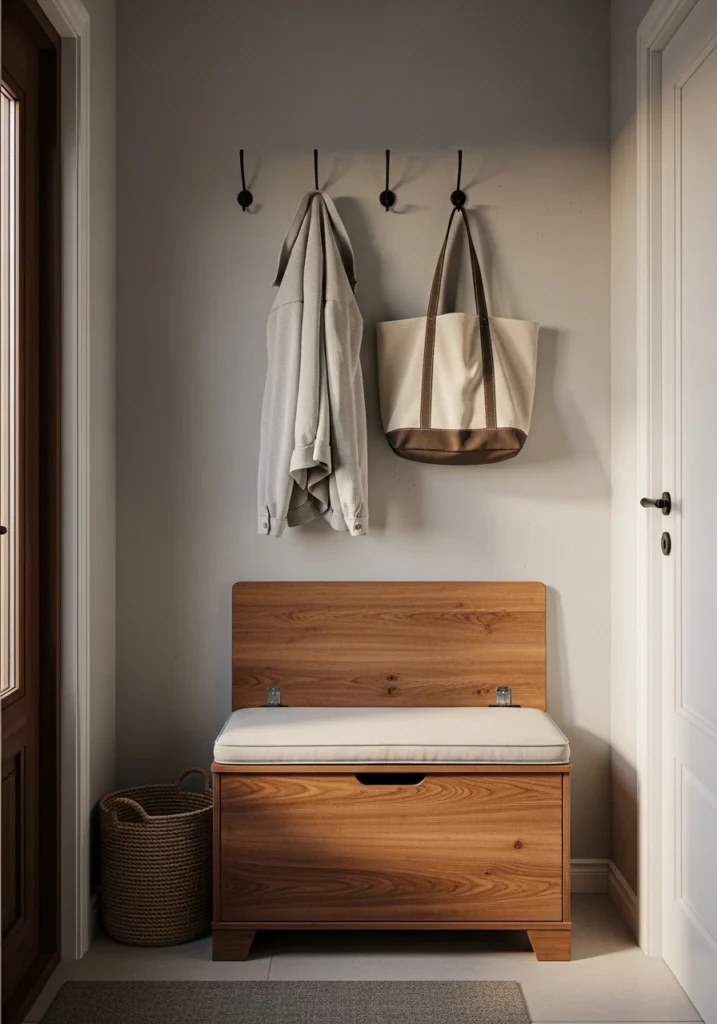
Think about what actually happens in your entryway every single day. You drop things, kick off shoes, set down bags, and leave in a hurry.
A storage bench addresses all of that without demanding extra floor space the way a separate shoe rack and separate seating would.
A good entryway storage bench combines seating, shoe storage, and sometimes even coat or bag organization into one compact footprint.
For small spaces, that consolidation is everything. Instead of four separate items crowding your entryway, you have one well-chosen piece doing the heavy lifting.
The Functional Case Over the Purely Decorative One
A lot of people treat their entryway as purely decorative territory, which honestly explains why so many small entryways are chaotic.
Pretty does not help you find your keys. A storage bench that looks good AND organizes your stuff, though? That is the real win.
The functional argument is simple: less visual clutter makes a small space feel larger.
When your shoes live inside a bench rather than scattered across the floor, the entire entryway immediately reads as more spacious and intentional.
Good design and good organization are not competing goals here; they work together.
How to Choose the Right Storage Bench for a Small Space
Not every storage bench suits a small entryway, and picking the wrong one can make a tight space feel even more cramped. Before you buy anything, you need to think through a few key factors.
Size and Proportions
This one sounds obvious, but it catches people off guard regularly. Measure your entryway before you shop, not after you fall in love with something online.
Note the width of the wall you plan to use, the depth of the space from wall to door, and your ceiling height if you are considering a bench with an overhead shelf or hooks.
As a general rule for small entryways:
- Bench width: Aim for 36 to 48 inches if space allows. Narrower than 36 inches limits storage significantly; wider than 48 inches can overwhelm a compact space.
- Bench depth: Stick to 14 to 18 inches deep. Anything deeper starts eating into walkway space uncomfortably.
- Seat height: 17 to 19 inches is the standard comfortable sitting height for adults.
A bench that respects these proportions will feel purposeful rather than shoved-in.
Open vs. Closed Storage
This is genuinely one of the most important decisions you will make, and the right answer depends entirely on your habits.
Open storage, like cubbies or open shelves beneath the seat, makes it easy to grab shoes quickly and keeps airflow moving.
Closed storage with a lift-up seat hides everything inside and keeps the entryway looking tidy even when the interior is a mess.
Honestly, the lift-up seat style is a personal favorite because it buys you the ability to throw things in there right before guests arrive without anyone being the wiser.
Open cubbies suit people who are naturally organized. Closed lift-top benches suit everyone else.
The Best Entryway Storage Bench Styles for Small Spaces
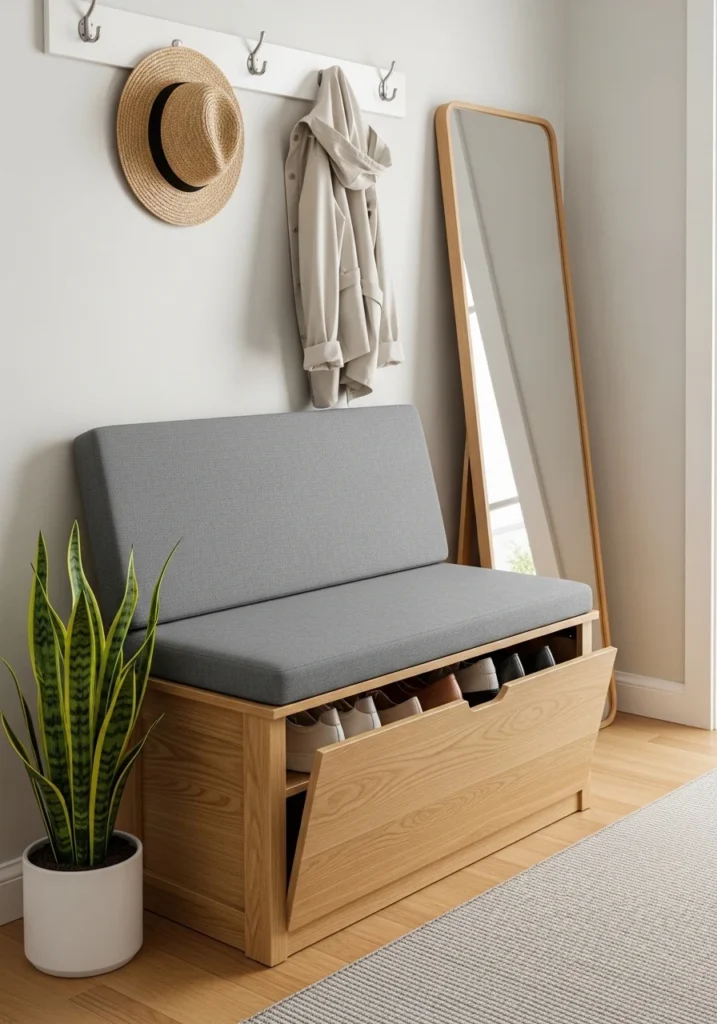
Style matters in a small entryway because the bench often becomes the visual focal point of the space. Here are the main styles worth considering and where each one works best.
Lift-Top Storage Benches
The lift-top bench is the gold standard for small entryways that need maximum hidden storage.
You raise the cushioned seat, toss in shoes, bags, or seasonal items, and close it back down. The entryway looks clean; the chaos lives inside.
Look for lift-top benches with a sturdy hinge mechanism because a flimsy hinge that drops the lid on your hand gets old very fast.
Solid wood or quality engineered wood frames hold up far better than particleboard over time, especially in high-traffic areas.
These benches work particularly well in entryways where visual tidiness is the priority and where you do not need to access the storage items multiple times a day.
Shop Lift-Top Storage Benches On Amazon
Cubby Benches
Cubby benches have individual open compartments beneath the seat, typically sized to hold one or two pairs of shoes each.
They work brilliantly for families because each person can claim their own cubby. No more rooting around trying to find the matching shoe.
Cubby benches with three to four compartments hit the sweet spot for small spaces. They provide enough organized storage without growing so wide that they dominate the entryway.
Pair them with small baskets in each cubby if you want to keep the look tidy while still allowing easy access.
Browse Cubby Benches On Amazon
Floating or Wall-Mounted Bench Options
Here is where things get creative for very small entryways. A wall-mounted bench with storage hooks or shelves above it keeps the floor completely clear, which visually expands the space significantly.
The floor-to-wall transition stays uninterrupted, and that continuity makes a narrow hallway feel wider and longer.
Wall-mounted options work especially well in rental-friendly situations where you want to avoid large furniture commitments, though they do require proper wall anchoring to hold weight safely.
Slim Entryway Benches with Shelf Storage
For the truly tiny entryways where even a standard bench feels oversized, a slim bench with an open lower shelf offers a lighter footprint.
The shelf holds a basket or two for shoes, the top provides seating, and the whole unit stays visually open so the space does not feel boxed in.
These work better when paired with wall hooks above them for bags and coats, since the storage capacity of the bench itself is limited.
Smart Organization Tips to Maximize Your Bench Storage
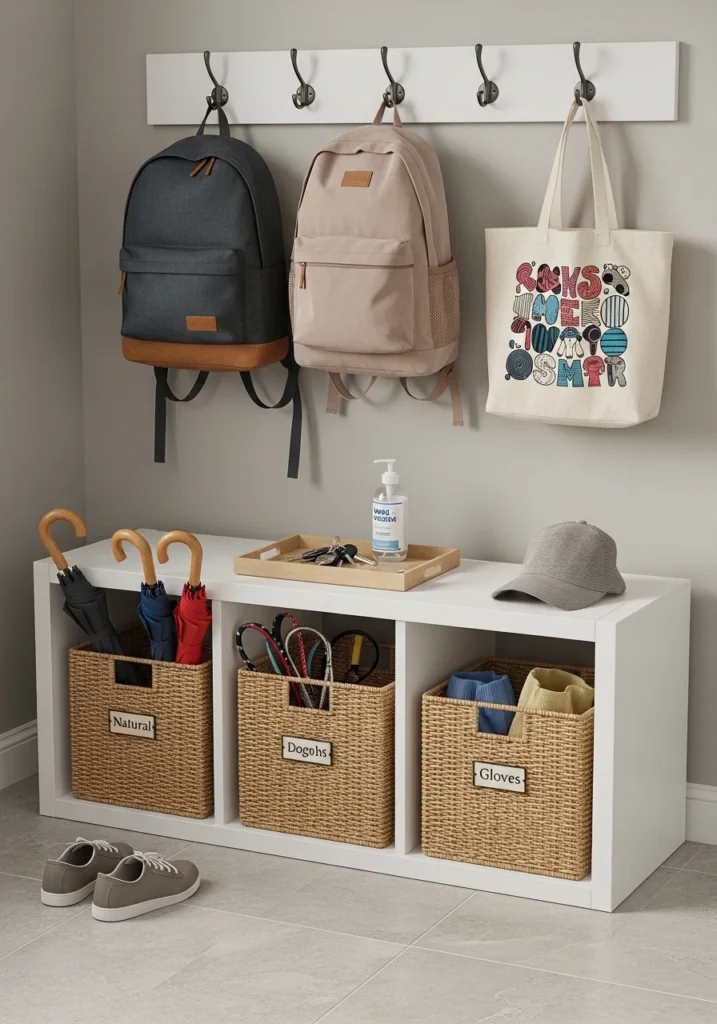
Buying the right bench is half the battle. Using it well is the other half. A few organizational habits make a significant difference in how much a small entryway storage bench can actually handle.
Use Baskets and Bins as Dividers
Whether your bench has open cubbies or a large lift-top compartment, baskets and bins turn an undivided space into an organized one.
Assign one basket to each family member, one for dog walking supplies, one for frequently grabbed items.
Label them if it helps. The goal is to make it obvious where things belong so putting them away takes zero mental effort.
Woven baskets add texture and warmth to open cubby benches. Clear bins work better inside lift-top benches where you need to see what is inside without pulling everything out.
Find Storage Baskets And Bins On Amazon
Rotate Seasonal Footwear
Small entryway storage benches cannot hold every pair of shoes you own. Instead, keep only current-season footwear in your entryway bench and store off-season shoes elsewhere.
This single habit dramatically increases how functional a compact bench feels because you are only storing the shoes you actually reach for right now.
It sounds like common sense, but most people try to cram twelve months of footwear into a space designed for four pairs, and then they wonder why the entryway stays disorganized.
Add Hooks Above the Bench
A storage bench handles floor-level chaos beautifully, but your bags, coats, and scarves need somewhere to live too.
Installing a row of hooks directly above the bench creates a complete entryway storage system without requiring additional floor space.
The bench and the hooks work as a unit, and the vertical use of wall space makes the whole setup feel intentional rather than improvised.
Look for hooks with enough projection to hold a thick winter coat without it dragging against the wall. Five to six inches of projection handles most outerwear comfortably.
Shop Entryway Wall Hooks On Amazon
Material Choices That Work Best for Entryway Conditions
Your entryway takes more abuse than almost any other space in your home. Wet shoes, muddy bags, and daily impact mean the materials in your storage bench need to hold up to real life.
Here is a quick breakdown of the most common materials and how they perform:
- Solid wood: Durable and long-lasting, handles bumps and daily use well. Heavier to move and typically more expensive, but worth it for a piece you plan to keep.
- Engineered wood or MDF: More affordable and widely available. Performs well in most conditions but watch for moisture damage near exterior doors in wet climates.
- Metal frames with wood or upholstered seats: Extremely sturdy and often lighter-looking visually, which suits small spaces well. Easy to clean.
- Upholstered seats: Comfortable but require more maintenance. Choose performance fabric or faux leather for easy wipe-downs rather than standard upholstery fabric.
For a small entryway near an exterior door, a bench that resists moisture and cleans easily beats one that merely looks good in the showroom.
Explore Entryway Storage Benches By Material On Amazon
Styling Your Entryway Storage Bench to Elevate the Space
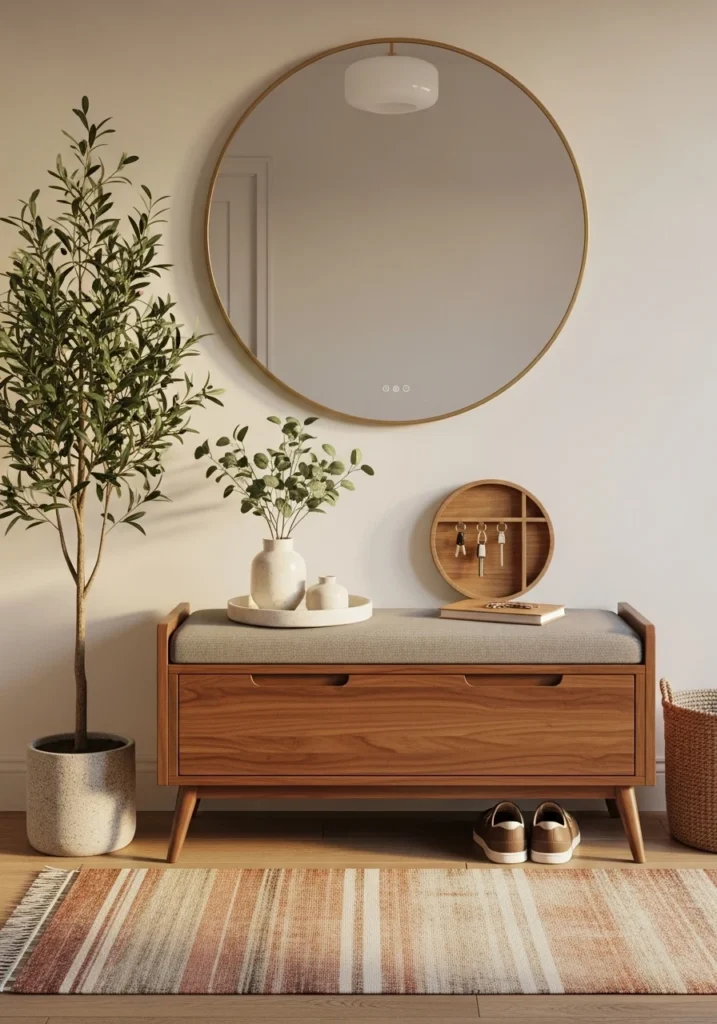
A storage bench in a small entryway has an outsized visual impact, so it is worth styling it thoughtfully.
The goal is to make the bench feel like a deliberate design choice rather than a functional afterthought.
Keep the top of the bench edited. One small tray, a plant, or a single decorative object looks intentional. A pile of random items looks exactly like what it is.
Consider the bench as part of a larger entryway vignette:
- Bench as the anchor piece at seat level
- Hooks or a mirror above the bench at eye level
- A small rug in front of the bench at floor level
- One or two accessories on the bench top for personality
That layered approach, working across three visual levels, creates a complete, considered look that punches well above the size of the space.
Putting It All Together
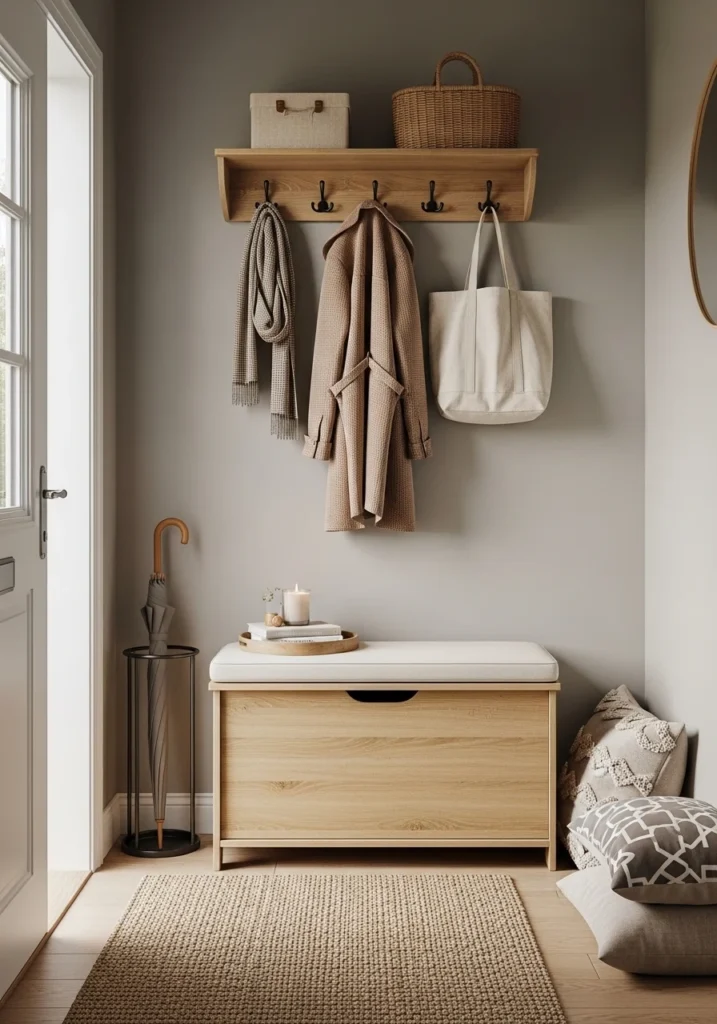
A well-chosen entryway storage bench transforms a small, chaotic entry space into one that works hard and looks great doing it.
The key is matching the bench style and size to your actual space, choosing storage that fits your real-life habits, and styling it as part of a complete entryway setup rather than a standalone piece.
Lift-top benches for hidden storage, cubby benches for family organization, and wall-mounted options for the tiniest spaces all solve the same core problem in different ways.
Pick the one that fits how you actually live, not the one that looks best in a catalog.
Small spaces reward intentionality more than any other kind. When every piece earns its place, even a narrow entryway can feel calm, organized, and genuinely welcoming.
And if a storage bench finally ends the daily shoe chaos at your front door, that alone is worth every penny.
What Is the Best Type of Storage Bench for a Small Entryway?
The best storage bench for a small entryway depends on your habits and space. A lift-top bench offers hidden storage and a tidy appearance.
In contrast, a cubby bench is great for families needing quick shoe access. For the tiniest entryways, a wall-mounted bench keeps the floor clear and makes the space feel larger.
How Wide Should an Entryway Bench Be for a Small Space?
For a small entryway, choose a bench that is 36 to 48 inches wide. A bench narrower than 36 inches cuts your storage space. One wider than 48 inches can overwhelm your area.
Always measure your wall and walkway space before buying. This ensures the bench fits well and doesn’t block foot traffic.
What Should I Store in an Entryway Storage Bench?
An entryway storage bench is most useful for current-season shoes, dog walking items, often-used bags, and small daily essentials.
Don’t use it for off-season shoes or bulky items, as this takes up space and defeats its purpose. Rotating seasonal items in and out keeps the bench functional and easy to manage all year.
How Do I Style a Storage Bench in a Small Entryway?
Style your entryway storage bench with a minimal top. Use one small tray, a plant, or a single decorative item. This looks intentional, not cluttered.
Add wall-mounted hooks above the bench for bags and coats. Place a small rug in front to visually ground the setup.
By using three visual levels, floor, bench height, and eye level, you create a polished look, even in a small space.
What Material Is Most Durable for an Entryway Storage Bench?
Solid wood is the most durable choice for an entryway storage bench. It withstands daily impact, moisture, and heavy use better than most options.
If budget is a concern, consider a metal frame with a wood or upholstered seat. This combo offers great durability at a lower cost.
For entryways near exterior doors, skip standard MDF. Instead, choose sealed wood or metal to avoid warping over time.