
Clutter sneaks up on you. One day, your walls are bare and surfaces clear. The next, every flat space is piled with items that belong elsewhere. Floating shelves solve this issue beautifully.
They don’t take up floor space or make your room feel smaller. I added them to my home a few years ago, and now I can’t imagine my living room without them.
The best part? Floating shelves do two jobs. They provide usable storage and serve as a design feature. If you choose the right style, your shelves will impress guests.
If not, you risk creating a messy wall that looks worse than having no shelves at all. Let’s ensure you succeed with your shelves.
Why Floating Shelves Beat Traditional Shelving Units
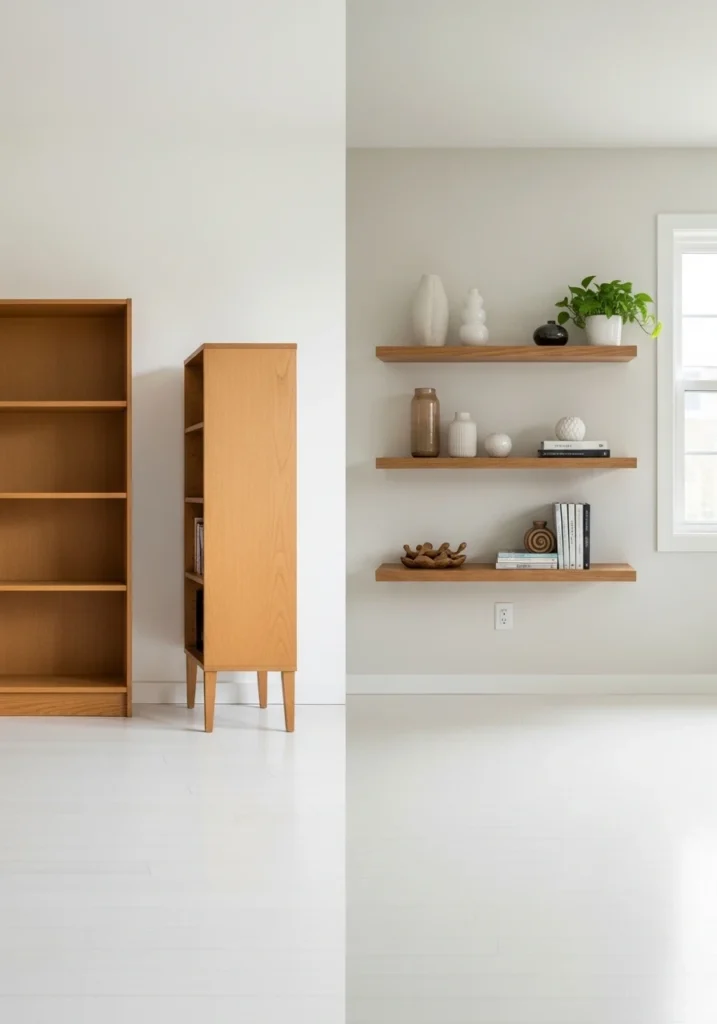
Walk into any furniture store and you will find plenty of freestanding shelving units promising to organize your life. Most of them deliver on storage but fail completely on style.
They bulk up your room, they show legs and backing panels, and they tend to make a space feel more like a storage facility than a home.
Floating shelves solve this by attaching directly to the wall, leaving the floor completely clear underneath. That visual breathing room is not a small thing.
It makes a room feel larger, lighter, and more intentional. There is a reason interior designers reach for floating shelves before almost anything else when a space feels cramped or cluttered.
The Practical Advantages
Beyond aesthetics, floating shelves offer genuinely useful practical benefits:
- Customizable height placement so you can position them exactly where your space needs them
- Flexible width and depth options to match the scale of your wall and what you plan to store
- Easy reconfiguration since most floating shelves can be repositioned without major damage to walls
- Works in every room, from the kitchen and bathroom to the bedroom and home office
- No assembly of bulky units which, let’s be honest, is always a win
The only real trade-off is that floating shelves require proper wall installation to hold weight safely. But more on that shortly.
Choosing the Right Material for Your Floating Shelves
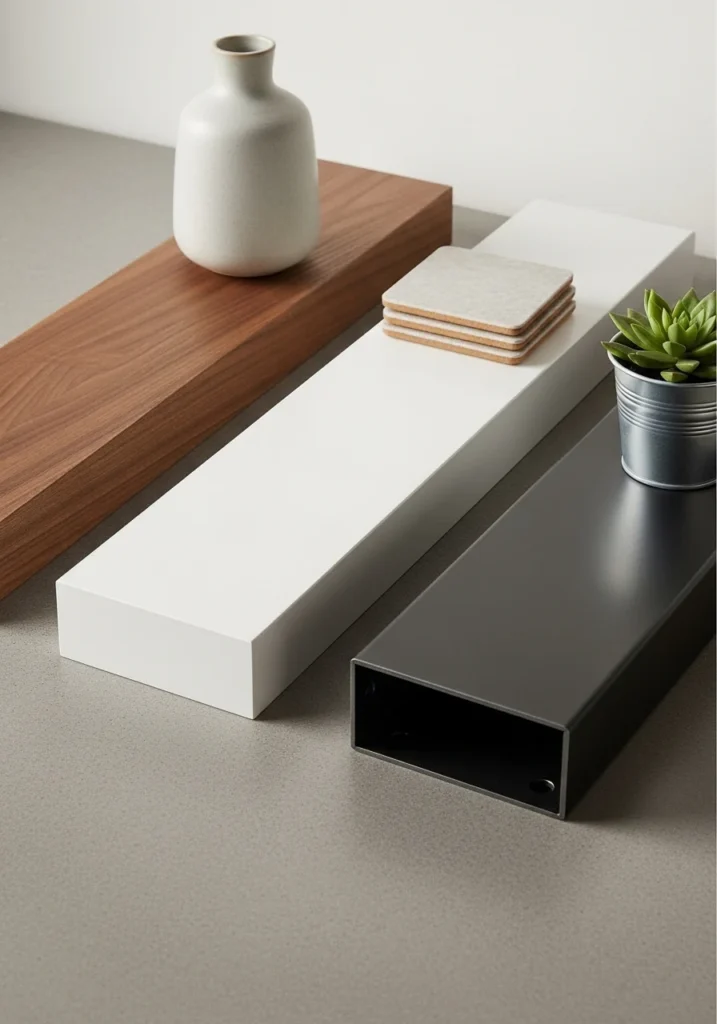
Not all floating shelves are created equal, and the material you choose affects both the look and the long-term durability of your shelves.
Walking into a home goods store without a clear preference is a fast track to decision paralysis.
Solid wood remains the gold standard for floating shelves. It carries weight well, ages beautifully, and offers a warmth that cheaper materials simply cannot replicate.
Walnut, oak, and pine are the most popular choices, each with a distinct character. Walnut reads as rich and sophisticated.
Oak is lighter and works across more design styles. Pine is the budget-friendly option that still looks genuinely good when finished properly.
Shop Solid Wood Floating Shelves on Amazon
MDF and Engineered Wood
MDF (medium-density fiberboard) shelves have gotten significantly better in quality over the years. They offer a smooth, paintable surface and come in at a much lower price point than solid wood.
The catch is that MDF does not handle moisture well and can sag under heavy loads over time. Use them in dry rooms and do not overload them.
For rooms like kitchens and bathrooms where moisture is a factor, look for moisture-resistant MDF or opt for solid wood with a sealed finish.
This small detail saves you from warped shelves and a lot of frustration down the road.
Browse Affordable MDF Floating Shelves on Amazon
Metal Floating Shelves
Metal shelves bring an industrial edge that works beautifully in contemporary, minimalist, and urban-style homes. They handle heavy loads without complaint and age in interesting ways.
The downside is that they feel colder and less versatile than wood, so they work best in spaces where that industrial look is intentional rather than accidental.
How to Install Floating Shelves That Actually Stay Up
Here is where a lot of people run into trouble. A floating shelf is only as good as its installation, and a poorly mounted shelf loaded with books or plants is a genuinely dangerous situation.
The good news is that proper installation is not complicated once you understand the basics.
The single most important rule: always find and anchor into wall studs whenever possible.
Studs provide the structural support that drywall anchors alone cannot reliably deliver, especially for shelves carrying real weight. Use a stud finder before you pick up a drill.
Weight Capacity: Know Your Limits
Every floating shelf system has a rated weight capacity, and you should take it seriously. Here is a rough guide to help you plan:
- Decorative shelves (light items, small plants, books): Look for a minimum capacity of 20 to 30 pounds
- Kitchen shelves (dishes, small appliances): Aim for 40 to 60 pounds or more
- Heavy-duty shelves (large book collections, record players, equipment): 75 pounds and above with proper stud anchoring
Overloading a shelf does not always cause immediate failure. Sometimes it sags slowly over months, which is almost more annoying because by the time you notice, the wall damage is already done.
The Right Hardware Matters
The bracket system hidden inside or behind your floating shelf determines everything about its stability.
Keyhole bracket systems, French cleats, and rod-style hidden brackets are the three most common options, each with different strengths.
Hidden rod brackets give you the cleanest look because there is nothing visible underneath the shelf. French cleats distribute weight across a wider area and work well for heavier loads.
Find Floating Shelf Brackets and Mounting Hardware on Amazon
Styling Floating Shelves Like a Pro
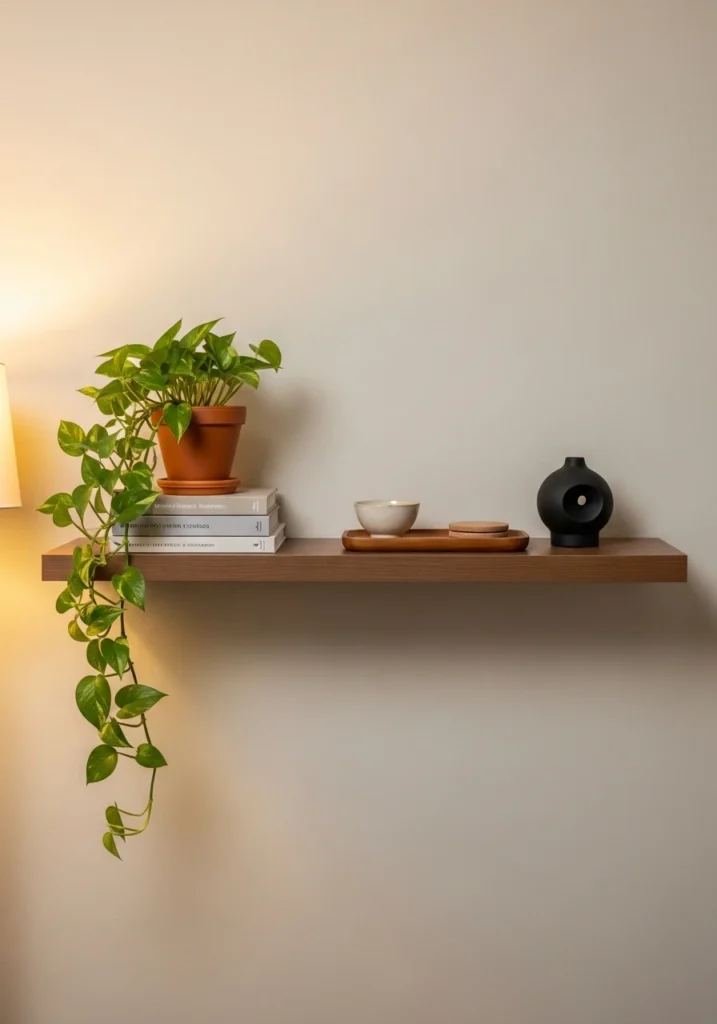
Getting shelves on the wall is the easy part. Styling them so they look intentional rather than like a dumping ground for random objects requires a bit more thought.
Most people either over-style their shelves until they look cluttered, or they under-style them until they look forgotten. The sweet spot sits right in between.
The rule of odd numbers works reliably in shelf styling. Groups of three objects almost always look more dynamic than groups of two or four.
Vary the heights within each group so your eye has somewhere interesting to travel.
Mix textures, such as a smooth ceramic next to a rough-textured basket next to a stack of books, and the whole display comes alive.
Creating Visual Balance
Think of each shelf as its own small composition. A good shelf vignette typically includes:
- One taller anchor piece like a vase, plant, or framed print
- One medium-height object such as a small sculpture, candle, or stacked books
- One low, flat element like a small tray, a coaster stack, or a trailing plant
Leave some intentional empty space on each shelf. That negative space is not wasted real estate. It is what keeps the display from reading as clutter.
Books as a Styling Tool
Books are one of the most underrated styling elements on floating shelves. You can stand them upright, stack them horizontally, face their spines outward or turn them spine-in for a more tonal, curated look.
A mix of vertical and horizontal arrangements adds rhythm to a shelf without requiring any extra purchases.
If your book collection looks a bit chaotic, grouping books by spine color creates an instant visual upgrade that costs exactly nothing.
Shop Decorative Shelf Decor and Styling Accessories on Amazon
The Best Rooms for Floating Shelves (And How to Use Them)
Floating shelves work in virtually every room, but the way you use them should shift depending on the space.
A bathroom shelf and a living room shelf serve very different purposes, and styling one like the other tends to look off.
Living Room Floating Shelves
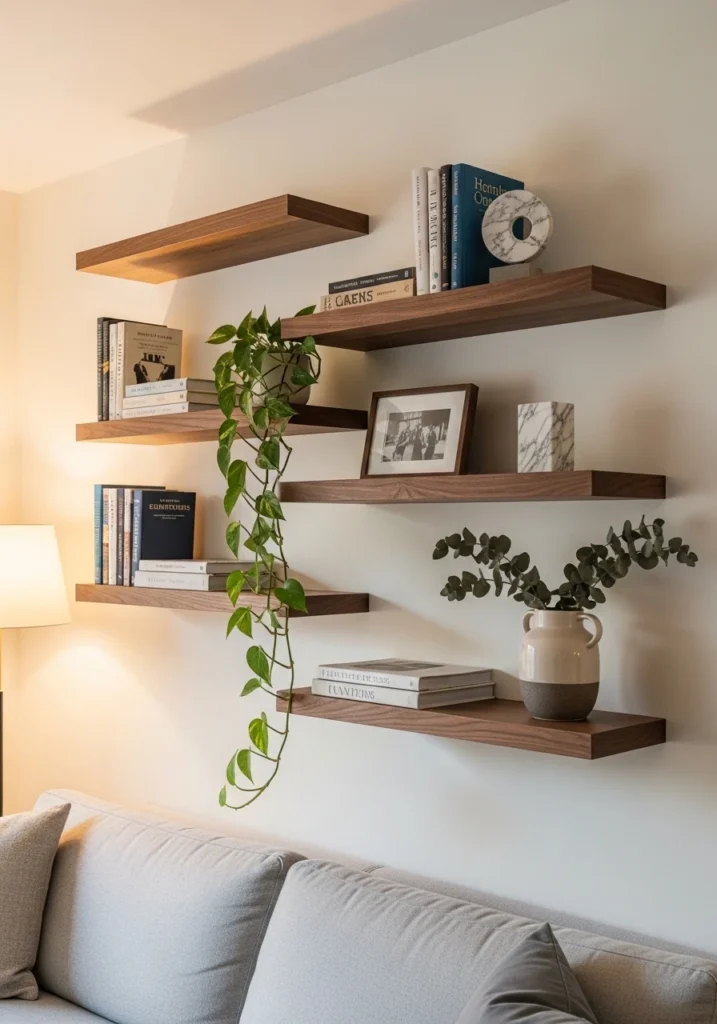
In the living room, floating shelves often serve as a gallery-meets-storage wall.
Grouping three to five shelves at staggered heights creates a dynamic arrangement that draws the eye upward and makes the ceiling feel taller.
Use them to display a mix of books, art objects, plants, and personal items that reflect who you actually are rather than what a catalog says your home should look like.
Kitchen Floating Shelves
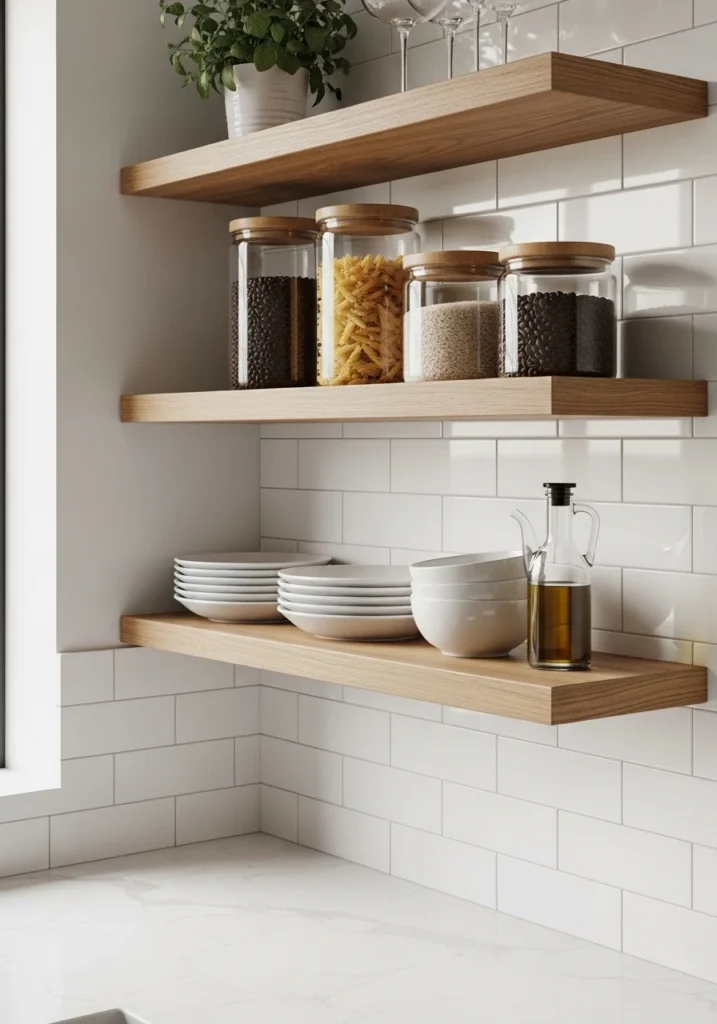
Open kitchen shelving has divided opinion sharply for years, and the people who hate it usually got there because they styled their kitchen shelves without thinking about what gets used daily.
Keep frequently used items at eye level and store them in consistent, attractive vessels rather than letting original packaging sit out. Decant your oils into a nice bottle.
Use a matching set of canisters for dry goods. The uniform containers are what makes open kitchen shelving look deliberate instead of messy.
Bathroom Floating Shelves
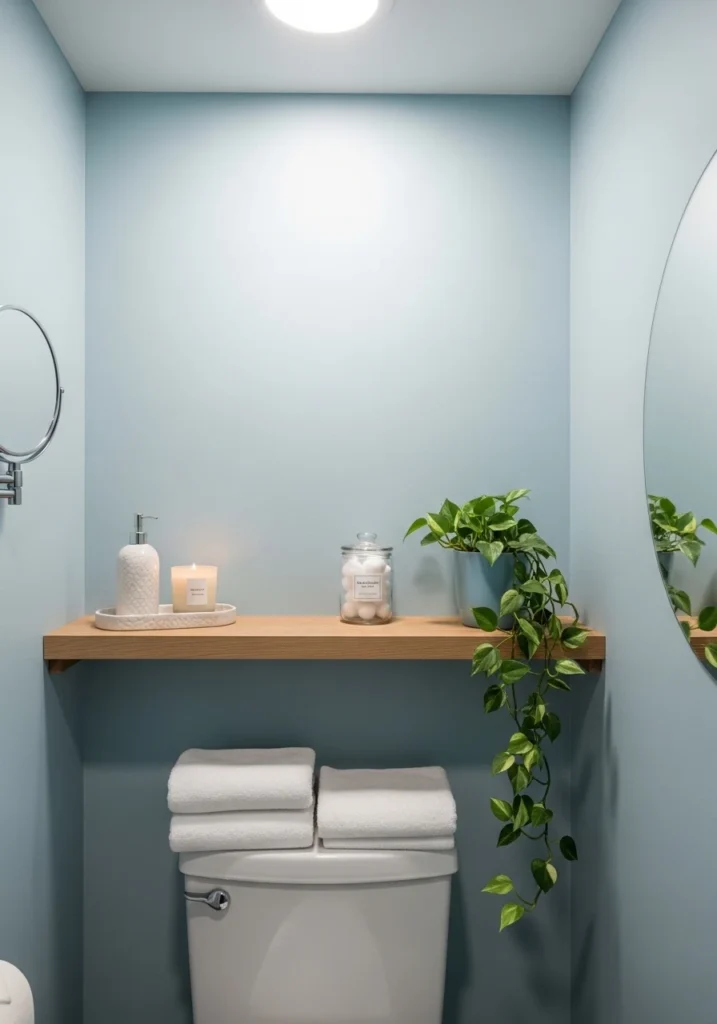
Bathrooms benefit enormously from floating shelves because floor space is almost always tight. A shelf above the toilet, beside the sink, or above a bathtub adds storage without closing in the room.
Keep bathroom shelves tightly edited since a cluttered bathroom shelf reads as significantly messier than a cluttered shelf anywhere else in the house.
A few folded towels, a plant, and two or three well-chosen products is usually enough.
Home Office Floating Shelves
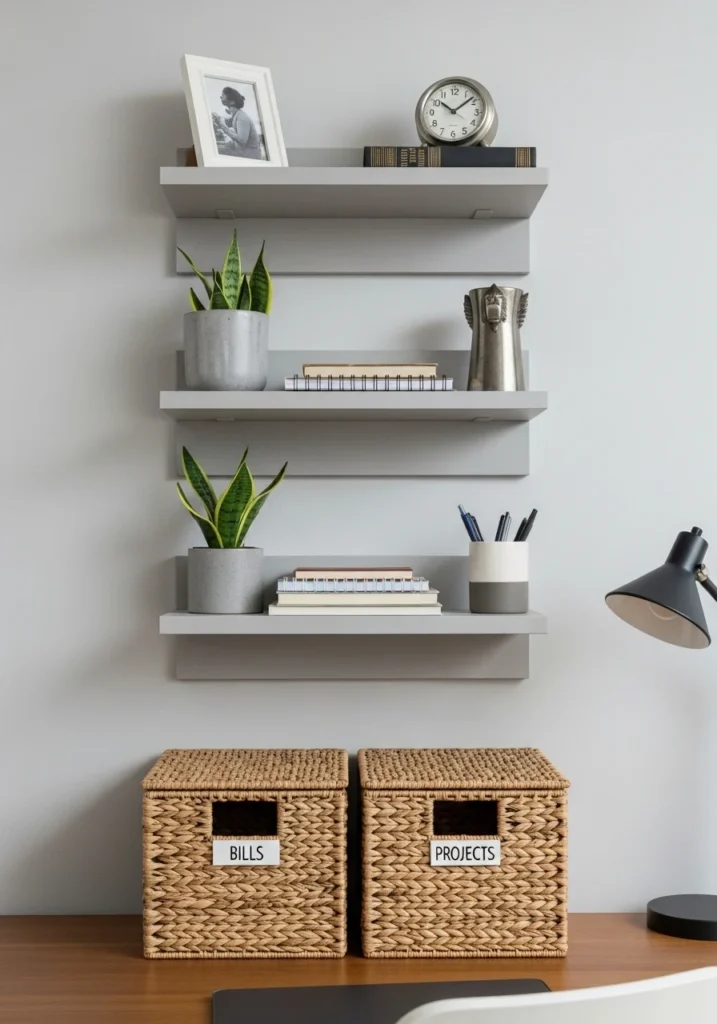
In a home office, floating shelves serve a more functional role. Keep the styling clean and purposeful.
Use labeled boxes or baskets to contain paperwork, cables, and supplies so the shelves look organized even when the contents are not.
A few personal objects or plants soften the space without turning a work environment into a showroom.
Browse Kitchen Floating Shelves and Open Shelving Options on Amazon
Common Floating Shelf Mistakes to Avoid
Even with the best intentions, certain shelf mistakes show up again and again. Knowing what they are makes it much easier to sidestep them.
- Hanging shelves too high: Most people instinctively hang shelves too close to the ceiling. Eye level or just above works better for both usability and visual comfort.
- Using shelves that are too small for the wall: A single narrow shelf on a large wall looks lonely and a little sad. Scale your shelves to the size of the wall they sit on.
- Ignoring weight limits: Already mentioned above, but worth repeating because it genuinely matters for safety.
- Matching everything perfectly: Shelves that look like a catalog display often feel cold and lifeless. Mix materials, heights, and textures for a more lived-in, authentic feel.
- Neglecting the wall color behind the shelves: The wall color plays a big role in how your shelves read. A dark accent wall behind light wood shelves creates striking contrast. A plain white wall suits almost any shelf material and style.
Putting It All Together
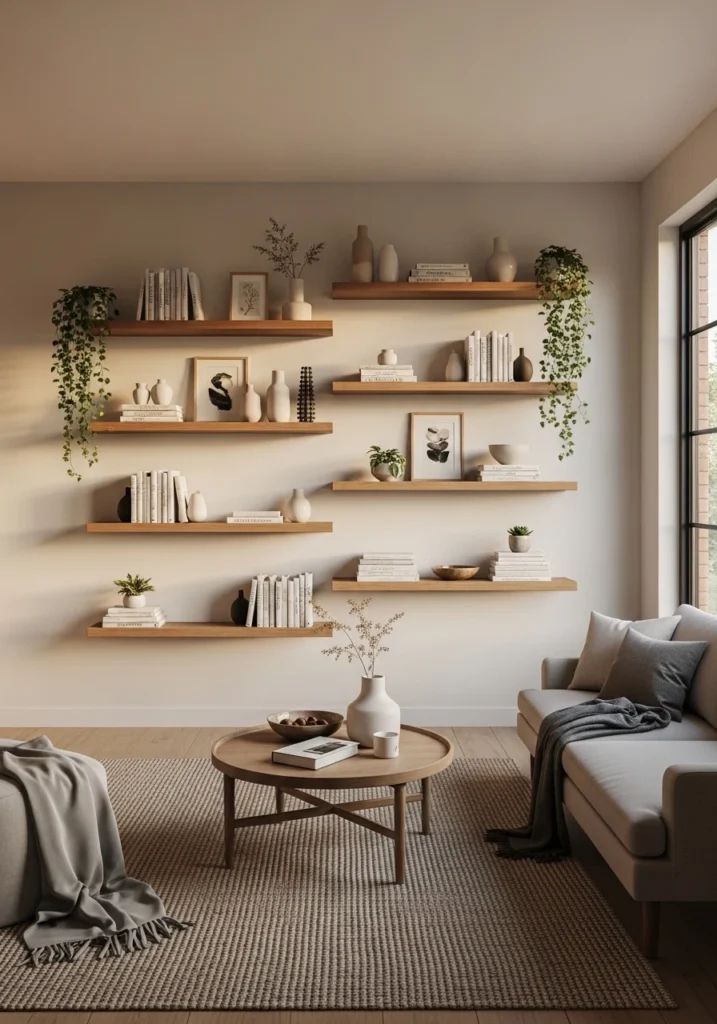
Stylish floating shelves for a clean and organized home are not just a design trend. They are a genuinely practical solution to the age-old problem of needing more storage without sacrificing space or style.
Choose the right material for your room, install with proper hardware into solid anchors, and style with intention rather than impulse.
Start with one wall or one room, get comfortable with the process, and then expand. The difference a well-executed shelf arrangement makes to a room is honestly a little surprising the first time you see it come together.
And once you go floating, going back to freestanding shelving units feels like a very significant step backward.
Your walls are already there. You might as well give them something interesting to do.
Start Shopping Floating Shelves on Amazon Today
What Are the Best Materials for Floating Shelves?
Solid wood, like walnut, oak, and pine, provides great strength and warmth. MDF is a good choice for dry rooms on a budget. Metal shelves fit industrial and minimalist spaces and can handle heavier loads.
How Much Weight Can Floating Shelves Hold?
Weight capacity relies on the bracket system and how well the shelf is anchored. Decorative shelves usually hold 20 to 30 pounds.
Kitchen shelves can manage 40 to 60 pounds. Heavy-duty shelves, secured into wall studs, can support 75 pounds or more.
Do Floating Shelves Need to Be Anchored Into Studs?
For shelves that hold real weight, anchoring into studs is best. Drywall anchors can work for lightweight decorative shelves.
However, for anything holding books, kitchenware, or heavy items, always use a stud for safe, long-term support.
How Do You Style Floating Shelves Without Making Them Look Cluttered?
Group objects in odd numbers. Vary heights within each group. Leave intentional empty space on every shelf.
Mixing textures like ceramic, wood, and natural fiber makes displays look curated, not random. Ruthless editing is the most effective tool.
Can You Use Floating Shelves in a Bathroom or Kitchen?
Yes, material choice is key. In moisture-heavy areas like bathrooms and kitchens, use solid wood with a sealed finish or moisture-resistant MDF to avoid warping.
Keep bathroom shelves neat and use matching containers in kitchens for a clean, organized appearance.