
Stop Drowning in Desktop Chaos
Your desk tells a story about how you work.
If that story currently involves three empty coffee mugs, a tangle of charging cables, a sticky note avalanche, and a printer that you have not used since 2021, then you and I need to talk.
Minimalist desk ideas are not just an aesthetic trend that looks good on Pinterest boards. They genuinely change how you think, focus, and feel while you work.
A clean, intentional workspace gives your brain permission to settle down and actually get things done. So let us talk about how to make that happen.
Why Minimalism and Desk Design Actually Go Together
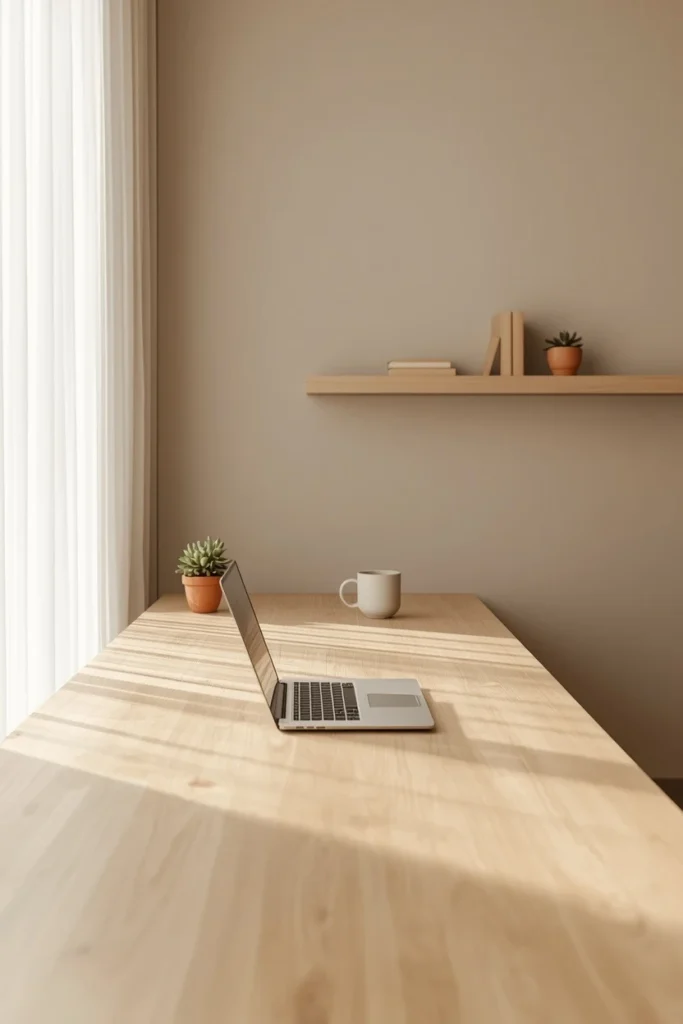
Here is the thing about a cluttered desk: every item sitting on it competes for your attention. Your brain processes each object as a potential task, even when you are trying to focus on just one thing.
Science backs this up. A cluttered environment raises cortisol levels, which is just a fancy way of saying that too much stuff stresses you out.
A minimalist desk removes that visual noise. You keep what you need, you remove what you do not, and suddenly your brain has breathing room.
It sounds almost too simple, right? But that simplicity is exactly the point.
Start With a Clear-Out, Not a Shopping Trip
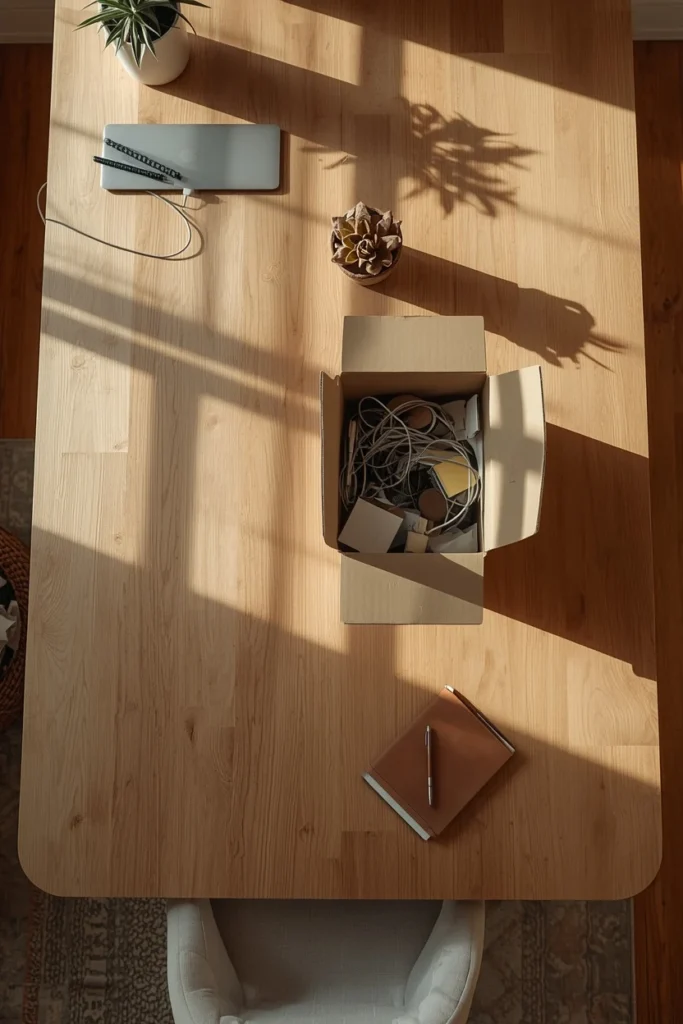
Here is some unsolicited but very sincere advice: before you buy a single cable organizer or bamboo desk tray, get rid of things first. Most people do the opposite.
They buy more stuff to organize their existing stuff, and then their desk just looks like a well-organized mess.
Pull everything off your desk surface. Everything. Then ask yourself one honest question for each item: does this actively support how I work, or is it just living here out of habit?
Keep only what earns its spot. That cheap pen holder with twelve dried-out pens? Gone. The decorative succulent that has been dead for four months? Also gone. Be ruthless. Your future self will thank you.
What Should Actually Stay on Your Desk
Once you have cleared the surface, think carefully about what comes back.
A good general rule is that your desk should hold only the items you use daily or that directly support your workflow. Here is a practical breakdown:
- Your monitor or laptop (obviously, unless you work telepathically)
- A single quality notebook or notepad for quick notes
- One or two pens that actually work
- Your keyboard and mouse if you use them regularly
- A small lamp if your space needs better lighting
- One personal item like a plant or a small framed photo, just one
That last point matters. Minimalism does not mean cold and lifeless. It means intentional. One well-chosen personal item adds warmth without chaos.
Minimalist Desk Setups That Actually Work
Let us talk about specific desk arrangements that look clean and support real productivity.
These are not fantasy setups from interior design magazines where nobody actually works. These are practical ideas you can pull off today.
The Single Monitor Float Setup
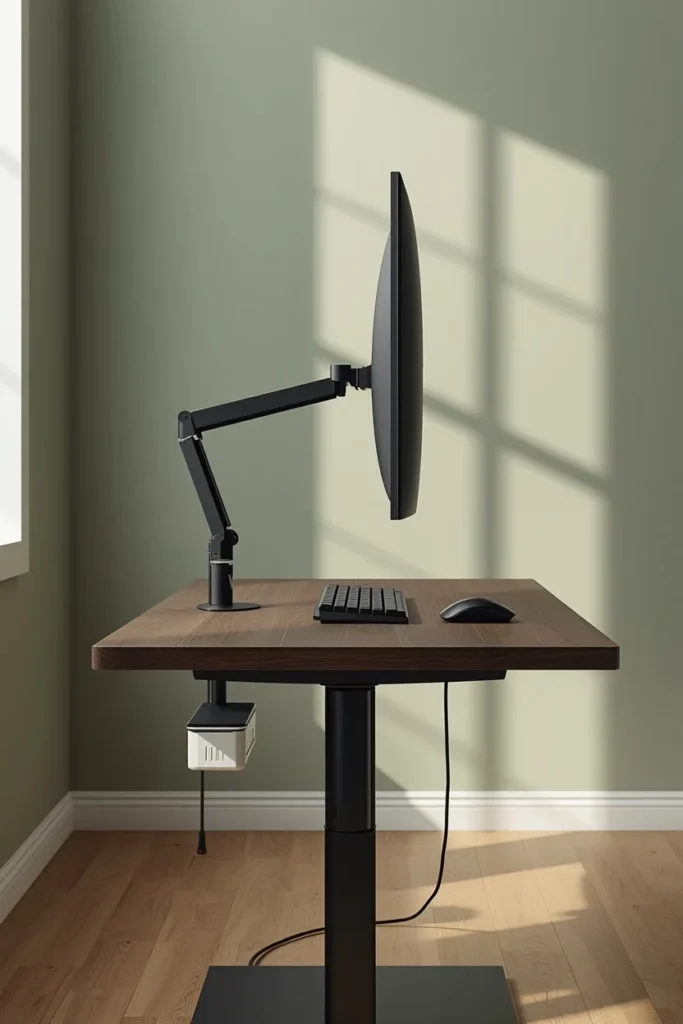
This setup centers a single monitor, raises it to eye level with a clean monitor riser or arm, and keeps the surface beneath it completely clear.
The keyboard and mouse sit on the desk surface only when in use. Everything else lives in a drawer or a nearby shelf.
The monitor arm is the real hero here. It lifts your screen off the desk, freeing up the entire surface below it.
You gain workspace, improve your posture, and the desk looks immediately more expensive than it is. That is a triple win by any measure.
Shop Monitor Arms And Risers On Amazon
The Cable-Free Illusion
Nothing ruins a minimalist desk faster than cable spaghetti. Even the cleanest setup looks chaotic when six different cords snake their way across the surface.
A few tools solve this completely:
- Cable clips that attach to the desk edge and guide cords downward
- A cable management box that hides power strips and excess cord lengths
- Velcro cable ties to bundle cords together cleanly
- A wireless charger to eliminate phone charging cables entirely
- A USB-C hub to reduce the number of individual cables running to your laptop
Spend thirty minutes sorting your cables once, and you will never have to deal with that particular kind of misery again.
Browse Cable Management Solutions On Amazon
The Drawer-First Philosophy
If your desk has drawers, use them aggressively. The goal of a minimalist surface is not to own fewer things. It is to store more things out of sight.
Your desk surface is prime real estate. Treat it like it costs money per square inch, because in terms of your mental clarity, it basically does.
Keep your desk surface for active work only. Everything else goes in a drawer, on a shelf, or in a cabinet.
Scissors, tape, extra pens, chargers, notebooks you reference occasionally, all of it belongs off the surface and within reach but out of sight.
Choosing the Right Desk for a Minimalist Setup
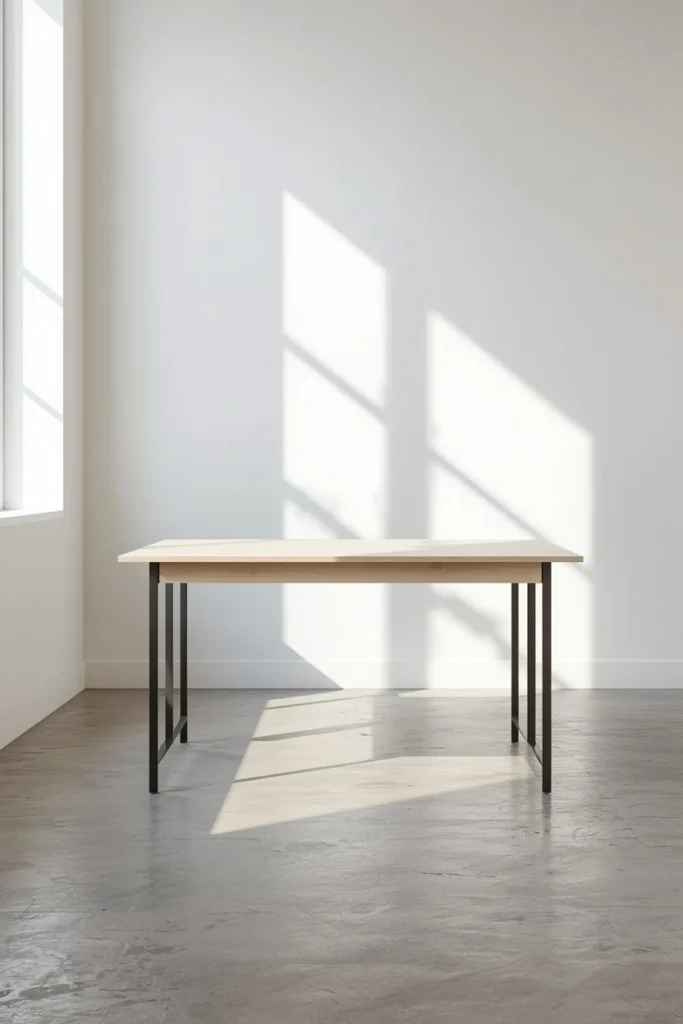
The desk itself matters more than most people realize. Some desk styles naturally support a cleaner look, while others work against you from the start.
Go Flat and Simple
Look for desks with clean lines, minimal ornamentation, and a flat uninterrupted surface. Avoid desks with built-in hutches, multiple fixed shelves, or elaborate storage that locks you into a specific layout.
Flexibility matters. You want a desk that adapts to your workflow, not one that imposes its own structure on you.
Light wood tones, white finishes, and matte black surfaces all work beautifully for minimalist aesthetics.
The material matters less than the silhouette. Keep the shape simple and the surface large enough for comfortable work without excess.
Consider a Standing Desk
Standing desks have moved from trendy to genuinely practical. A height-adjustable desk encourages you to shift positions throughout the day, which improves both comfort and focus.
More importantly for a minimalist setup, the act of adjusting your desk height gives you a natural reason to clear the surface regularly.
When you lower your desk, you tidy it. When you raise it, you tidy it again. That built-in habit loop keeps your workspace cleaner with almost no extra effort.
Explore Height-Adjustable Desks On Amazon
Color and Lighting: The Invisible Elements of a Minimalist Desk
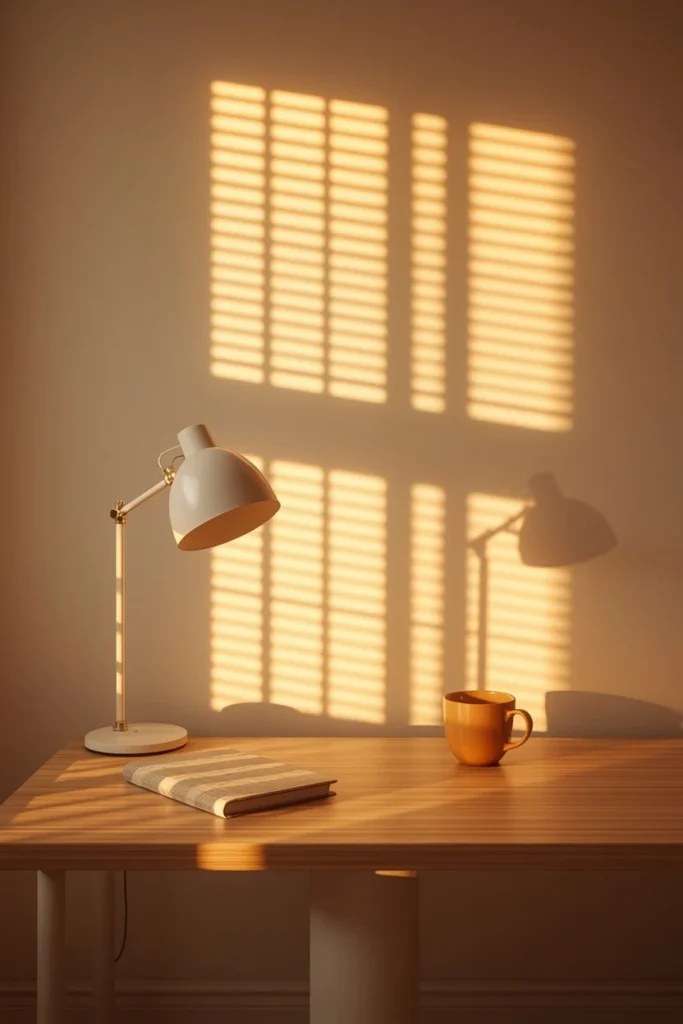
People obsess over storage and organization, but they completely overlook how much color and lighting affect the feel of a workspace. A perfectly organized desk in a dim, cluttered room still feels stressful.
Natural light is your best friend. Position your desk near a window if at all possible.
Natural light reduces eye strain, boosts mood, and makes your space feel more open even without adding a single square foot of room.
For your desk lamp, choose something clean and functional. A simple LED task lamp with adjustable brightness does everything you need without adding visual clutter.
Avoid novelty lamps or anything that draws more attention to itself than to your work.
Keep your color palette consistent and calm. Neutral tones on your walls and desk surface, a simple desk mat in a solid color, and one or two intentional accents create a space that feels cohesive rather than chaotic.
Find Minimalist Desk Lamps On Amazon
The Maintenance Habit Nobody Talks About
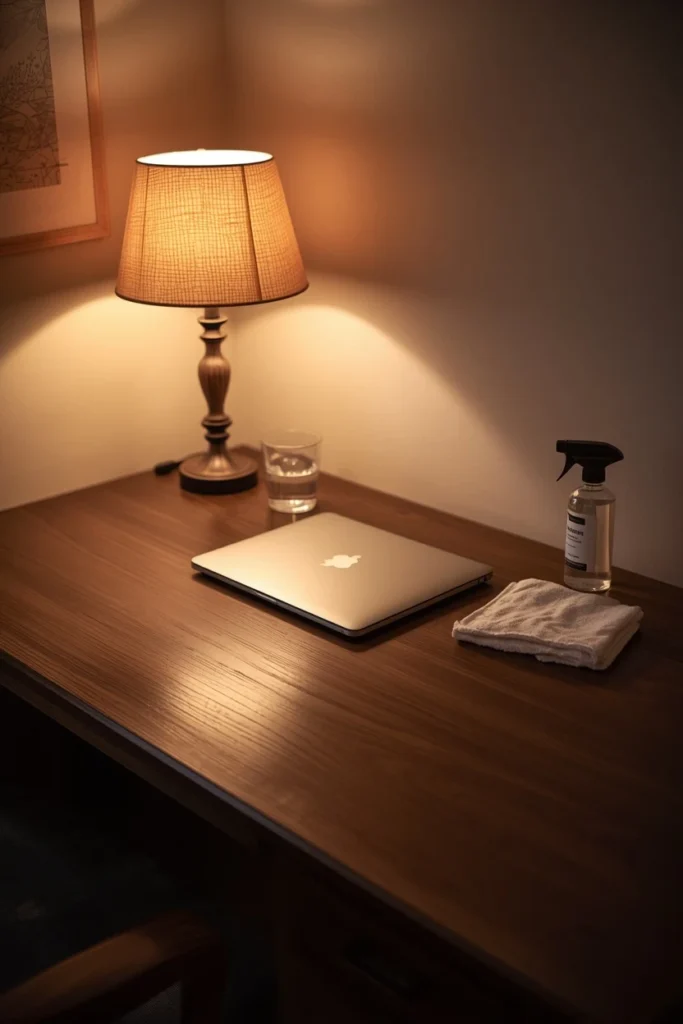
Here is the part that most minimalist desk guides skip entirely: maintaining a clean desk takes about five minutes a day. That is it. Five minutes.
At the end of each workday, clear your surface, put things back where they belong, and wipe down your desk.
This tiny habit compounds dramatically over time. Your desk stays clean because you never let clutter accumulate past a single day’s worth.
A clean desk at the end of today is a productive start tomorrow. That five-minute reset is one of the highest-return habits you can build into your workday.
Wrapping It Up
A minimalist desk is not about owning the least possible amount of stuff or creating a workspace that looks like it belongs in an architecture firm brochure. It is about removing friction.
Every unnecessary item on your desk is a small tax on your attention, and those taxes add up faster than you think.
Clear the surface, manage the cables, choose your desk setup deliberately, and commit to the five-minute daily reset.
Do those four things consistently, and you will have a workspace that actually supports the way you think and work.
Now stop reading and go move that dead succulent off your desk. You know the one.
What Makes a Desk Setup Minimalist?
A minimalist desk setup prioritizes function over accumulation. It keeps only the items you use daily on the desk surface and moves everything else out of sight into drawers, shelves, or storage boxes.
The goal is a clean, distraction-free surface that supports focused work rather than one that reflects every task you have ever half-started.
Neutral colors, simple desk lines, managed cables, and deliberate personal touches all contribute to a genuinely minimalist look and feel.
How Do I Start Decluttering My Home Office Desk?
Start by removing every single item from your desk surface completely. Then evaluate each object honestly before allowing it back. Ask yourself whether you used it in the last week.
If the answer is no, it belongs in a drawer, a storage area, or the bin. Most people discover that only five to eight items genuinely belong on their desk at any given time.
Do the clear-out before you buy any organizers or storage products, because buying more containers to hold unnecessary clutter just relocates the problem instead of solving it.
What Is the Best Desk for a Minimalist Home Office?
The best desk for a minimalist home office has a flat, uninterrupted surface, clean straight lines, and no built-in hutches or fixed overhead shelving that limits your layout flexibility.
Height-adjustable standing desks work particularly well for minimalist setups because they encourage you to tidy the surface each time you adjust the height.
In terms of finish, light wood tones, matte white, and matte black surfaces all photograph well and age cleanly. Prioritize surface area and simplicity of form over built-in storage features.
How Do I Manage Cables on a Minimalist Desk?
Cable management is one of the highest-impact improvements you can make to a minimalist desk setup. Run cables along the back or underside of your desk using adhesive cable clips or a cable raceway.
Use a cable management box to hide your power strip and any excess cord length.
Switch to a wireless keyboard, mouse, and charger wherever possible to reduce the number of cords on the surface entirely.
A single USB-C hub for your laptop can also replace four or five individual cables with one, which dramatically cleans up the look without requiring a complete hardware overhaul.
How Many Items Should Sit on a Minimalist Desk?
There is no strict number, but a practical benchmark for a minimalist desk is between five and eight items on the surface at any one time.
That typically includes your monitor or laptop, a keyboard and mouse, a lamp, one notebook, one or two pens, and a single personal item such as a small plant or a photo.
Anything beyond that range warrants a genuine justification for its presence on the surface.
The fewer decisions your eye has to make when you sit down to work, the faster your brain settles into a focused state, and that is the real goal of keeping the number low.