
Your kitchen island deserves better than a sad, flickering ceiling light from 1998.
If you’ve been staring at that empty stretch of ceiling above your counter wondering what’s missing, I’m willing to bet the answer is glass pendant lights.
I redid my own kitchen last year and the pendant lights were genuinely the one change that made everyone walk in and say “wait, did you renovate the whole thing?”
Spoiler: I didn’t. I just hung three pieces of glass from the ceiling.
This guide covers everything I learned the hard way, from picking the right glass style to figuring out how high to hang these things without smacking my head on them every morning. Let’s get into it.
Why Glass Pendant Lights Work So Well Over an Island
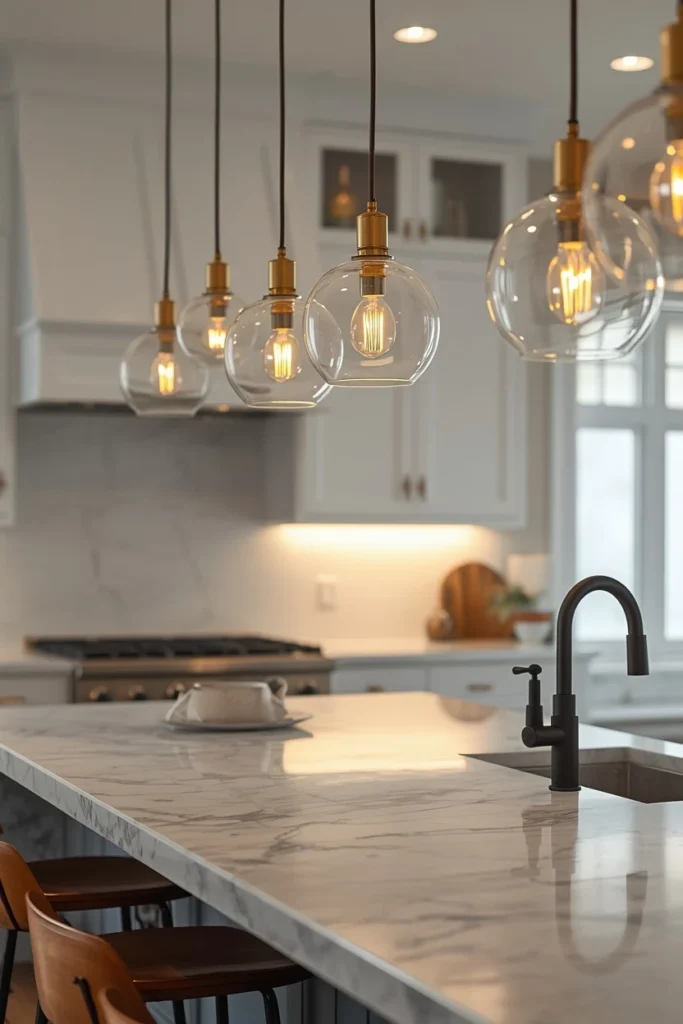
There’s a reason designers keep coming back to glass pendants for kitchen islands instead of fabric shades or solid metal domes. Glass does something other materials simply can’t.
They Light Up the Room Without Blocking the View
A solid pendant shade blocks light and creates a visual wall between you and whoever is standing on the other side of the island.
Glass pendants let light travel in every direction, which means your countertop actually gets illuminated instead of just the table directly under the fixture.
You also keep your sightline across the kitchen, so you can still see your kid sneaking a cookie from across the room.
They Match Almost Any Kitchen Style
Here’s the thing nobody tells you about glass: it’s basically a chameleon. Pair it with brass and it looks vintage industrial.
Pair it with matte black and it looks like something out of a minimalist Scandinavian magazine. Try doing that with a fabric drum shade and watch it just look out of place no matter what you do.
Types of Modern Glass Pendant Lights to Consider
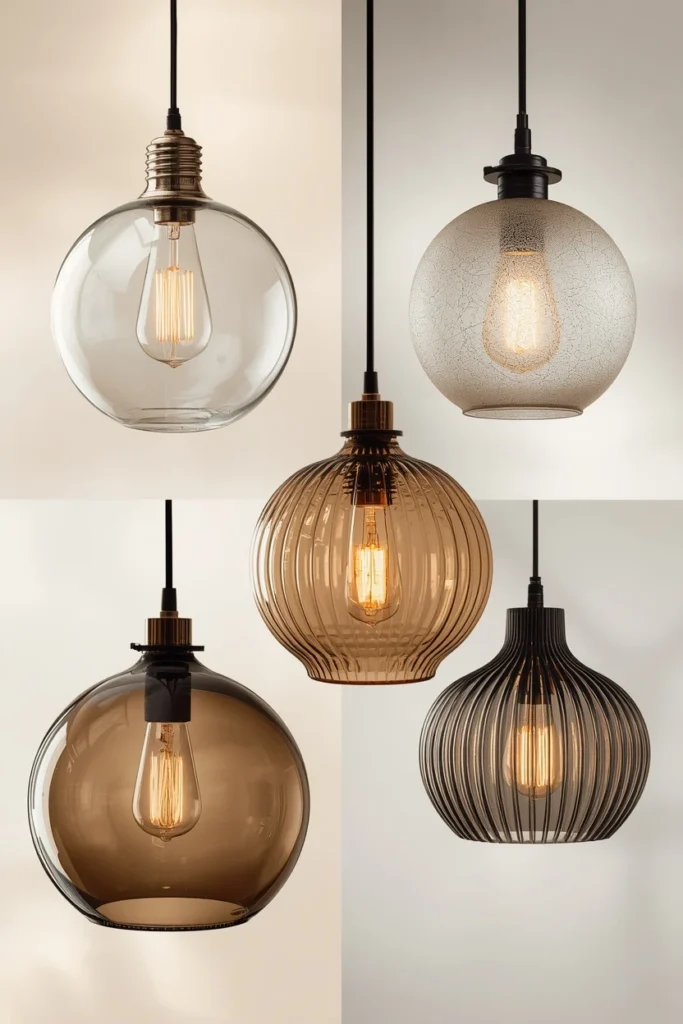
Not all glass is created equal, and the type you pick changes the entire mood of your kitchen. Here are the main styles worth knowing about.
- Clear glass pendants: These show off the bulb completely, so the lightbulb itself becomes part of the design. Great if you’re using a decorative Edison bulb, less great if you hate seeing the actual filament.
- Frosted or seeded glass: This softens the light and hides the bulb, giving a warmer and more diffused glow. I went with seeded glass in my own kitchen because it hides dust better than I’d like to admit.
- Smoked or colored glass: Amber, smoke gray, and even soft blue glass add a moody, almost moody-bar feel to the space. These work best when your kitchen already has some warm wood tones to balance it out.
- Ribbed or fluted glass: This textured trend has been everywhere lately, and for good reason. It catches light beautifully and adds a bit of visual texture without being loud.
Shop Modern Glass Pendant Lights On Amazon
Shape Matters More Than You’d Think
The shape of the glass changes how the light spreads and how the fixture reads visually.
- Globe pendants spread light evenly in every direction and feel soft and rounded.
- Cone or bell shapes focus more light downward, which works great for task lighting over a prep area.
- Cylinder pendants feel sleek and modern, and they tend to disappear visually so they don’t compete with other design elements.
Ever wonder why so many new kitchens use globe pendants? It’s because they’re forgiving. They work with almost any island shape and don’t demand much from the rest of the room.
How to Choose the Right Size for Your Island
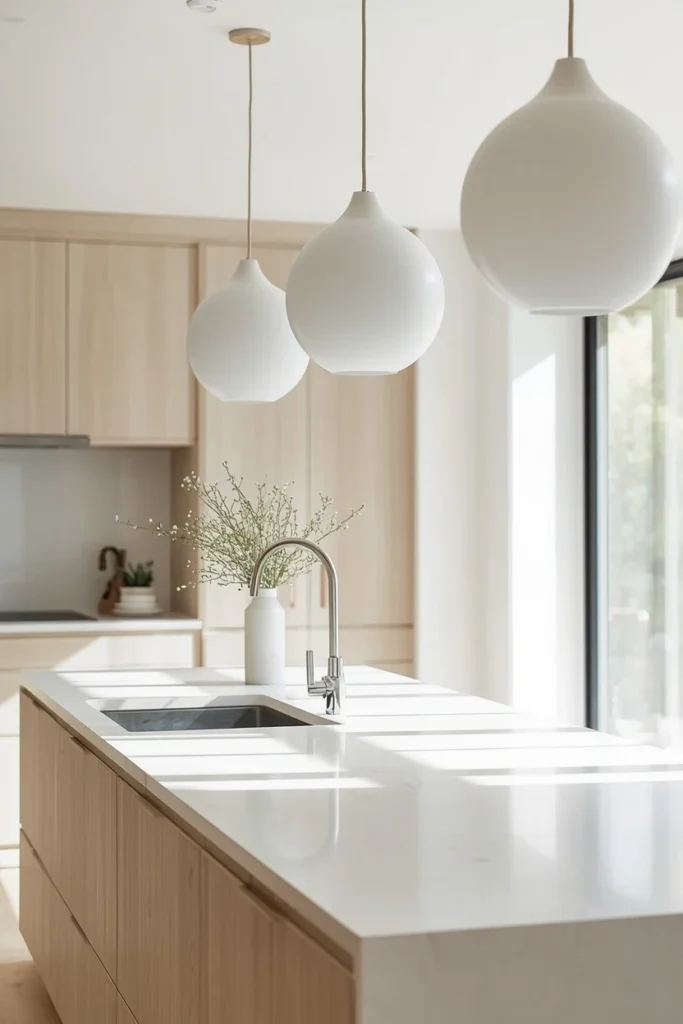
This is where people mess up constantly, myself included on my first attempt.
I bought pendants that looked perfect online and they turned out to be the size of a small soccer ball, completely overwhelming my island. Size matters, and not just in the way you’d assume.
A general rule of thumb that designers use:
- Add the length and width of your island in feet, then convert that number to inches. That’s roughly the combined diameter your pendants should total.
- For example, a 6-foot by 3-foot island adds up to 9, so your pendants combined should be around 9 inches in diameter if you’re hanging multiple, or you can scale up slightly for a single statement piece.
- Leave at least 30 inches of clearance between pendants and the countertop, and adjust based on your own height so you’re not ducking every time you reach for the salt.
Single Statement Pendant vs Multiple Smaller Pendants
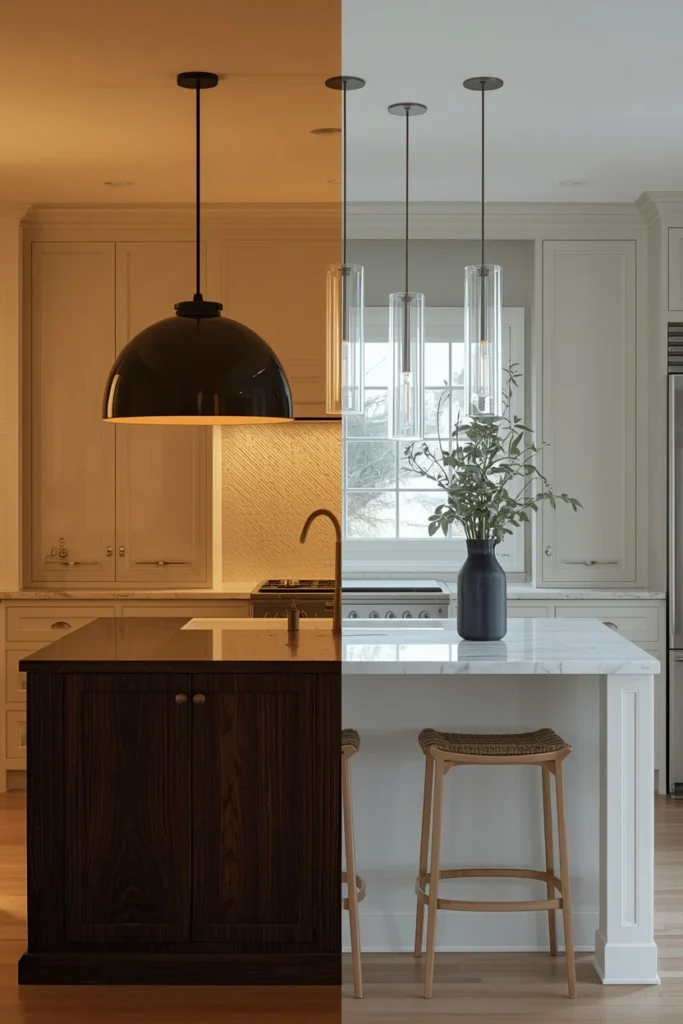
This is one of those debates where there’s no universally right answer, only what fits your space and your personality.
Multiple pendants work best over longer islands because they create rhythm and even light distribution.
Three is the classic number, though two works fine for smaller islands and four can work for an exceptionally long one.
The repetition also makes a kitchen feel intentional rather than like you grabbed whatever was on sale.
A single oversized pendant makes more sense for shorter or square islands, and it creates a strong focal point that draws the eye immediately.
I personally lean toward multiples because I like the symmetry, but I’ve seen single dramatic pendants completely transform a small kitchen in a way three tiny lights never could.
Picking the Right Bulbs and Light Temperature
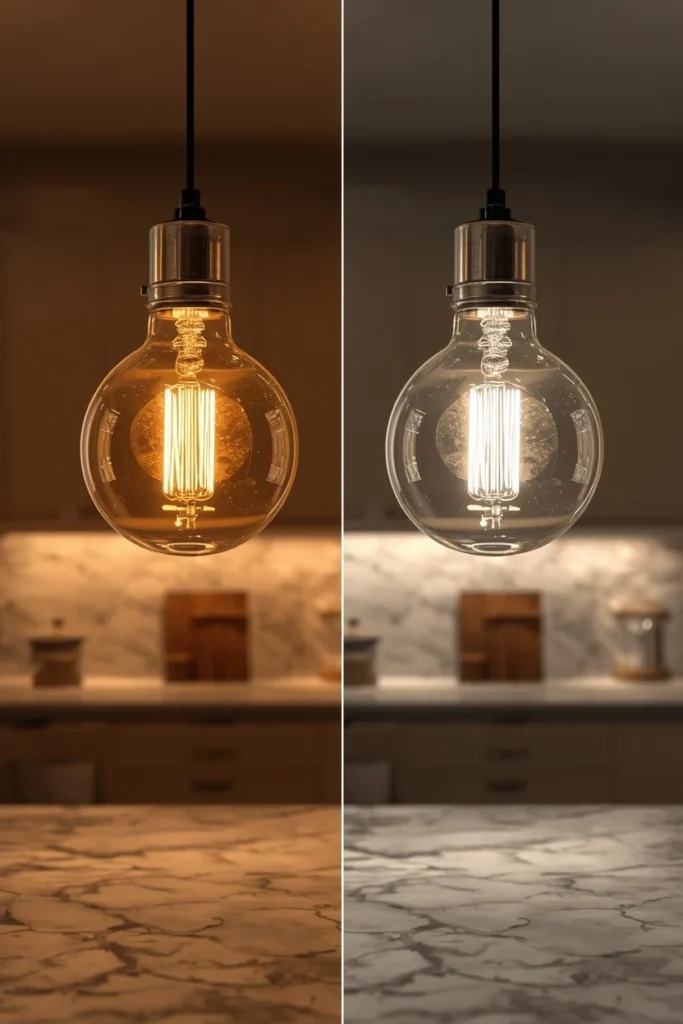
The glass shade gets all the attention, but the bulb inside does most of the actual work. Choosing the wrong one can make a gorgeous fixture look completely off.
- Warm white (2700K to 3000K) creates that cozy, inviting glow most people want in a kitchen, especially if you’re going for a traditional or industrial look.
- Cool white (3500K to 4000K) suits more modern, minimalist kitchens and makes colors and countertop materials look truer to life.
- Dimmable bulbs are non-negotiable in my opinion. A kitchen island does double duty as a dinner spot and a homework station, and those two activities need completely different lighting moods.
Clear glass pendants show off decorative filament bulbs beautifully, while frosted glass works better with simple LED bulbs since you don’t actually see them anyway.
No point paying extra for a fancy bulb you’ll never see, right?
Shop Dimmable LED Bulbs On Amazon
Placement and Spacing Tips That Actually Matter
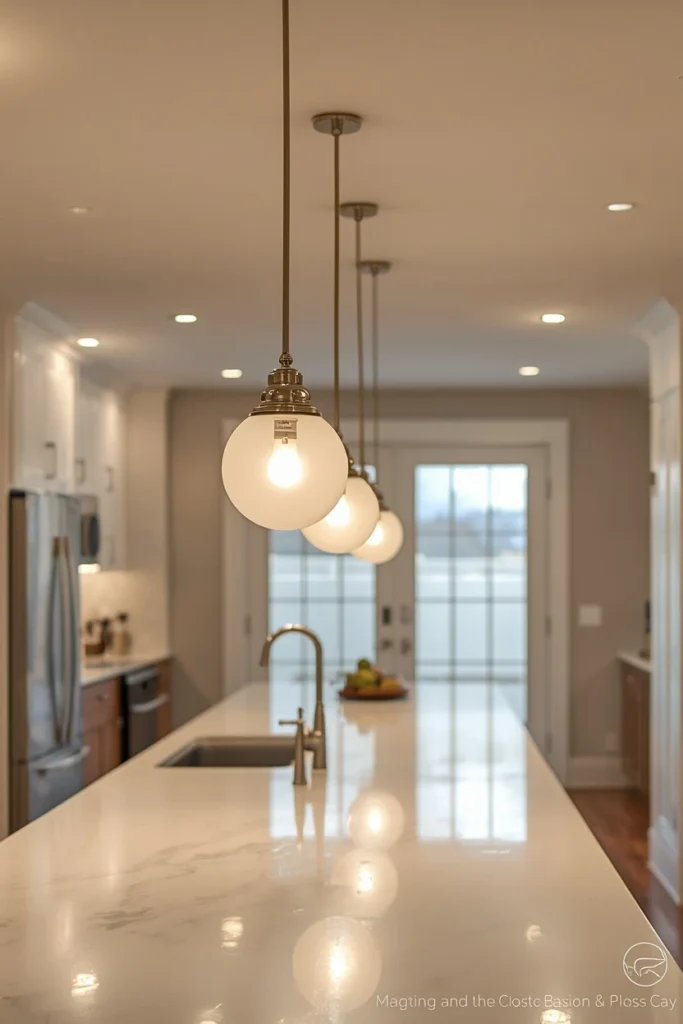
Getting the spacing wrong is the fastest way to make an otherwise great fixture look awkward. A few rules I now live by after redoing this twice:
- Center pendants over the island, not over the sink or stovetop, even if the ceiling junction box happens to be somewhere else. Electricians can move it, and it’s worth the extra cost.
- Space multiple pendants evenly, usually around 24 to 30 inches apart depending on island length.
- Keep pendants away from walkways so nobody clotheslines themselves walking past with a tray of food.
Pairing Glass Pendants with Your Kitchen Finishes
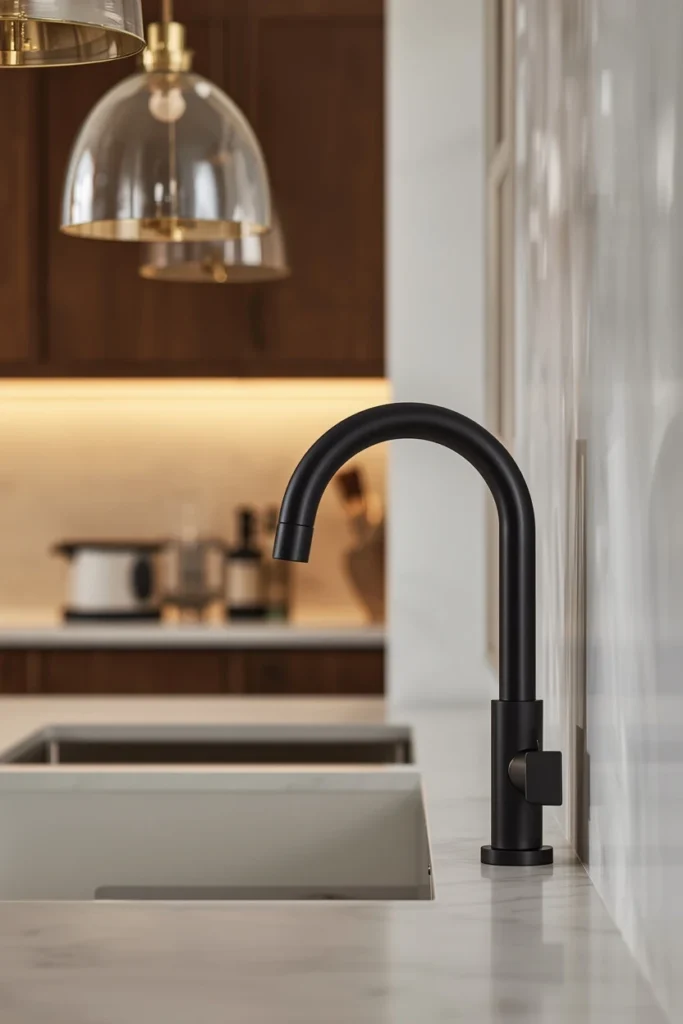
The hardware on your pendant matters just as much as the glass itself, since it’s what ties the fixture into the rest of your kitchen’s metal finishes.
- Brass or gold hardware pairs beautifully with warm wood tones and cream cabinetry.
- Matte black hardware suits bold, contemporary kitchens and adds contrast against white countertops.
- Brushed nickel or chrome works in almost any kitchen and tends to read as the safest, most neutral choice.
Matching your pendant hardware to your faucet and cabinet handles isn’t mandatory, but it does make the whole kitchen feel pulled together instead of randomly assembled.
Budget Considerations Worth Knowing
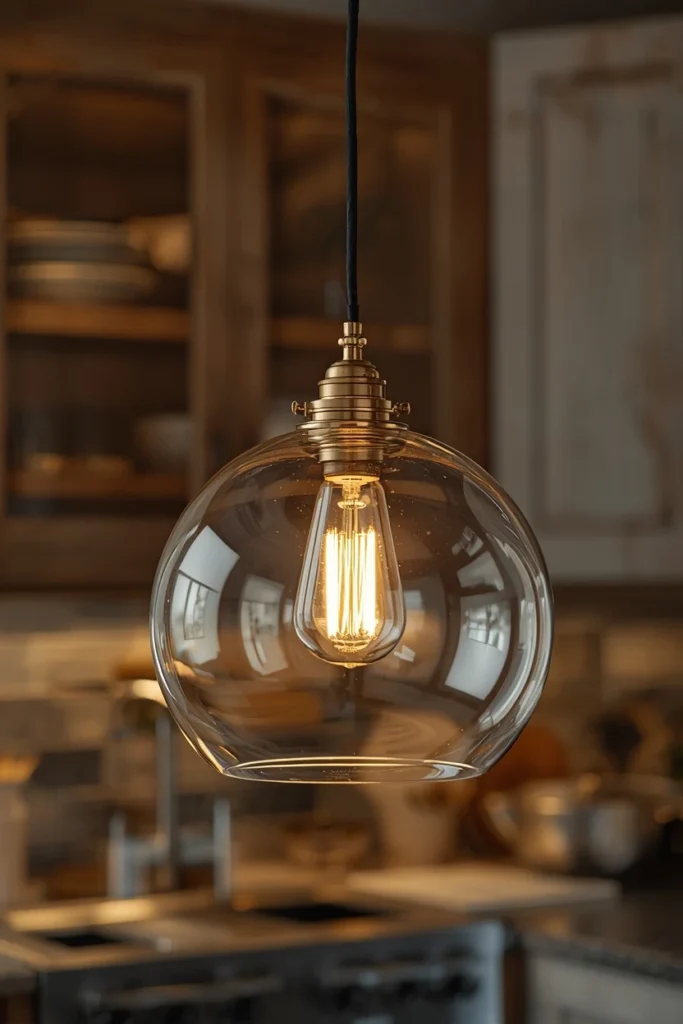
Glass pendants range from genuinely affordable to “wait, how much for a light bulb holder?” The good news is that price doesn’t always reflect quality the way you’d expect.
Mid-range pendants in the $50 to $150 range often use the same basic glass and hardware as higher-end versions, just with less brand markup.
Where you actually do get value for spending more is in the dimming compatibility, the quality of the wiring, and how well the finish holds up over the years without flaking or tarnishing.
I’d rather spend a bit more on hardware that won’t look dingy in two years than save money upfront and replace it sooner anyway.
Final Thoughts
Modern glass pendant lights genuinely earn their reputation as one of the easiest upgrades for a kitchen island.
They bring in light, add personality, and somehow manage to look both timeless and current at the same time.
Pick the right glass style, get the sizing right, choose a bulb temperature that suits how you actually use your kitchen, and you’re set.
If you take nothing else from this, remember that the right pendant lights can make an ordinary kitchen feel like one straight out of a design magazine, no full renovation required.
Now go measure your island before you fall in love with a pendant that’s way too big for it.
Browse Kitchen Island Pendant Lighting On Amazon
What Size Pendant Lights Are Best For A Kitchen Island?
Add your island’s length and width together in feet, then use that number in inches as your target combined pendant diameter.
A 6 by 3 foot island, for example, works well with around 9 inches of combined pendant diameter. Going bigger isn’t always better, since oversized pendants can make even a large island feel cramped.
How High Should Pendant Lights Hang Above A Kitchen Island?
Most kitchens look and feel right with 30 to 36 inches of clearance between the bottom of the pendant and the countertop. Taller ceilings can handle a bit more drop without looking awkward.
Always adjust based on your own height so the fixture doesn’t end up at eye level for anyone in the kitchen.
Should I Choose Clear Or Frosted Glass Pendant Lights?
Clear glass works best when you want the bulb itself to be part of the design, especially with decorative Edison style bulbs.
Frosted or seeded glass hides the bulb and gives off a softer, more diffused glow.
Neither option is objectively better, it really comes down to whether you want your lighting to be a feature or a background detail.
How Many Pendant Lights Do I Need For My Kitchen Island?
Three pendants is the most common choice and works well for standard sized islands. Smaller islands often look better with two, while longer islands can handle four.
A single oversized pendant is also a solid option if you want one strong focal point instead of repeated smaller fixtures.
What Bulb Temperature Works Best For Kitchen Island Pendant Lights?
Warm white bulbs between 2700K and 3000K create a cozy feel that suits most kitchens, especially traditional or industrial styles.
Cool white bulbs between 3500K and 4000K suit modern, minimalist spaces and show true colors more accurately.
Whichever you pick, choosing a dimmable bulb gives you the flexibility to shift the mood between meal prep and dinner.