
If you’ve ever tasted carrot cake that made you close your eyes, you know what this article is about. That moment is what we’re after.
This carrot cake recipe delivers every time. I’ll guide you through each detail so you can recreate it in your kitchen easily.
I’ve baked many carrot cakes over the years. Honestly, most were just fine, but none made people reach for a second slice before finishing the first.
Then I found the secret, and everything changed. This recipe gives you a deeply moist, warmly spiced cake topped with the creamiest, tangiest cream cheese frosting you’ll ever taste. Let’s dive in.
What Makes a Carrot Cake Truly Moist
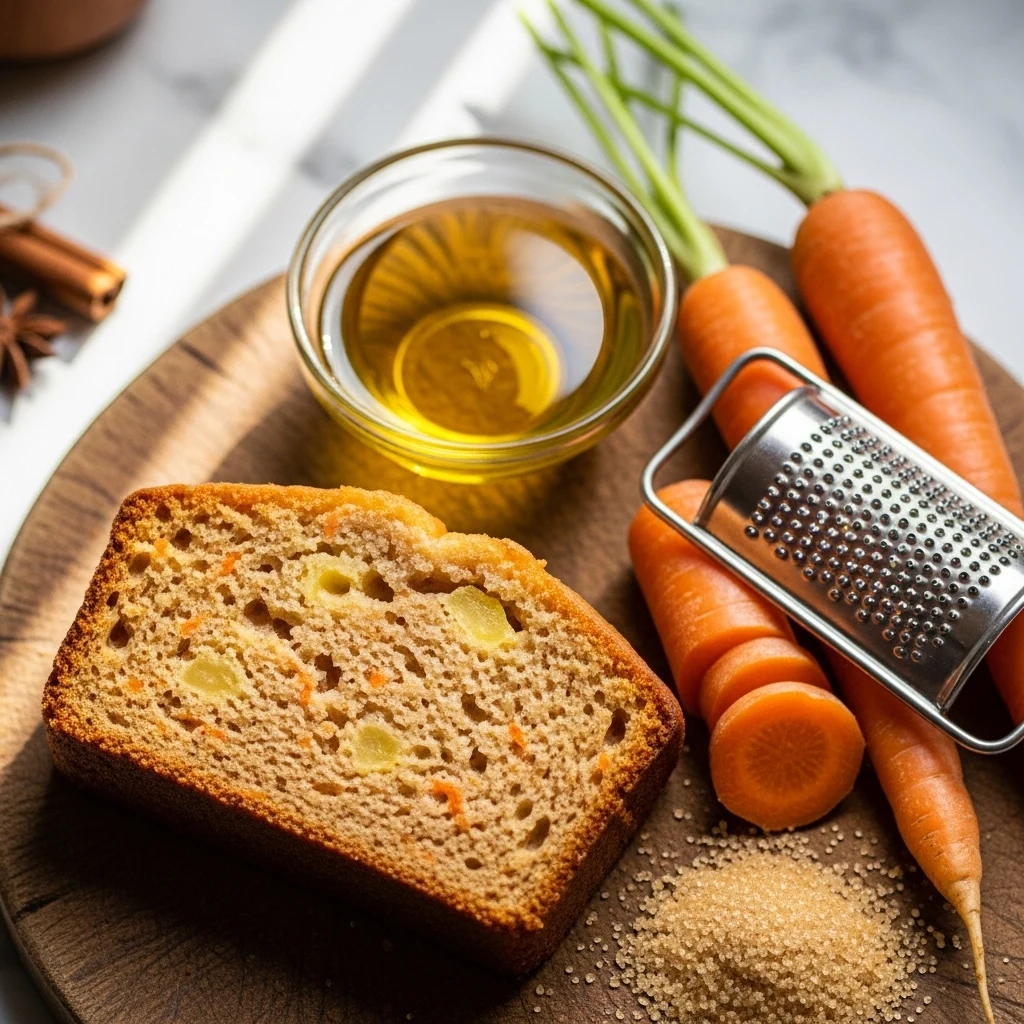
This is the question that separates good carrot cake from great carrot cake. Moisture in a carrot cake does not just happen by accident. It is the result of deliberate ingredient choices that work together.
The Role of Oil Over Butter
Most classic cakes rely on butter for richness, and butter is wonderful. But carrot cake needs oil, not butter.
Oil coats the flour proteins more effectively than butter, which means the crumb stays tender and soft even after the cake cools completely.
Butter solidifies as it cools, which can make a cake feel denser and drier the next day. Oil keeps things consistently moist from the moment you slice it to the last crumb two days later.
Use a neutral oil like vegetable or sunflower oil. You do not want a strong-flavored oil competing with the cinnamon and nutmeg.
Freshly Grated Carrots Are Non-Negotiable
Please, if you take nothing else from this article, take this: do not use pre-shredded carrots from a bag.
They are too dry, too thick, and they refuse to release their natural moisture into the batter the way freshly grated carrots do.
Freshly grated carrots break down beautifully during baking, releasing just enough moisture to keep the cake soft without making it soggy.
Grate them on the fine side of a box grater. Yes, your knuckles might disagree with this decision. Do it anyway.
Get A High-Quality Box Grater On Amazon
Brown Sugar and Crushed Pineapple
Here is where things get interesting. Swapping some of the white sugar for brown sugar adds a subtle molasses depth that makes the cake taste more complex.
And crushed pineapple, drained but not completely squeezed dry, is the secret ingredient many bakers overlook.
It adds sweetness and moisture without making the cake taste like a tropical cocktail. Nobody will know it is there, but they will definitely notice if you leave it out.
The Ingredients You Need
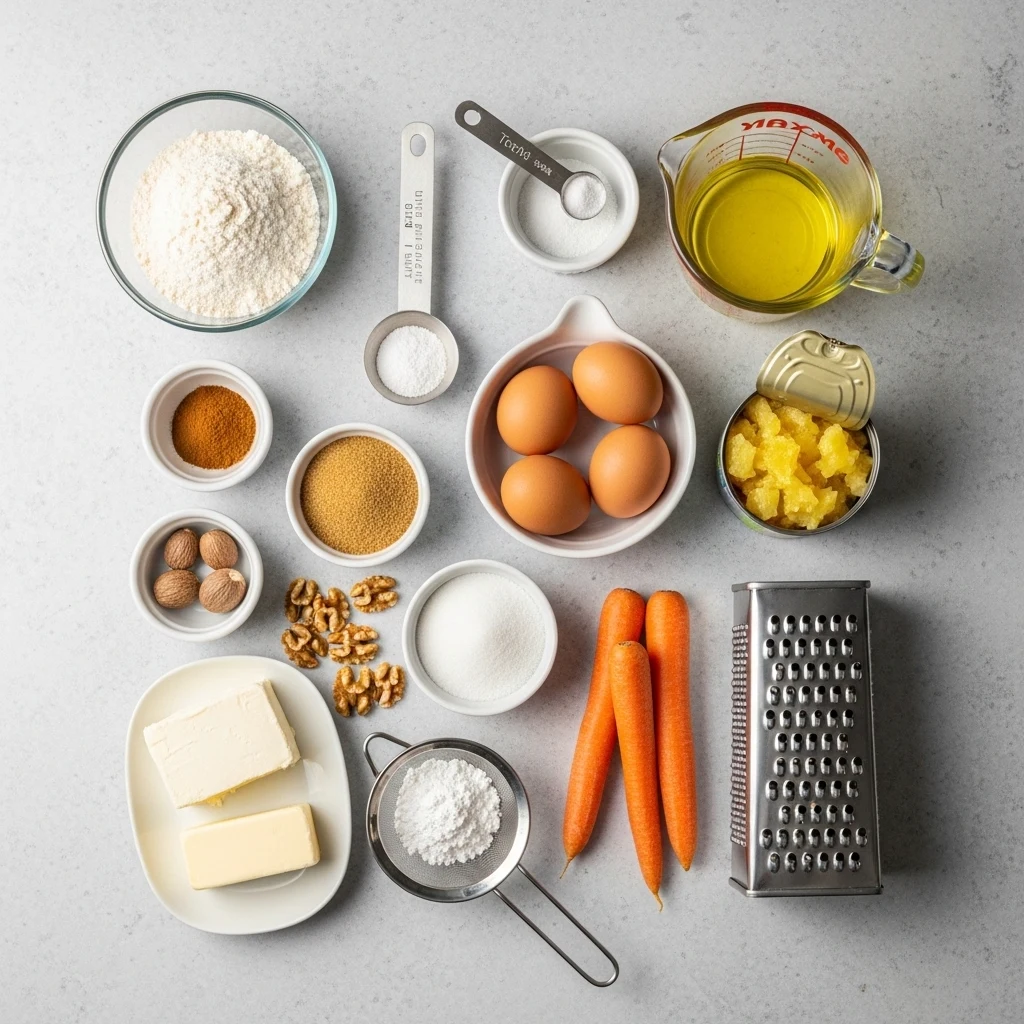
Before you start, gather everything. Baking rewards the prepared and punishes the person who realizes mid-mix that they are out of baking soda.
For the cake:
- 2 cups all-purpose flour
- 2 teaspoons baking soda
- 2 teaspoons ground cinnamon
- Half a teaspoon ground nutmeg
- Half a teaspoon ground ginger
- Half a teaspoon fine salt
- 4 large eggs, at room temperature
- 1 cup vegetable oil
- 1 cup granulated white sugar
- Half a cup packed brown sugar
- 2 teaspoons pure vanilla extract
- 3 cups freshly grated carrots (about 5 medium carrots)
- Half a cup crushed pineapple, lightly drained
- Half a cup chopped walnuts or pecans (optional but encouraged)
For the cream cheese frosting:
- 450 grams full-fat cream cheese, softened
- Half a cup unsalted butter, softened
- 3 cups powdered sugar, sifted
- 2 teaspoons pure vanilla extract
- A pinch of salt
Shop Essential Baking Tools For This Recipe On Amazon
How to Make the Cake Batter
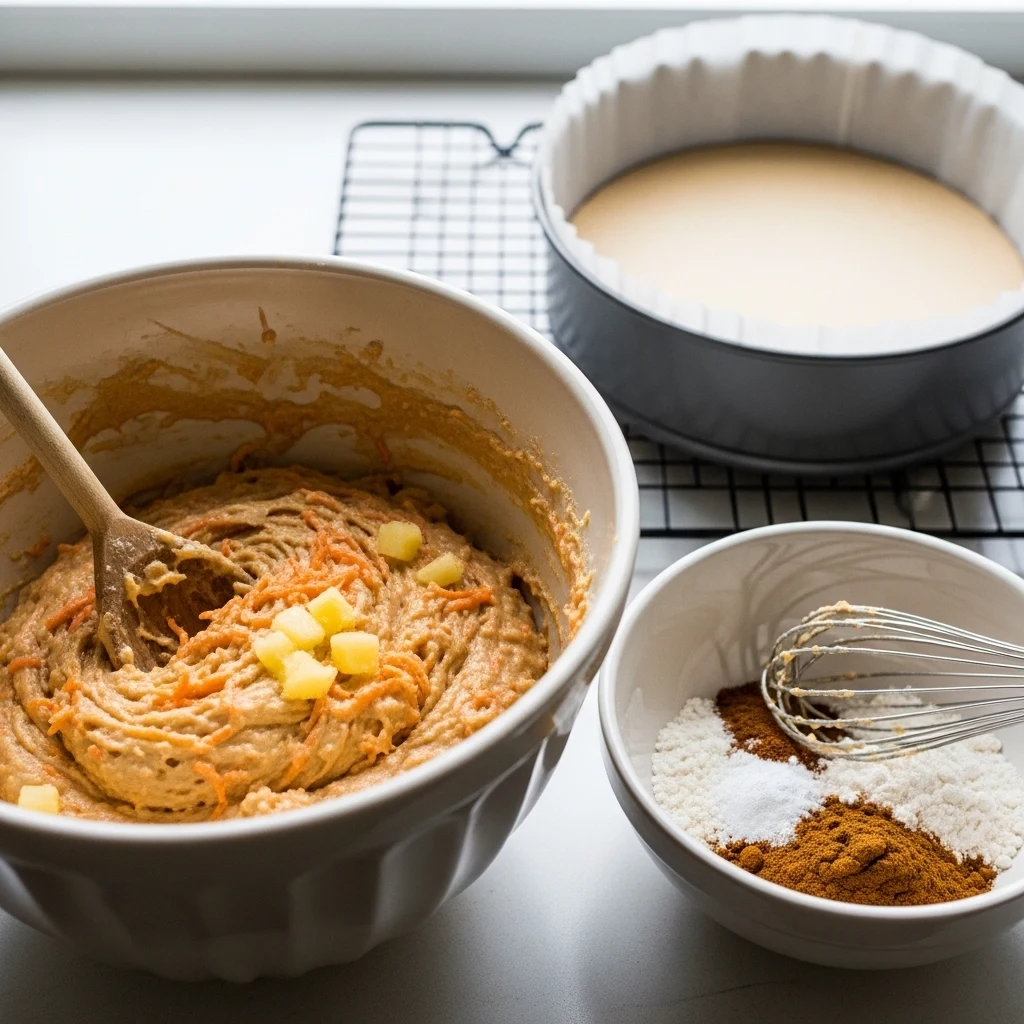
Mix Dry and Wet Ingredients Separately
Start by whisking together your flour, baking soda, cinnamon, nutmeg, ginger, and salt in a large bowl. Set that aside.
In a separate large bowl, whisk the eggs, oil, both sugars, and vanilla together until everything is smooth and well combined.
This only takes about a minute by hand or thirty seconds with a mixer.
Do not skip the step of mixing them separately. It ensures the leavening agents distribute evenly, which means your cake rises uniformly instead of producing that awkward dome in the middle.
Browse Reliable Hand Mixers For Baking On Amazon
Fold in the Good Stuff
Now pour the wet ingredients into the dry ingredients and stir until just combined. A few streaks of flour are fine.
Then fold in your grated carrots, drained pineapple, and nuts if you are using them. At this point, the batter will look thicker than you expect and almost a little rustic.
That is completely normal. Resist the urge to overmix. Overmixing develops gluten, and gluten is not your friend in a tender cake.
Baking Temperature and Timing
Pour the batter evenly into two greased and lined 9-inch round cake pans. Bake at 175 degrees Celsius (350 degrees Fahrenheit) for 28 to 32 minutes.
The cake is done when a toothpick inserted into the center comes out with just a few moist crumbs attached. Not wet batter. Moist crumbs.
Let the cakes cool in the pans for 15 minutes, then turn them out onto a wire rack to cool completely.
And when I say completely, I mean it. Frosting a warm cake is a choice you will immediately regret.
Find 9-Inch Round Cake Pans On Amazon
The Cream Cheese Frosting That Steals the Show
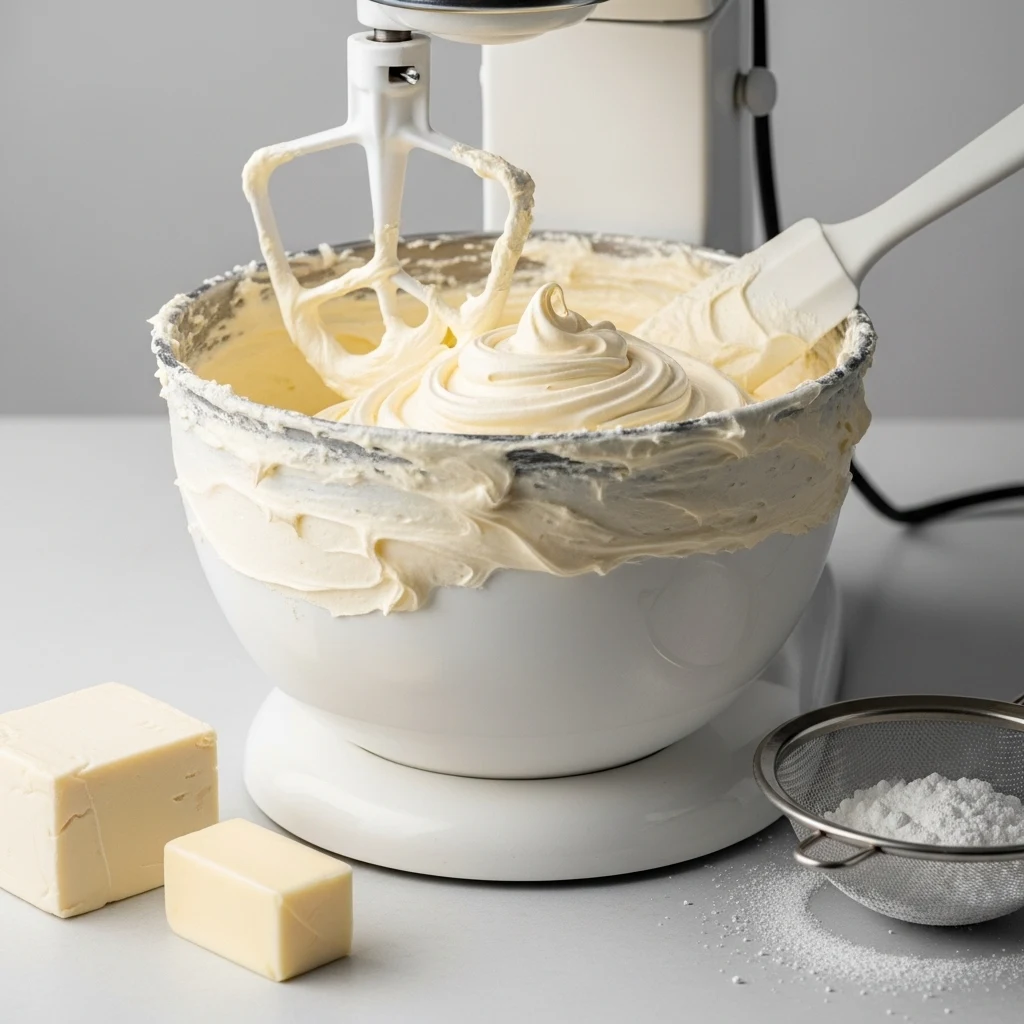
Why Full-Fat Cream Cheese Matters
Low-fat cream cheese has a higher water content, which means your frosting will be runny and sad. Always use full-fat block cream cheese, not the spreadable kind in a tub.
The block variety is denser and produces a frosting that holds its shape beautifully.
Both the cream cheese and butter need to be at room temperature before you start.
Cold cream cheese will leave lumps in your frosting no matter how long you beat it, and lumpy frosting is a tragedy we can easily avoid.
How to Make the Frosting
Beat the softened cream cheese and butter together on medium speed for about 2 minutes until smooth and fluffy.
Add the sifted powdered sugar gradually, one cup at a time, mixing on low speed first to avoid a powdered sugar snowstorm in your kitchen.
Then add the vanilla and pinch of salt and beat on medium-high for another minute until the frosting is thick, creamy, and spreadable.
Taste it. Adjust the sweetness if you need to. This is the moment to add a little more powdered sugar if you want it sweeter, or a tiny squeeze of lemon juice if you want a bit more tang.
Getting the Frosting Right in Warm Weather
Cream cheese frosting is sensitive to heat.
If your kitchen is warm, the frosting can soften too quickly and slide right off your cake before you can photograph it for the people you will inevitably want to impress.
Refrigerate the frosting for 20 to 30 minutes before applying it if your kitchen feels warm. It firms up just enough to make spreading easier.
Assembling the Cake
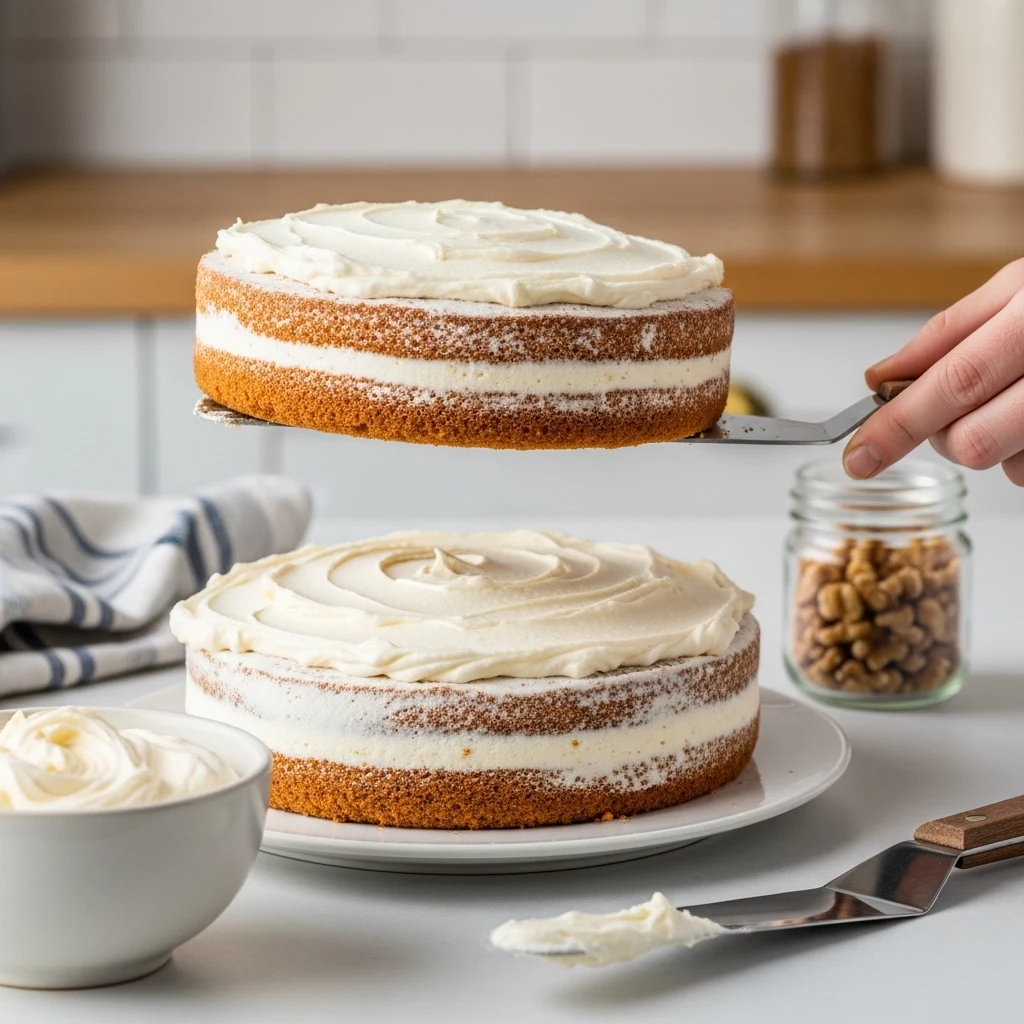
Place one cake layer on your serving plate or cake board. Spread a generous layer of frosting on top, going all the way to the edges. Set the second layer on top and press down gently so it sits evenly.
Then apply a thin layer of frosting all around the outside of the cake first. This is called a crumb coat, and it traps any loose crumbs so your final layer of frosting looks clean and smooth.
Refrigerate the crumb-coated cake for 20 minutes, then apply the final, generous layer of frosting. You can keep it casual and swoopy, or use an offset spatula for a cleaner look.
Either way, finish with a handful of chopped walnuts or pecans on top for texture and that classic carrot cake look.
Shop Offset Spatulas For Smooth Frosting On Amazon
Tips for Storing Your Carrot Cake
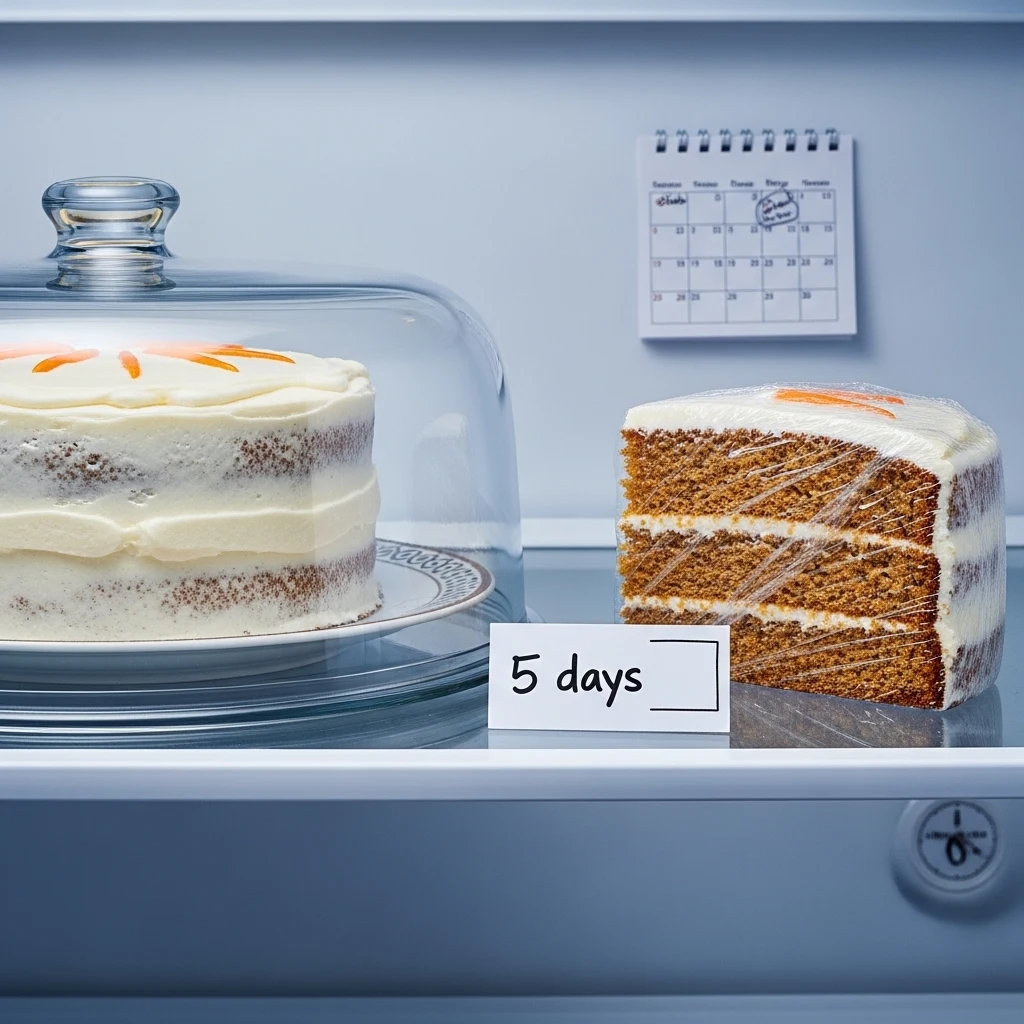
Carrot cake with cream cheese frosting must be refrigerated because of the dairy in the frosting. Here is how to keep it tasting its best:
- Refrigerate the cake in an airtight container or covered with plastic wrap for up to 5 days.
- Bring it to room temperature before serving. Cold cake is denser and less flavorful than cake that has sat at room temperature for 30 to 45 minutes.
- Freeze unfrosted cake layers wrapped tightly in plastic wrap and then foil for up to 3 months. Thaw overnight in the refrigerator before frosting and serving.
Common Mistakes to Avoid
Even experienced bakers make these mistakes with carrot cake, so it is worth running through them quickly.
- Using cold eggs: Cold eggs do not emulsify as well into the batter, which can result in a slightly denser cake. Pull them out of the fridge 30 minutes before baking.
- Skipping the pineapple: You will not taste it directly, but you will notice the difference in texture. The pineapple is doing quiet, important work.
- Overbaking: Carrot cake can go from perfectly done to dry surprisingly fast. Start checking at 28 minutes and pull it the moment the toothpick test passes.
- Using cold cream cheese in the frosting: Non-negotiable. Room temperature only, or your frosting will be lumpy and uneven.
Why This Recipe Works Every Time
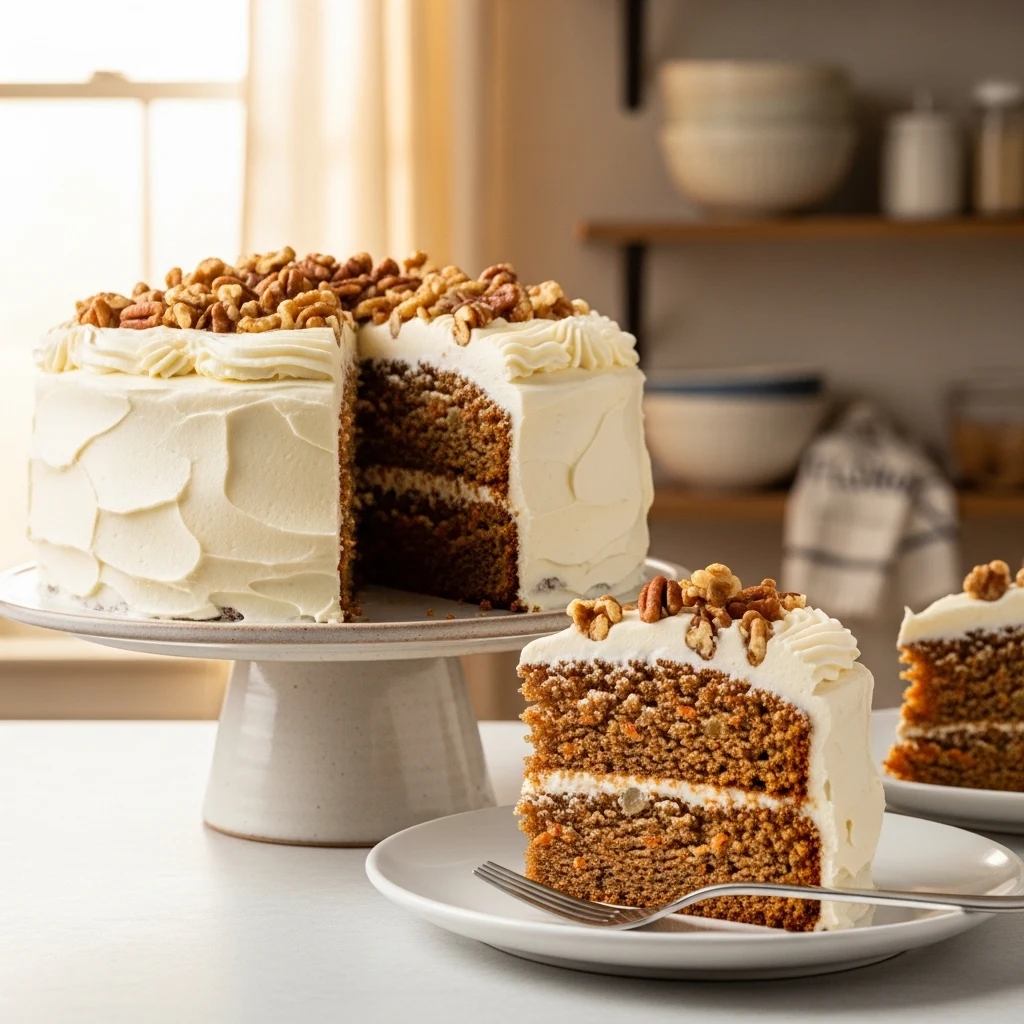
The combination of oil, brown sugar, fresh carrots, and pineapple creates a batter that is naturally forgiving and hard to dry out.
The spice blend is warm without being overwhelming, and the cream cheese frosting is rich enough to feel indulgent without drowning out the flavor of the cake beneath it.
Every component has a reason to be there, and nothing is superfluous.
This is not a complicated cake to make, but it is one that rewards you generously for paying attention to the details.
Follow the steps, use good ingredients, and let the cake cool completely before you frost it.
When you cut into it and see that perfectly moist, evenly textured crumb, you will understand why this version of carrot cake has earned a permanent spot in the recipe rotation.
And when the people at your table go back for a second slice without anyone having to suggest it, you will know you got it exactly right.
Why Does My Carrot Cake Turn Out Dry?
Dry carrot cake often has three main causes: using pre-shredded carrots, overbaking, or measuring flour incorrectly.
To avoid this, always spoon flour into the measuring cup and level it off. Use freshly grated carrots. Start checking the cake at the 28-minute mark.
Can I Make Carrot Cake Ahead of Time?
Yes, carrot cake often tastes better the next day. The spices have time to settle. You can bake the cake layers up to two days ahead.
Just wrap them tightly in plastic wrap and store them in the refrigerator. Make the frosting fresh on the day you assemble and serve the cake for the best texture and flavor.
Do I Have to Use Pineapple in Carrot Cake?
You don’t have to use it, but you’ll see a difference in moisture and texture if you skip it. Crushed pineapple adds subtle sweetness and keeps the crumb soft.
If you prefer to avoid it, unsweetened applesauce is a good substitute in the same amount.
How Do I Keep Cream Cheese Frosting from Being Runny?
Three things can cause runny cream cheese frosting: using tub-style cream cheese instead of block, using cold ingredients that aren’t softened, and overmixing after adding powdered sugar.
Use full-fat block cream cheese. Make sure the cream cheese and butter are at room temperature. If the frosting feels too soft, refrigerate it for 20 to 30 minutes before spreading.
How Long Does Carrot Cake with Cream Cheese Frosting Last?
A frosted carrot cake lasts up to 5 days in the fridge if stored in an airtight container or wrapped tightly in plastic. Always let individual slices sit out for about 30 minutes before eating.
Cold cake is denser and less tasty than cake served at room temperature. You can freeze unfrosted layers for up to 3 months.