
There’s something special about a great French baguette. The crust shatters, revealing a soft, chewy inside. The smell fills your kitchen, making neighbors envious.
This bread makes all other breads seem lazy. While you can grab one from a bakery, making a baguette at home is an experience like no other. Trust me.
This guide shows you how to bake a proper baguette at home. No shortcuts or mystery ingredients.
No pretending that bread flour and a quick rise will do the trick. Just the real process, laid out clearly.
What Makes a French Baguette “Authentic”
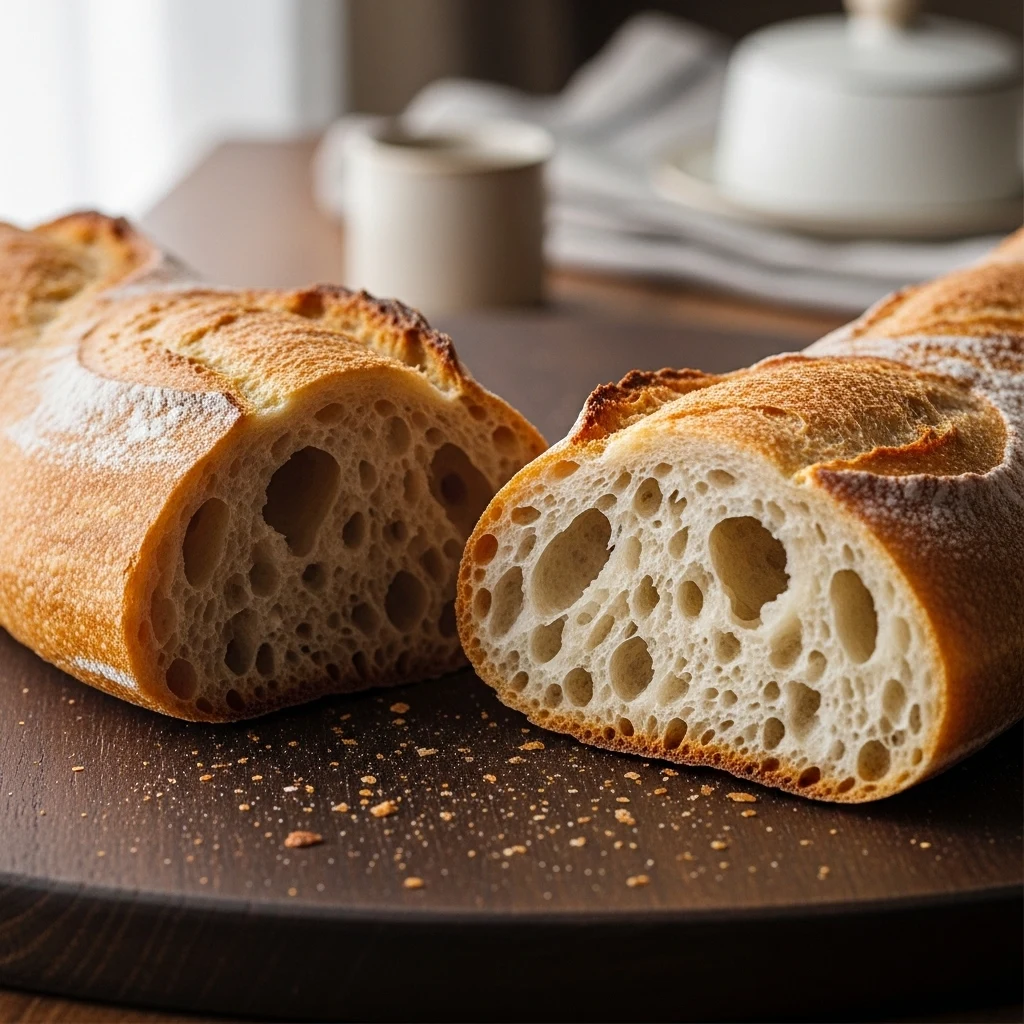
Before you start measuring anything, it helps to understand what you are actually going for. An authentic French baguette is not just a long loaf of white bread.
It has a specific character that comes from a few key things working together.
The crust should be deeply golden, thin but sturdy, and it should crackle loudly when you cut into it. If it does not make noise, something went wrong somewhere.
The crumb (the inside) should be open and irregular, with holes of different sizes, not uniform like sandwich bread.
And the flavor should have a mild tang and a wheaty depth that only comes from a slow fermentation process.
Getting all three right at the same time is the goal. And yes, it takes a bit of practice. But once you nail it, you will never look at a store-bought baguette the same way again.
Ingredients You Will Need
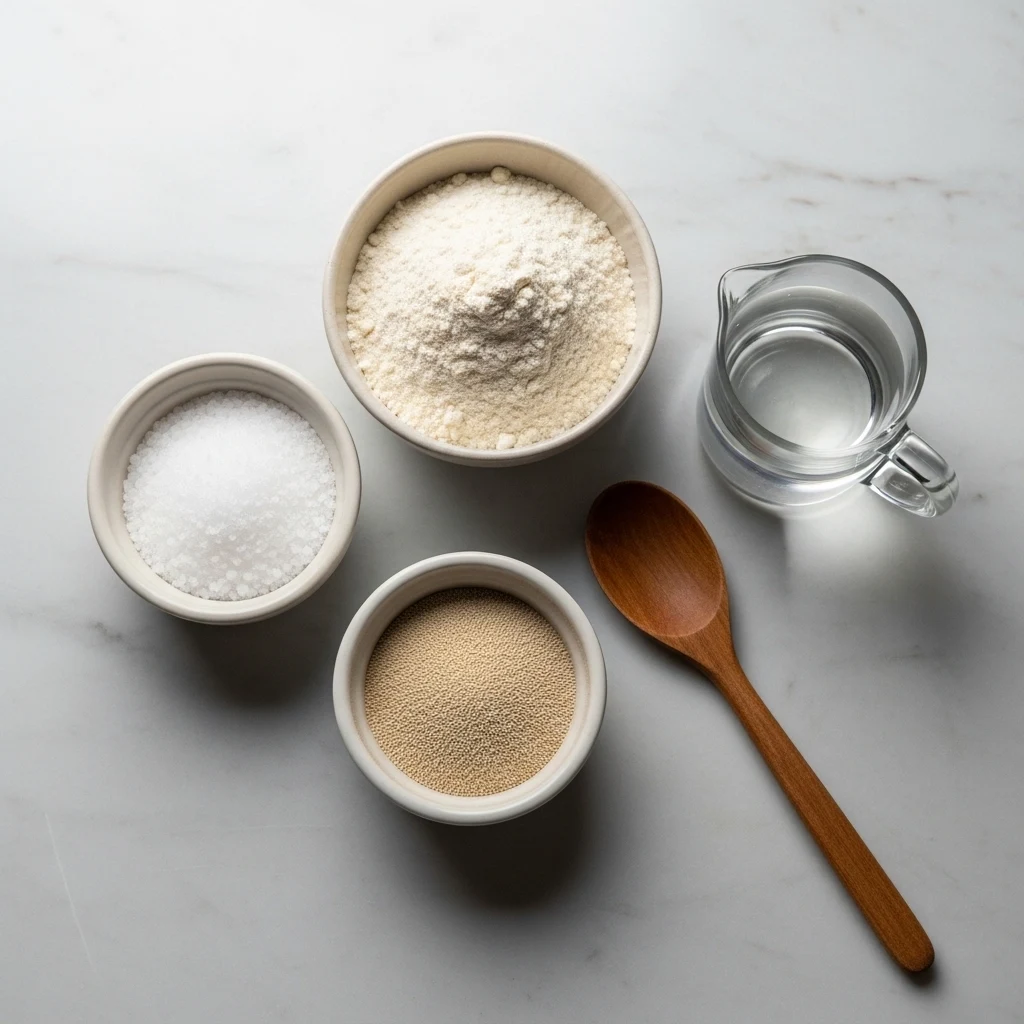
Good baguettes do not need a long shopping list. In fact, the short ingredient list is exactly why technique and time matter so much here.
- 500g (about 4 cups) bread flour: All-purpose flour can work, but bread flour gives you better structure and chew.
- 375ml (1.5 cups) cool water: Cool water slows fermentation slightly, which builds more flavor.
- 10g (2 teaspoons) fine sea salt: Do not skip salt. It does far more than season.
- 3g (1 teaspoon) instant yeast: A small amount on purpose. More yeast means faster rise and less flavor.
That is it. Four ingredients. The magic is entirely in how you handle them.
Shop Bread Flour and Sea Salt on Amazon
Equipment That Actually Matters
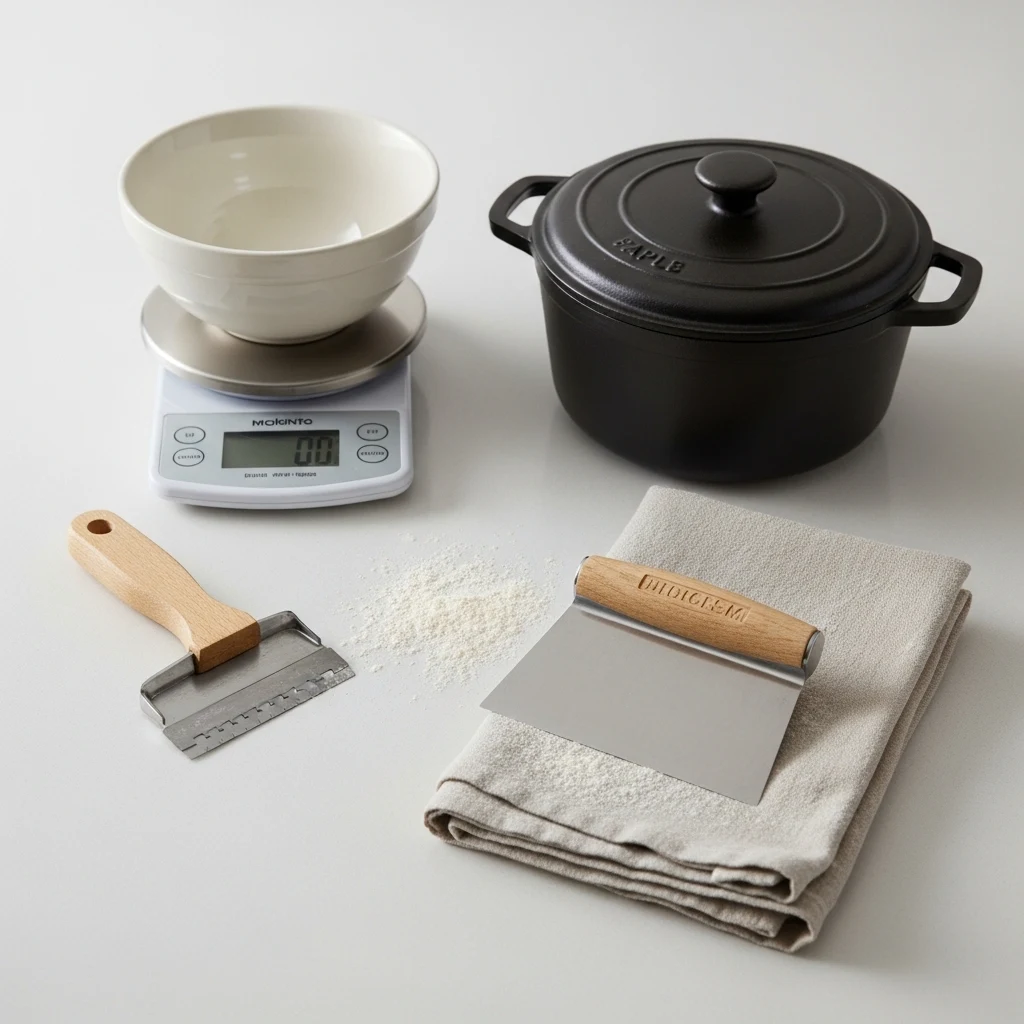
You do not need a professional deck oven (obviously), but a few tools will make a real difference in your results.
- A kitchen scale: Baking by weight is far more reliable than cups. Do yourself the favor.
- A Dutch oven or a baking stone: You need retained heat to get that crust. A Dutch oven is the easiest home solution. A baking stone with a steam pan also works well.
- A lame or sharp razor blade: For scoring the dough before baking. A regular knife will drag and deflate your loaf.
- A bench scraper: Genuinely useful for shaping without tearing the dough.
- A proofing cloth (couche) or a floured towel: For the final rise. It holds the shape and keeps the dough from spreading flat.
Find Everything You Need for Baguette Baking on Amazon
The Dough: Mixing and Autolyse
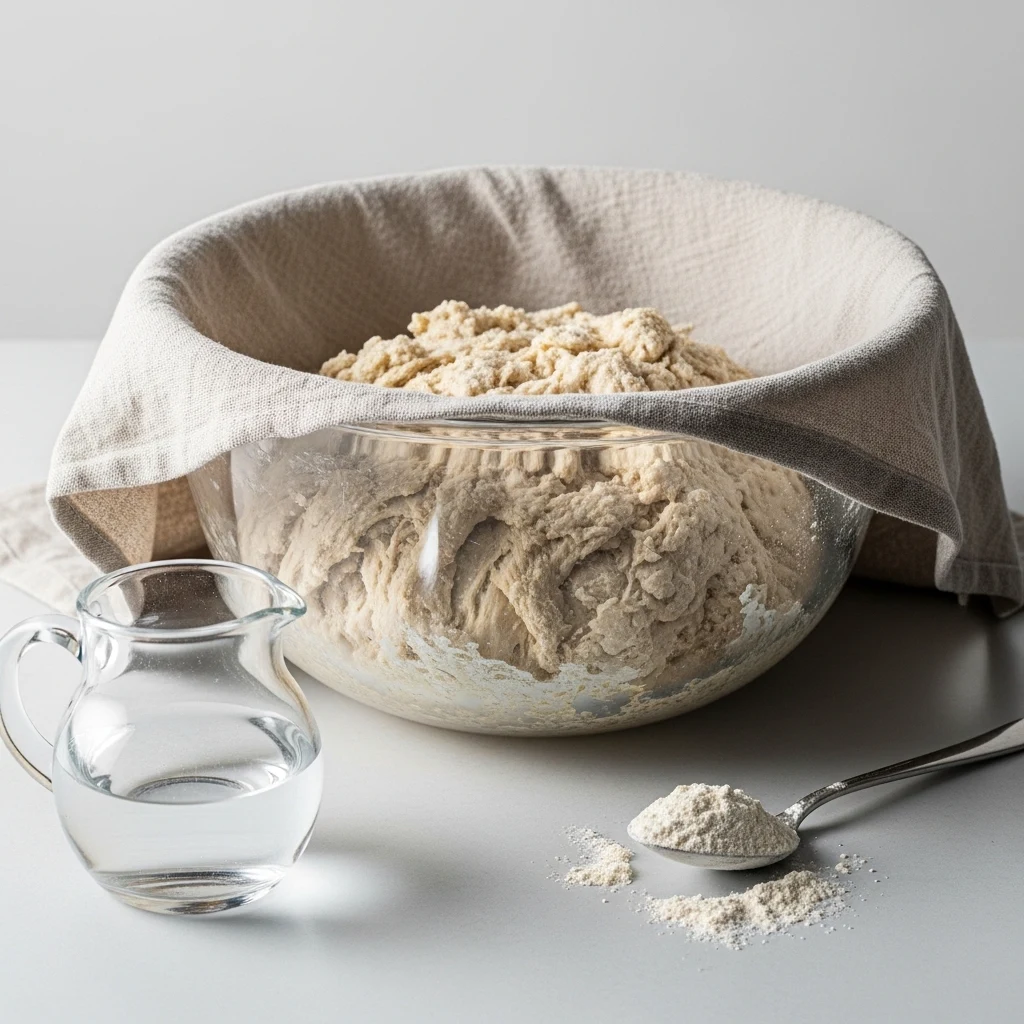
Starting with Autolyse
Here is where most home bakers skip a step that changes everything.
Autolyse is simply mixing your flour and water together and letting them rest before adding anything else. No yeast yet, no salt.
Combine your 500g flour and 340ml of the water (hold back about 35ml). Mix until no dry flour remains, then cover and let it sit for 30 to 60 minutes.
During this rest, the flour fully hydrates and gluten starts developing on its own. This means less kneading later and a much better crumb texture.
Adding Yeast and Salt
After the autolyse, dissolve your yeast in the remaining 35ml of water and add it to the dough. Work it in with your hands until fully incorporated.
Then sprinkle in the salt and do the same. The dough will feel a bit sticky and shaggy at first. That is completely normal, so resist the urge to add more flour.
Shop Dutch Ovens and Baking Stones on Amazon
Building Strength: Stretch and Fold
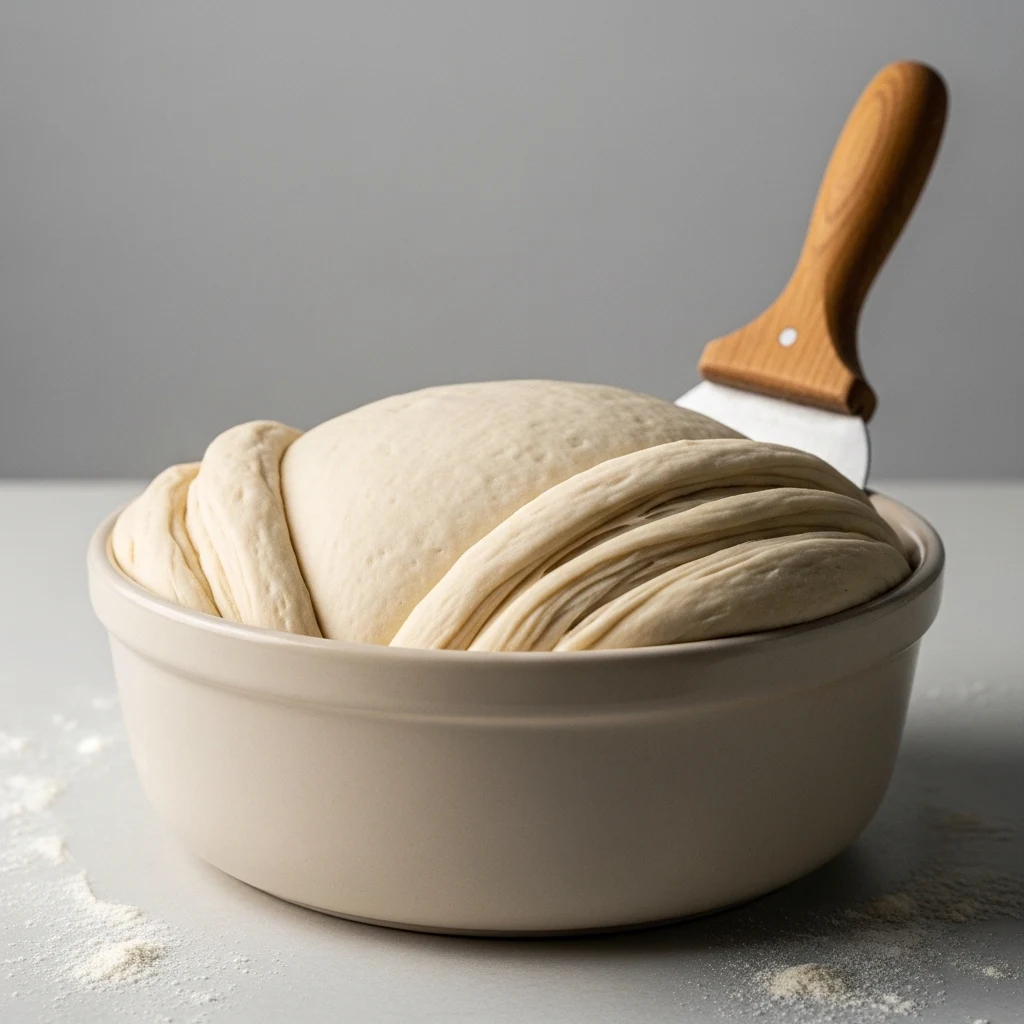
This is where baguette dough is different from most bread doughs. Instead of kneading on a counter for ten minutes, you use a technique called stretch and fold to build gluten strength gently.
Here is how it works:
- Wet your hand lightly to prevent sticking.
- Grab one side of the dough, stretch it up as far as it will go without tearing, and fold it over the opposite side.
- Rotate the bowl 90 degrees and repeat. Do this four times total per set.
- Repeat this entire set every 30 minutes, four times during the first two hours.
After four sets, your dough should feel noticeably stronger, smoother, and less sticky. It will hold its shape instead of spreading flat. That is the gluten network doing its job.
The Bulk Fermentation: Where Flavor Is Born
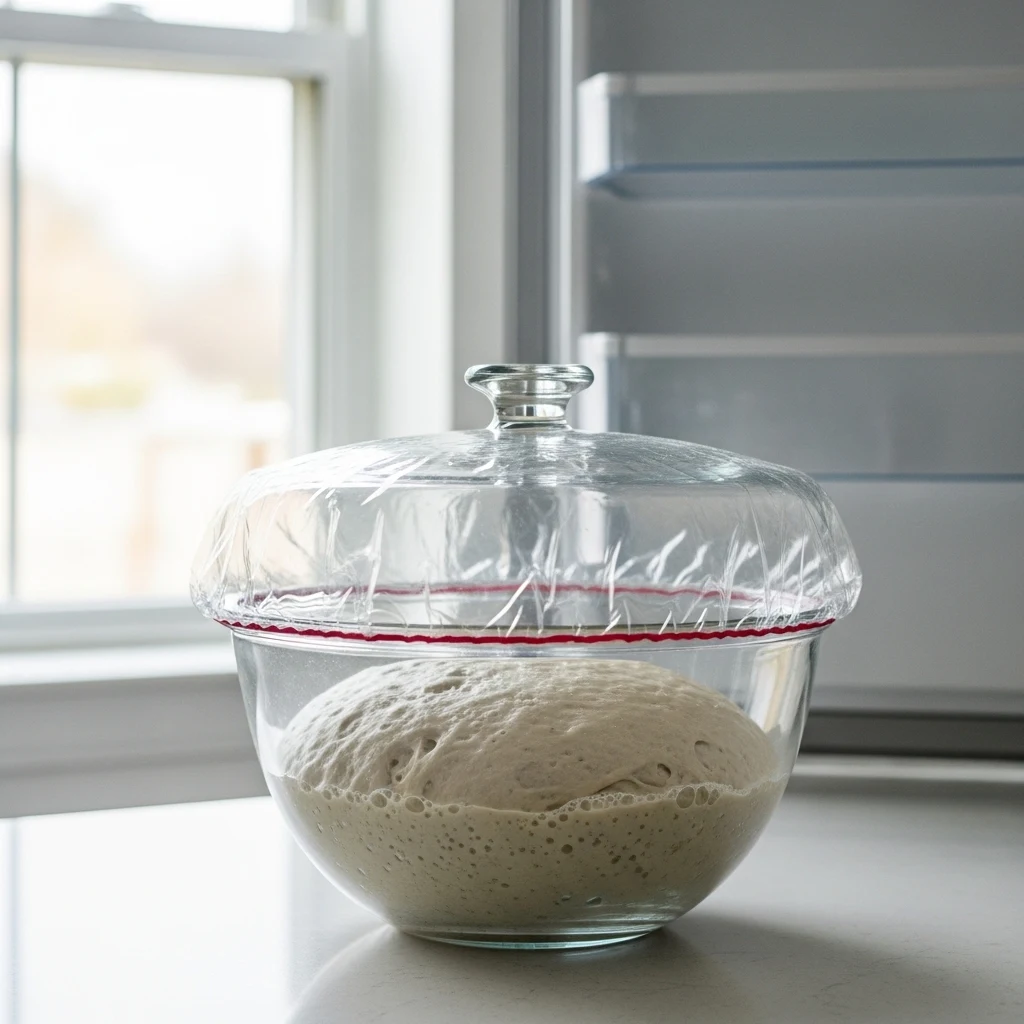
After your stretch and fold sets, cover the dough and let it ferment at room temperature for 1 to 2 more hours, or until it has grown by about 50 percent in volume.
The exact timing depends on your kitchen temperature. A warmer kitchen speeds things up; a cooler one slows them down.
Here is a pro tip that most recipes skip: For even more flavor, you can do the entire bulk fermentation in the refrigerator overnight (8 to 16 hours).
Cold fermentation slows yeast activity and gives enzymes more time to break down starches, which produces a more complex, slightly tangy flavor.
If you have the time and patience, the overnight method is genuinely worth it.
Dividing and Pre-Shaping
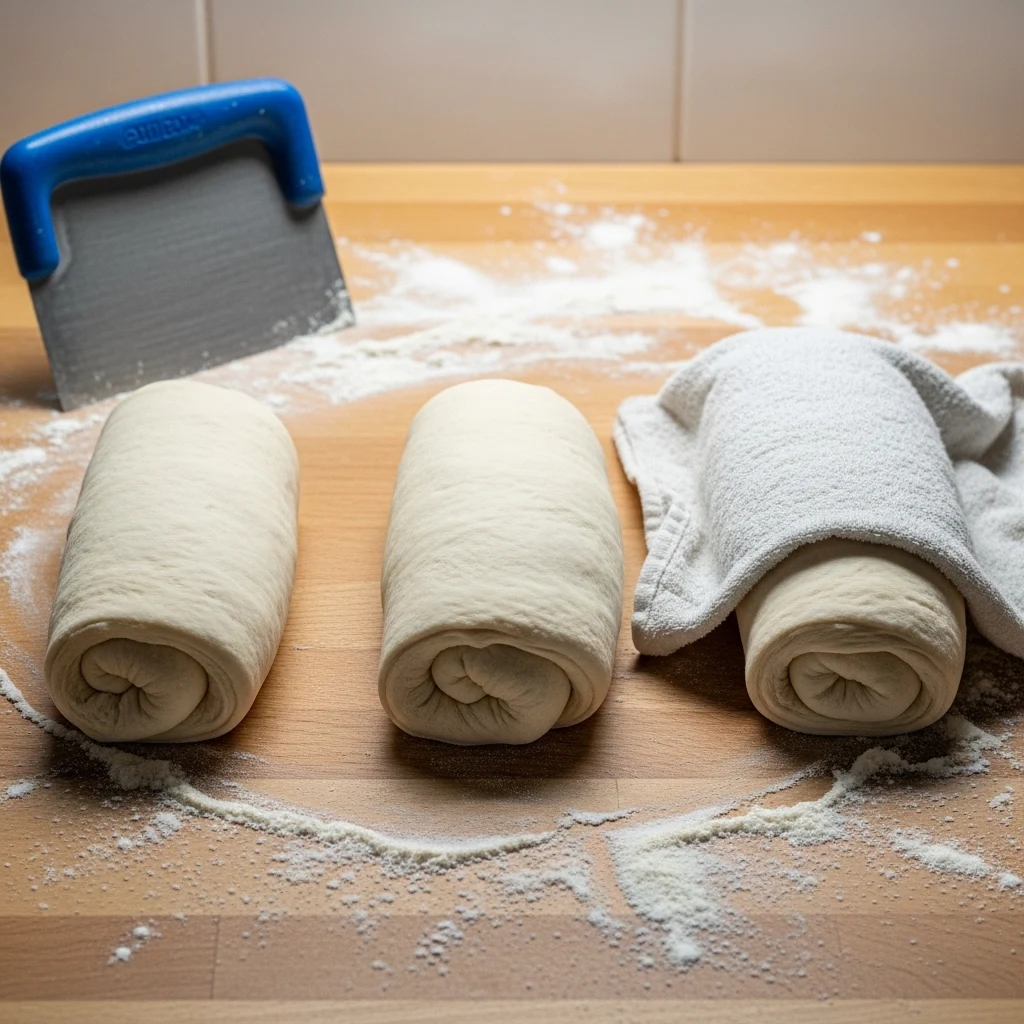
Once your dough has finished its bulk fermentation, turn it out gently onto an unfloured surface. You want some friction between the dough and the counter, so do not flour it here.
Divide the dough into three equal pieces (roughly 290g each for standard baguette length).
Using your bench scraper and hand together, shape each piece into a loose cylinder by folding the sides to the middle and rolling gently.
Do not press hard. You want to build a little surface tension without degassing the dough.
Cover your pre-shaped pieces with a damp cloth and let them bench rest for 20 to 30 minutes. This relaxes the gluten and makes the final shaping much easier.
Final Shaping: The Part That Takes Practice
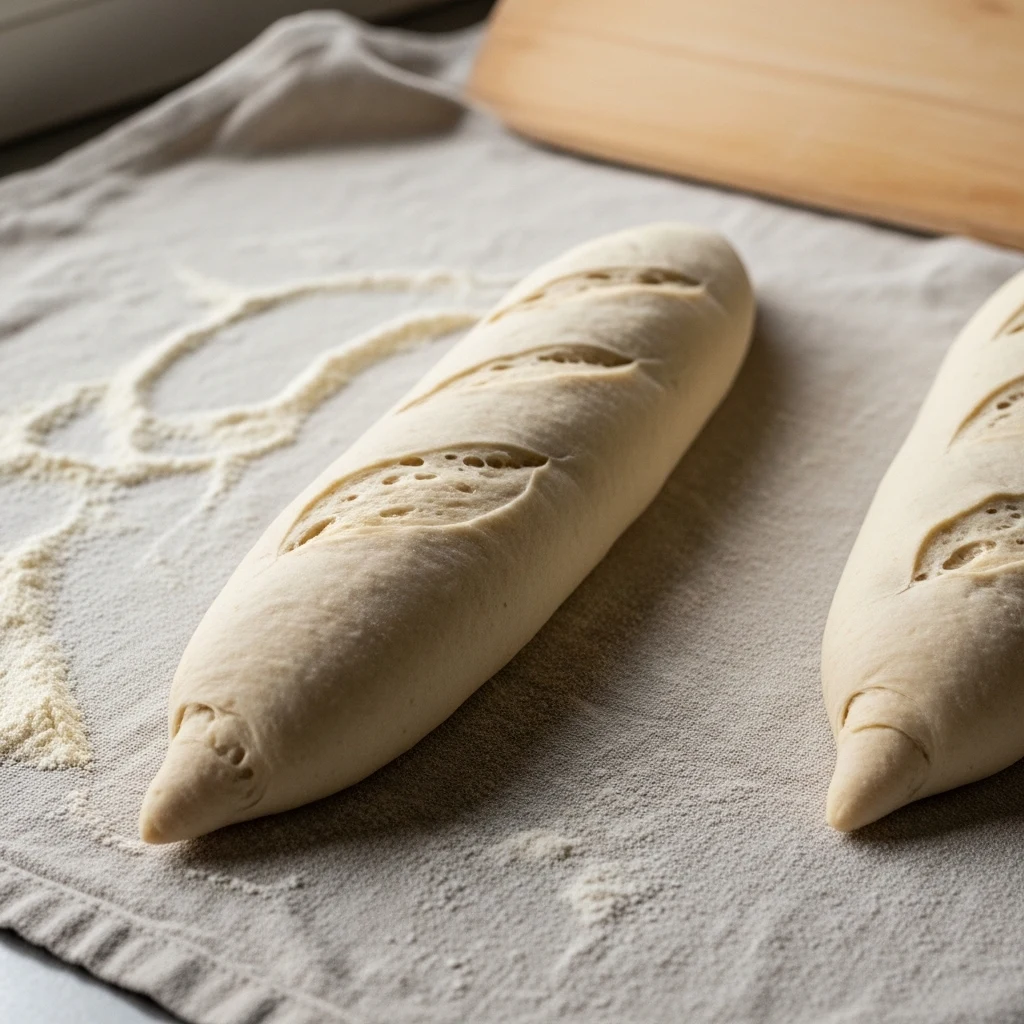
Shaping baguettes is the step everyone talks about, and honestly, the first time you do it will not be perfect. That is fine. The good news is that even imperfect baguettes taste excellent.
How to Shape a Baguette
- Take one pre-shaped piece and gently flatten it into a rough rectangle.
- Fold the top third down and press lightly to seal.
- Fold the bottom third up over that and seal again.
- Roll the log gently with both hands, starting from the center and working outward, until it reaches about 14 to 16 inches long.
- The pressure should be even and gentle. You are elongating, not compressing.
Place each shaped baguette seam-side up onto a well-floured couche or floured towel, with fabric gathered between each loaf to hold the shape.
This prevents the sides from spreading during the final proof.
The Final Proof
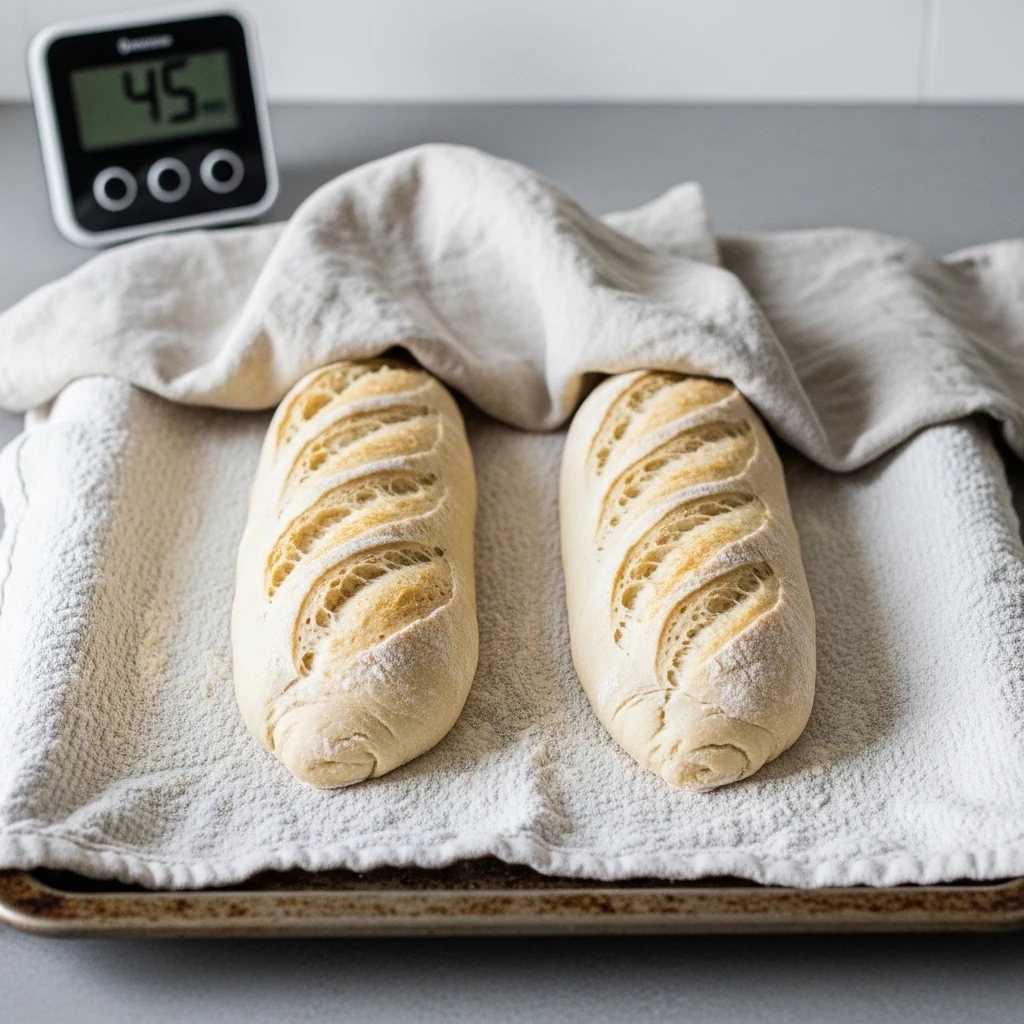
Cover your shaped baguettes loosely and let them proof at room temperature for 45 minutes to 1 hour. They should look puffier but not dramatically larger.
If you press gently with a fingertip and the dough springs back slowly, it is ready. If it springs back immediately, give it more time.
Meanwhile, get your oven going.
Baking: The Heat and Steam Equation
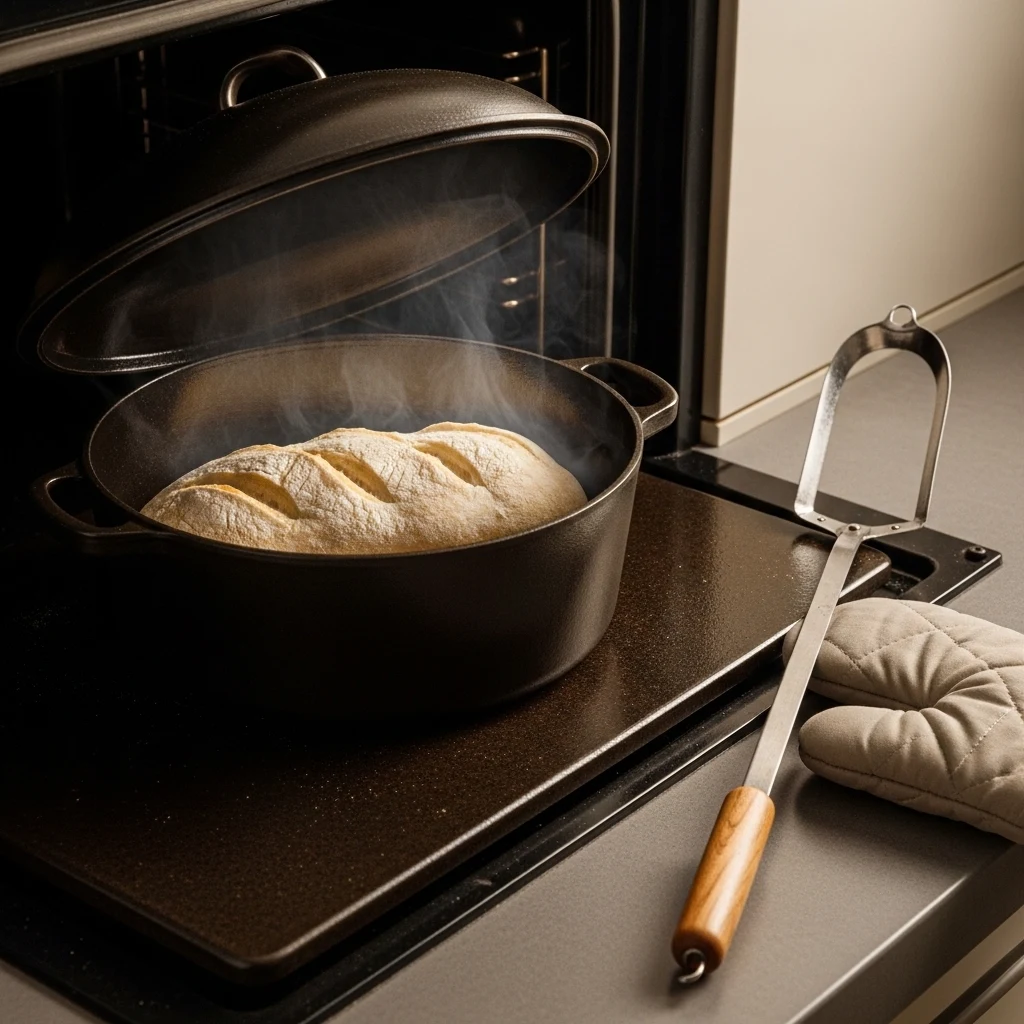
Preheating Your Oven
Set your oven to 250 degrees Celsius (480 degrees Fahrenheit) with your baking stone or Dutch oven inside. Preheat for at least 45 to 60 minutes.
A properly preheated surface is non-negotiable for good oven spring and crust development.
Your oven thermometer may say it is ready in 15 minutes, but the stone or steel needs longer to fully absorb that heat.
Steam: The Secret to That Crust
Steam in the first few minutes of baking keeps the surface of the dough pliable so it can expand before the crust sets.
Without steam, the crust forms too early, the baguette cannot spring properly, and you end up with a dense, pale loaf.
If you are using a baking stone, place a metal pan on the oven floor during preheat. Just before loading your baguettes, pour about one cup of boiling water into that pan to create a burst of steam.
If you are using a Dutch oven, the lid traps steam naturally for the first phase of baking.
Scoring the Dough
Right before loading, use your lame or razor blade to score each baguette with three to five diagonal cuts at a shallow angle (about 30 degrees to the surface).
Each cut should be about 10 to 12 centimeters long and roughly 1 centimeter deep.
Scoring gives the bread a defined opening to expand through and is what creates those beautiful ears on a well-baked baguette.
Get a Bread Lame and Scoring Tools on Amazon
The Bake
Bake with steam for the first 15 minutes, then vent the steam (remove the lid if using a Dutch oven, or open the oven briefly to let moisture escape) and bake for another 10 to 15 minutes until deeply golden brown.
Do not pull them out too early. A pale baguette is a sad baguette.
The internal temperature should reach 93 to 96 degrees Celsius (200 to 205 degrees Fahrenheit).
Cooling: The Step You Will Be Tempted to Skip
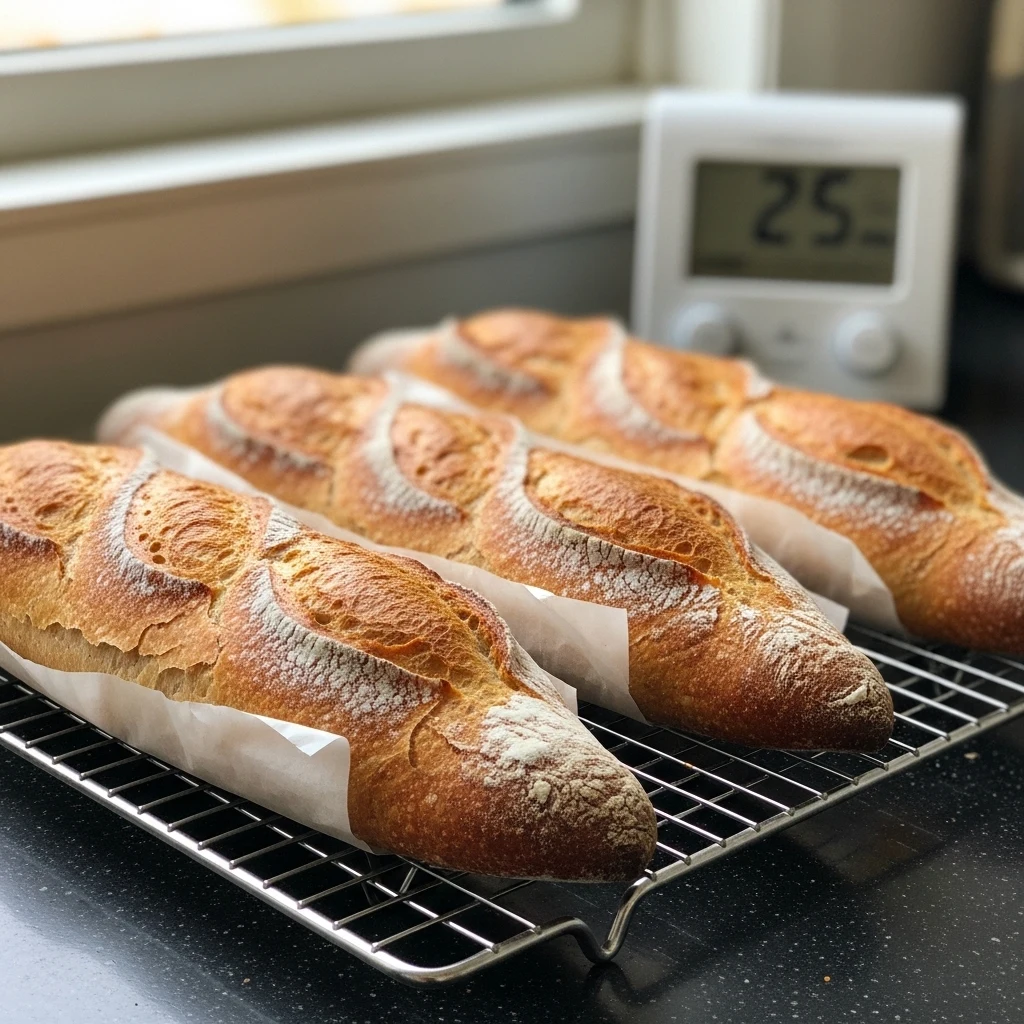
Let your baguettes cool on a wire rack for at least 20 to 30 minutes before cutting into them. The crumb is still setting during this time.
Cut too early and the interior will be gummy, which is a cruel way to end a process you worked this hard on.
Can you smell them? That warm, wheaty, slightly caramelized smell? That is your reward right there. Enjoy it for the full 30 minutes.
Common Problems and How to Fix Them
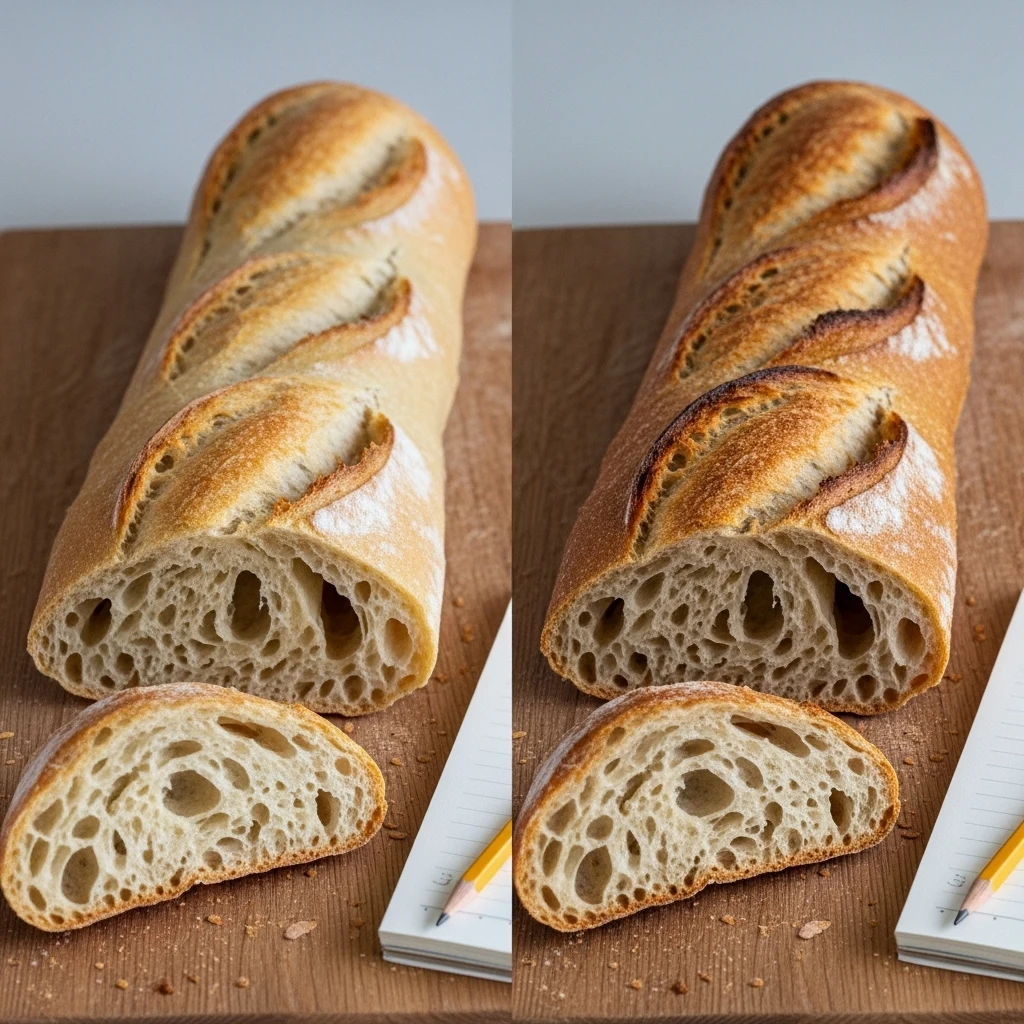
Dense Crumb with No Holes
This usually means the dough was over-kneaded, under-fermented, or degassed too aggressively during shaping. Handle the dough gently and make sure your bulk fermentation goes to completion.
Crust Goes Soft After Cooling
Not enough bake time, or the oven lost too much heat when you opened it. Keep the door closed as much as possible and bake until deeply colored.
Baguettes Spread Flat Instead of Rising Up
The dough is likely over-proofed, or the final shaping did not build enough surface tension. Try shaping a bit tighter and watch your proof time more carefully.
Scoring Tears Instead of Cutting Clean
Your blade is not sharp enough, or the angle is too steep. Use a fresh razor and keep the blade almost parallel to the surface of the dough.
A Few Personal Notes on Getting Better at This
The first time I made baguettes at home, they looked like pale, deflated tubes. Perfectly edible, but nowhere close to what I was going for. The second time was better.
By the fourth or fifth attempt, the crust had that satisfying crack and the crumb finally had some character.
The biggest lessons: Do not rush the fermentation, do not skip the steam, and do not pull the baguettes out too early because you are impatient. Every minute in that oven matters.
Also, the cold overnight fermentation method is genuinely worth trying. The flavor difference is noticeable in a way that is hard to describe until you taste it side by side.
Wrapping It Up
An authentic French baguette from scratch is not the easiest bread to make, but it is absolutely within reach for any home baker willing to respect the process.
Use good flour, keep your yeast amount low, ferment slowly, handle the dough gently, and bake with plenty of heat and steam.
Those five things cover the vast majority of what separates a great baguette from a mediocre one.
There will be a learning curve, and that is part of what makes it worth doing.
The moment you pull a tray of properly baked baguettes out of your oven and hear that crust crackling as they cool, you will understand exactly why people have been making this bread the same way for centuries.
Some things earn their reputation honestly.
Shop Proofing Cloths and Bread Baking Accessories on Amazon
What Type of Flour Is Best for an Authentic French Baguette?
Bread flour is the best choice for a true French baguette. Its higher protein content builds strong gluten, creating the chewy crumb and sturdy crust that define a proper baguette.
All-purpose flour works in a pinch, but the texture will be softer and less structured.
How Long Does It Take to Make a French Baguette from Scratch?
Making a French baguette from scratch takes about 5 to 6 hours. This includes autolyse, stretch and fold sets, bulk fermentation, shaping, proofing, and baking.
If you use the cold overnight fermentation method, it takes about 18 to 24 hours. Most of that time is hands-off in the fridge, which greatly improves the flavor.
Why Is Steam Important When Baking a Baguette?
Steam keeps the dough’s outer surface moist during the first 15 minutes of baking. This lets the baguette expand fully before the crust sets. Without steam, the crust hardens too early.
This traps the loaf and stops it from rising properly. The result is a dense crumb and a dull, pale crust. A proper baguette needs a deep golden, crackling shell.
Can I Make French Baguettes Without a Baking Stone or Dutch Oven?
Yes, the results may not be as good. Preheat a heavy baking sheet in the oven for at least 45 minutes. This retains heat.
Use a steam pan on the oven floor to mimic the moisture a Dutch oven or baking stone offers. The crust might be less dramatic, but the baguette will still taste great.
How Do You Store Homemade French Baguettes?
Homemade French baguettes taste best within a few hours of baking. The crust is crispiest then. If you need to store them, wrap cooled baguettes in a paper bag.
Keep them at room temperature for up to one day. Avoid plastic bags; they trap moisture and soften the crust.
For longer storage, slice the baguettes and freeze them. To revive the crust, reheat directly in a hot oven for 5 to 8 minutes.