
Picture this: you walk into a farmhouse kitchen, and everything looks warm, inviting, and perfectly put together. The shiplap walls, the butcher block counters, the oversized farmhouse sink.
But the bar stools? Generic, wobbly, and clearly bought in a panic. We have all seen it, and honestly, it is a little heartbreaking.
The right rustic bar stool can either pull a farmhouse kitchen together completely or remind everyone that you forgot the most important seat in the house.
This article breaks down everything you need to know about choosing rustic bar stools that actually belong in a farmhouse kitchen.
From materials and styles to height and comfort, we are covering it all. So grab a coffee, pull up a stool (a good one, hopefully), and let us get into it.
Why Rustic Bar Stools Are a Farmhouse Kitchen Essential
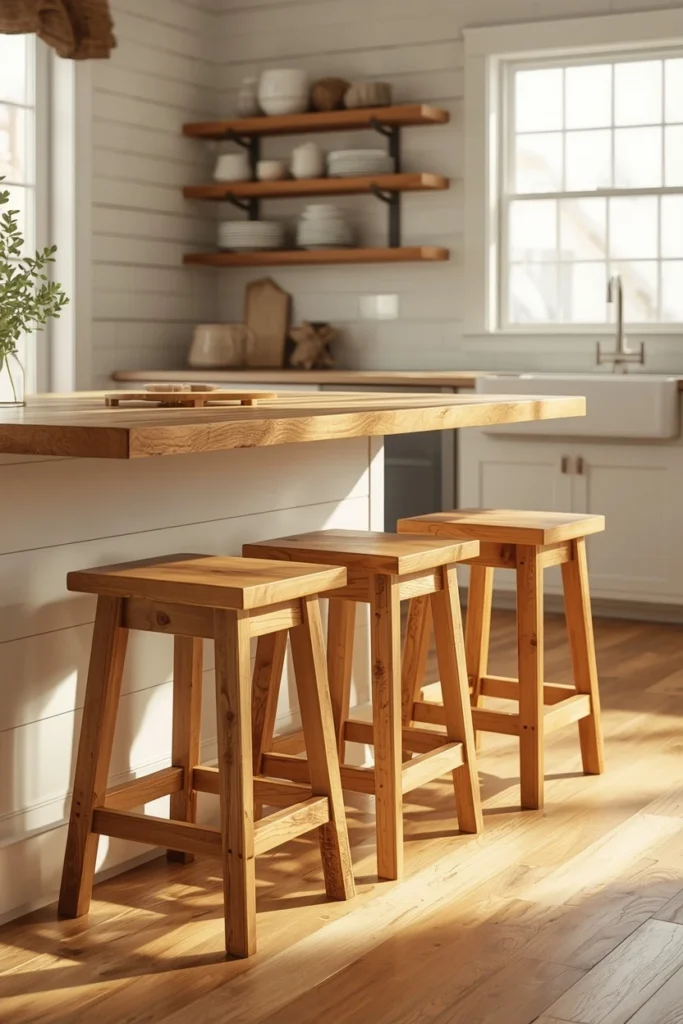
Most people spend a lot of time obsessing over the big stuff in a farmhouse kitchen: the cabinetry, the countertops, the appliances.
But here is the thing nobody tells you until it is too late: the bar stools carry the whole visual weight of your kitchen island or breakfast bar.
They are the pieces people actually sit on, touch, and interact with daily. That makes them both a style statement and a functional necessity.
Rustic bar stools bring texture, warmth, and character to a space that could easily feel cold or overly polished.
A well-chosen rustic stool ties together raw wood, vintage metal, and natural fabrics in a way that feels lived-in and genuinely welcoming.
That is the whole philosophy behind farmhouse design anyway, right? Making a space feel like real people actually live there.
The Best Materials for Rustic Bar Stools
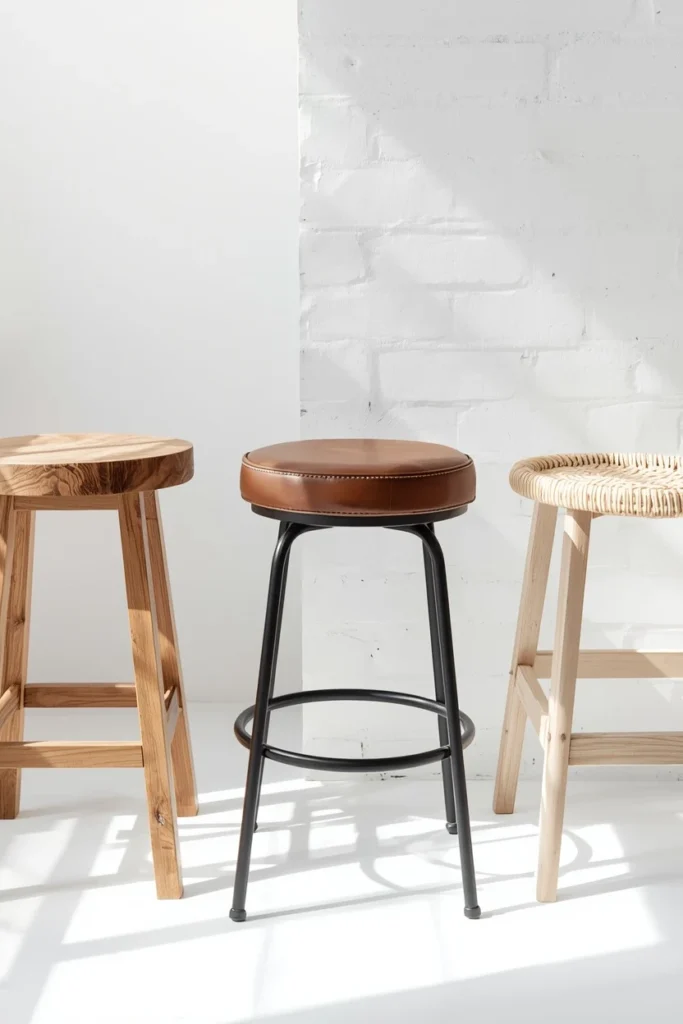
Reclaimed and Solid Wood
Nothing says farmhouse quite like solid wood, and reclaimed wood takes it up another notch.
Reclaimed wood bar stools carry visible grain patterns, natural knots, and slight imperfections that give each piece a unique personality.
You are not buying a cookie-cutter stool. You are buying something with a story.
When shopping for wood bar stools, look for these options:
- Oak: Dense, durable, and it develops a gorgeous patina over time.
- Pine: Lighter and more affordable, with a slightly rustic, knotty texture.
- Hickory: Extremely tough with a dramatic grain that looks stunning in rustic settings.
- Reclaimed barn wood: The gold standard for authentic farmhouse style.
Pine scratches more easily than oak, so if your household involves kids or pets, oak or hickory will serve you better in the long run.
Reclaimed wood, while beautiful, may need occasional sealing to protect it from moisture in a kitchen environment.
Shop Rustic Wood Bar Stools On Amazon
Wrought Iron and Raw Metal
Metal bar stools with a raw or blackened finish pair exceptionally well with wood countertops and open shelving.
Wrought iron brings an industrial-meets-rustic look that works particularly well in kitchens that blend farmhouse style with a slightly more modern edge.
The best part? Metal frames are incredibly durable. You can wipe them clean in seconds, and they rarely wobble or weaken over time the way cheaper wooden legs sometimes do.
Just make sure the seat has some kind of cushion or padded surface if you plan on sitting for more than ten minutes, because bare metal is exactly as comfortable as it sounds.
Find Rustic Metal Bar Stools On Amazon
Rattan, Wicker, and Woven Seats
A woven or rattan seat on a wooden or metal frame adds gorgeous texture to a farmhouse kitchen.
The combination of natural fibers with solid wood or iron creates a layered, tactile look that photographs beautifully and feels even better in person.
Keep in mind that woven seats need a bit more care. Avoid letting them stay damp for long periods, and vacuum them occasionally to keep dust from settling into the weave.
But if you are willing to give them a little love, they reward you with warmth and style that is hard to beat.
Browse Woven And Rattan Bar Stools On Amazon
Farmhouse Bar Stool Styles You Need to Know
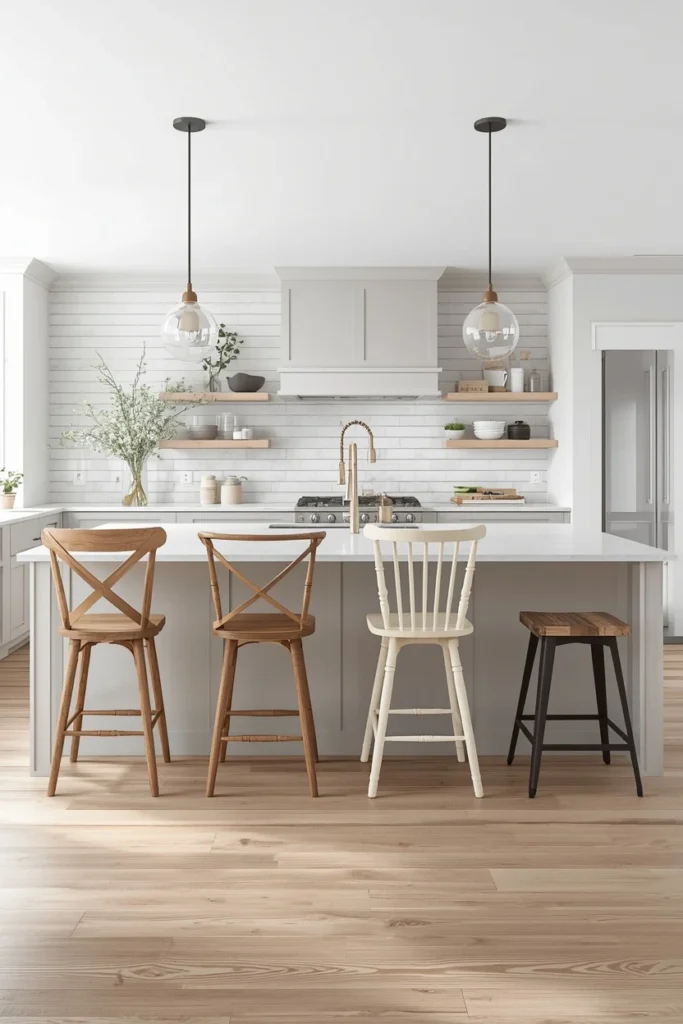
The Classic Cross-Back Stool
The cross-back bar stool is arguably the most iconic farmhouse seating choice available.
Those two diagonal back slats forming an X shape are instantly recognizable, and they work in virtually every farmhouse kitchen.
Cross-back stools look equally at home in a pure rustic farmhouse setting and in a transitional kitchen with white shaker cabinets.
They are also incredibly comfortable to lean back into, which matters when you are parked at the kitchen island for a long Sunday breakfast.
The Saddle Seat Stool
Saddle seat stools feature a carved wooden seat that contours slightly to the body, removing the need for a cushion entirely.
The slight dip in a saddle seat makes it significantly more comfortable than a flat wooden seat, and it gives off a beautifully traditional, handcrafted look.
These work best in kitchens leaning toward a more rugged, country-style aesthetic. Pair them with a butcher block counter and exposed ceiling beams, and you have nailed the farmhouse look completely.
The Spindle Back Stool
Spindle back stools bring a classic, almost colonial-era charm to a farmhouse kitchen. Multiple thin vertical spindles form the back, creating an airy silhouette that does not visually crowd the space.
If your kitchen already has a lot of visual weight from dark cabinetry or exposed brick, spindle back stools keep things from feeling overly heavy.
They tend to run a bit more traditional in style, so they work best in kitchens that lean into heritage farmhouse aesthetics rather than modern farmhouse ones.
The Industrial Metal Stool with Wood Seat
For kitchens that mix farmhouse warmth with industrial edge, a metal frame stool with a solid wood seat hits exactly the right note.
The contrast of black or antique bronze metal against warm wood tones creates a visual tension that feels modern and rustic at the same time.
This style works especially well under a white marble countertop or a concrete kitchen island, where you want to add warmth without losing the cooler, edgier vibe.
Explore Farmhouse Bar Stool Styles On Amazon
Getting the Height Right
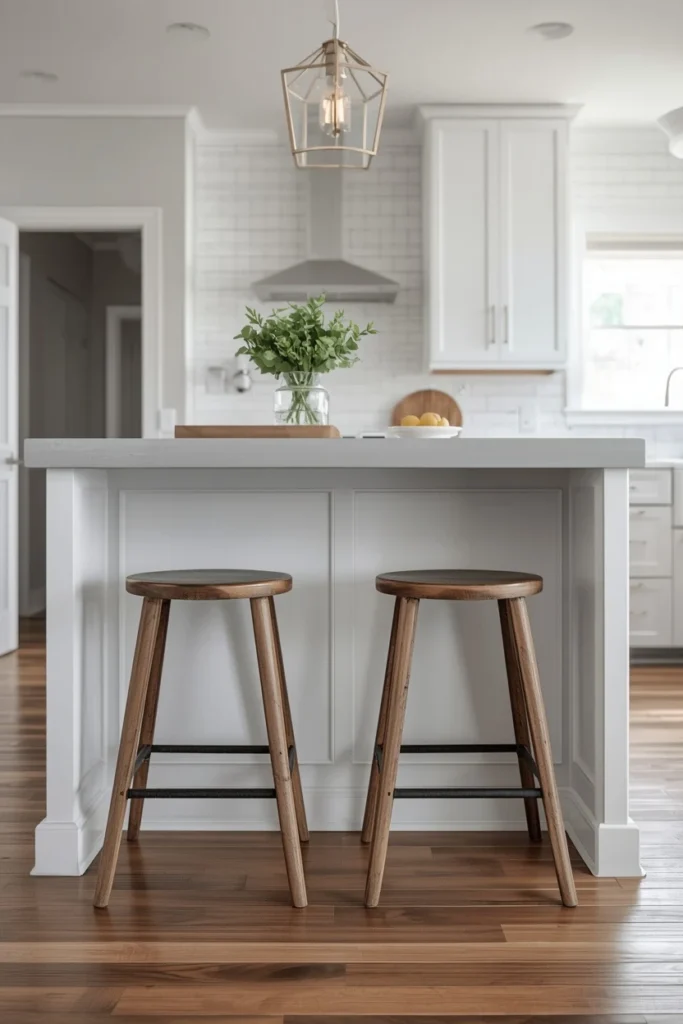
Here is something that catches a lot of people off guard: bar stool height actually matters more than almost any style decision you make.
Choosing the wrong height means your guests either look like they are sitting in a kindergarten chair or straining their necks to see over the counter.
Use these measurements as your guide:
- Counter height (34 to 36 inches): Choose a stool with a seat height of 24 to 26 inches.
- Bar height (40 to 42 inches): Choose a stool with a seat height of 28 to 30 inches.
- Extra-tall island (44 to 48 inches): Choose a stool with a seat height of 33 to 36 inches.
Always measure your counter or island height before buying. It sounds obvious, but the number of people who skip this step and end up with stools that are three inches too short is genuinely staggering.
Shop Bar Stools By Height On Amazon
Comfort Features Worth Looking For
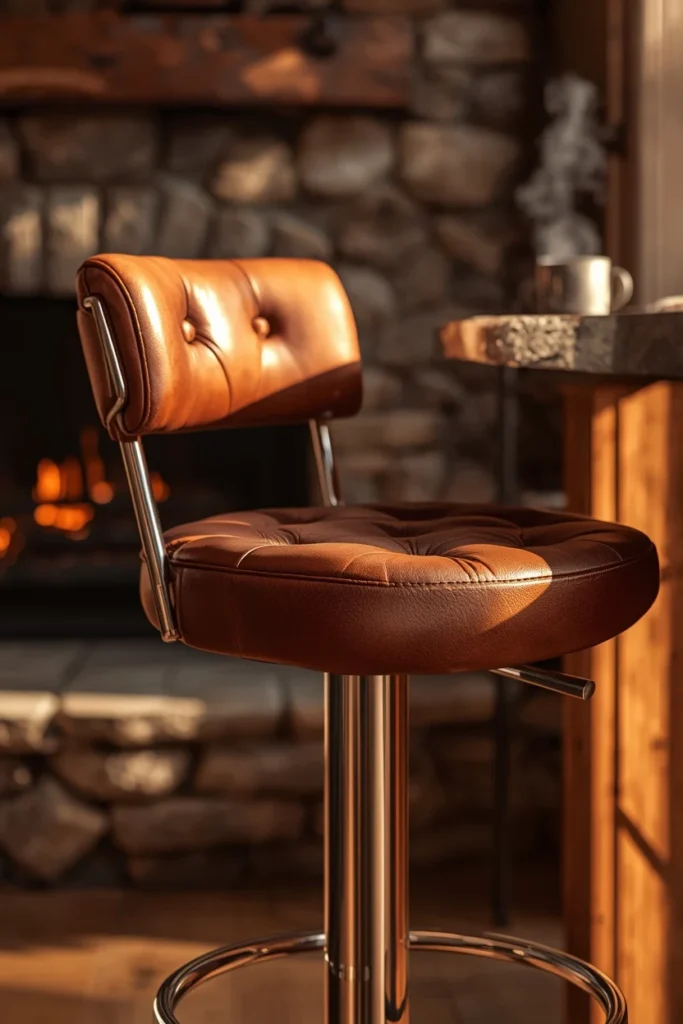
Style is important, but nobody wants to sit on a stool that feels like a medieval punishment device.
When choosing rustic bar stools, comfort features can make the difference between a stool that gets used daily and one that just looks good in photos.
Look for these features when comparing options:
- Footrests: A well-placed footrest at the right height dramatically reduces leg fatigue during long sit-downs.
- Padded or cushioned seats: Especially important for backless stools or flat wood seats.
- Swivel function: Particularly useful in kitchens where you want to turn easily between the island and the rest of the room.
- Back support: Even a simple low back makes extended seating far more comfortable than a completely backless design.
Backless stools look incredibly sleek and minimal, and they tuck under a counter neatly when not in use.
But if your household involves anyone who plans to sit for more than a quick snack, a backed stool is usually the kinder choice.
Find Comfortable Rustic Bar Stools On Amazon
How Many Stools Do You Actually Need?
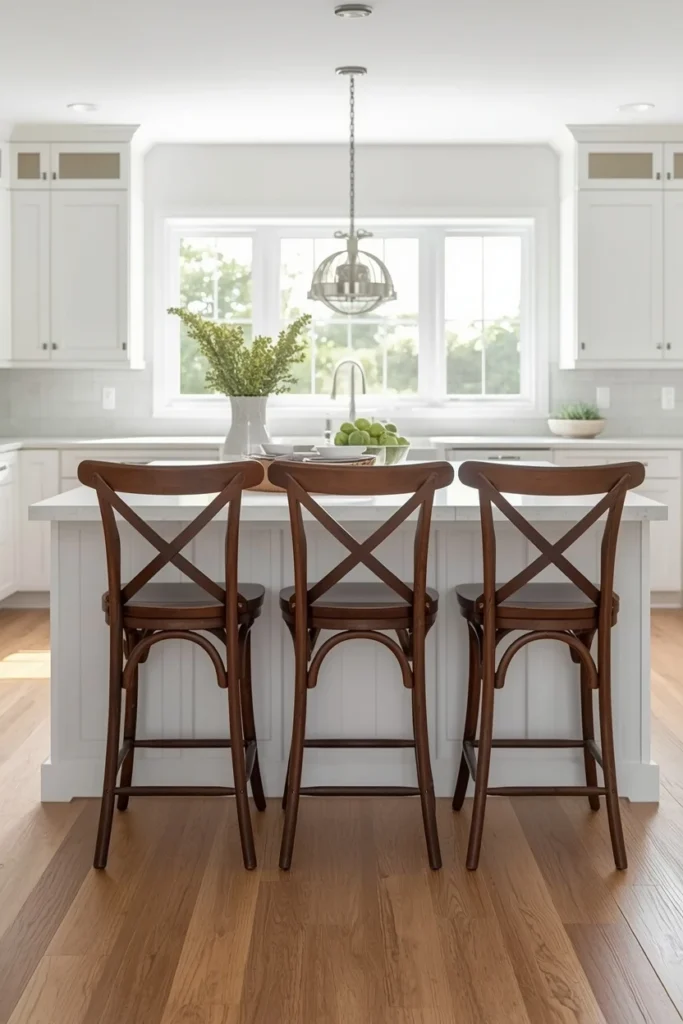
A good rule of thumb is to allow 24 to 26 inches of space per stool along the counter edge.
This gives each person enough room to sit comfortably without bumping elbows with the person next to them. For a standard 60-inch kitchen island, that typically means two to three stools.
Resist the urge to cram in an extra stool just because it technically fits. A slightly uncrowded seating arrangement always looks and feels better than one where everyone is fighting for elbow room.
Pulling It All Together
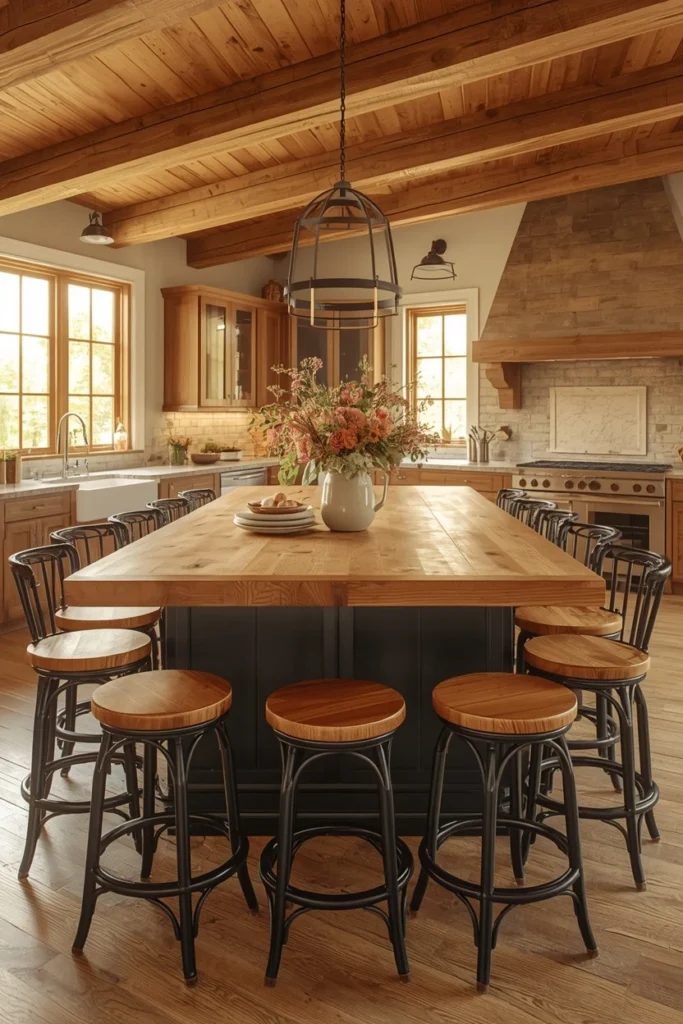
Choosing rustic bar stools for your farmhouse kitchen is not something to rush or treat as an afterthought.
The right stool adds warmth, character, and a sense of completeness to a space that you and your family will use every single day.
Think about your counter height first. Then consider your existing materials and whether you want wood, metal, or a combination of both.
Factor in how long people actually sit at your island, and choose a comfort level that matches real life rather than a magazine shoot.
And finally, pick a style that genuinely speaks to the farmhouse aesthetic you have built in the rest of your kitchen.
A great rustic bar stool is one of those pieces you buy once, keep for years, and wonder how your kitchen ever looked complete without it.
Choose well, and your farmhouse kitchen will thank you every single morning.
What Height Bar Stool Do I Need for a Farmhouse Kitchen Island?
The right stool height depends entirely on your counter or island height. For a standard counter height of 34 to 36 inches, choose a stool with a seat height of 24 to 26 inches.
For a bar height counter of 40 to 42 inches, go with a seat height of 28 to 30 inches. Always measure your counter before purchasing to avoid ending up with stools that are too short or awkwardly tall.
What Is the Best Wood for Rustic Bar Stools in a Farmhouse Kitchen?
Oak, hickory, and reclaimed barn wood are the top choices for rustic bar stools in a farmhouse kitchen. Oak offers excellent durability and develops a rich patina over time, making it ideal for busy households.
Hickory is even tougher and features a dramatic grain pattern that suits a rugged farmhouse aesthetic.
Reclaimed wood delivers the most authentic rustic character, though it benefits from occasional sealing in a kitchen environment where moisture is a factor.
How Many Bar Stools Should I Put at a Farmhouse Kitchen Island?
Allow 24 to 26 inches of counter space per stool to ensure comfortable seating without crowding. A 60-inch island typically accommodates two to three stools comfortably.
Prioritize a slightly uncrowded arrangement over squeezing in an extra seat, as adequate elbow room makes a noticeable difference in day-to-day comfort and overall kitchen feel.
Are Backless or Backed Rustic Bar Stools Better for a Farmhouse Kitchen?
Backless stools offer a cleaner, more minimal look and tuck neatly under a counter when not in use, which works well in smaller kitchens where visual clutter is a concern.
However, backed stools provide significantly more comfort for extended seating, making them the more practical choice for kitchens where people regularly sit for meals or long conversations.
For a farmhouse kitchen that sees daily use, a low-back or cross-back stool usually strikes the best balance between style and comfort.
What Rustic Bar Stool Styles Work Best in a Modern Farmhouse Kitchen?
The cross-back stool and the industrial metal stool with a wood seat are the two styles that translate most naturally into a modern farmhouse kitchen.
Cross-back stools bring iconic farmhouse character while remaining versatile enough to pair with white shaker cabinets or open shelving.
Metal-frame stools with warm wood seats introduce an industrial-rustic contrast that complements concrete islands, marble countertops, and mixed-material kitchens particularly well.
Both styles keep the farmhouse feel intact without looking overly traditional or dated.