
You finally got that gorgeous neutral sofa. The clean linen, soft greige, and warm ivory match everything. But now it just sits there. It looks fine, but it’s forgettable. Sound familiar?
Here’s the thing: a neutral sofa is a canvas, not a finished look. Textured throw pillows are the quickest and cheapest way to transform that canvas.
They can make your living room pop when people walk in. Let’s talk about how to do it right.
Why Texture Matters More Than Color on a Neutral Sofa
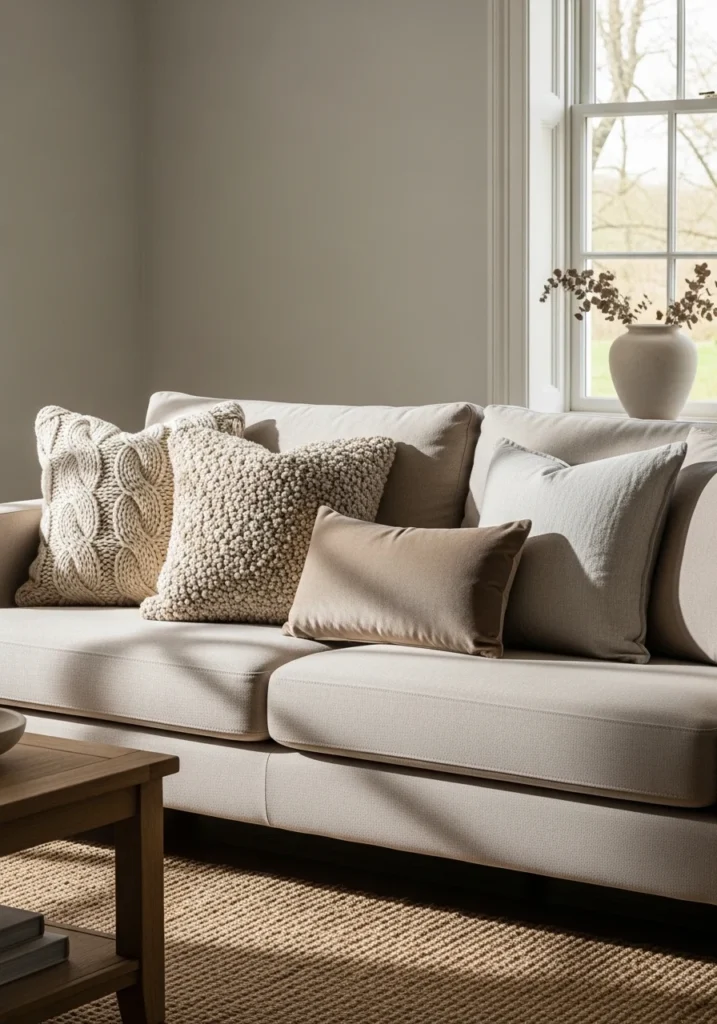
Most people think decorating a neutral sofa is a color problem.
They go hunting for the perfect shade of burnt orange or sage green, buy a set of perfectly smooth pillows in that color, toss them on the sofa, and then wonder why the whole thing still looks flat.
Texture is what adds life. Color catches the eye, sure, but texture is what makes you want to reach out and touch something.
It creates depth, dimension, and that layered, “I have great taste and also know what I am doing” quality that makes a room feel genuinely designed rather than just furnished.
On a neutral sofa specifically, texture becomes even more important because you are working with a restrained color palette.
You do not have bold hues doing the heavy lifting, so the visual interest has to come from somewhere else. That somewhere else is texture.
The Visual Weight Principle
Think of it this way: a flat, smooth pillow on a beige sofa practically disappears.
A chunky knit, a boucle weave, or a velvet pillow in a similar neutral tone suddenly makes the whole sofa look intentional.
The contrast between soft, neutral color and rich, tactile texture is the whole secret.
This is also why you do not need to reach for loud colors to make a neutral sofa interesting.
Some of the most stunning sofa styling uses pillows in the exact same tonal family as the sofa itself, but in wildly different textures.
Ivory linen next to cream boucle next to off-white velvet? That is a masterclass in restraint that reads as anything but boring.
The Best Textures for Neutral Sofa Pillows
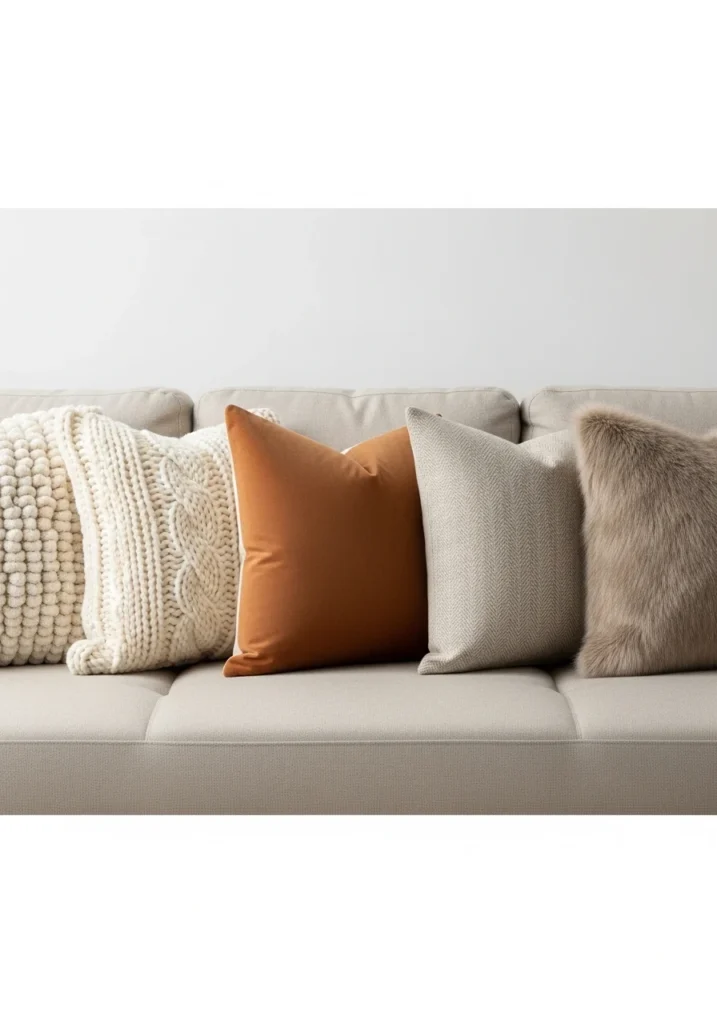
Not all textures are created equal, and some work better for certain aesthetics than others. Here is a breakdown of the most popular options and when to reach for each one.
Boucle
Boucle is having a serious moment right now, and honestly, it deserves every bit of the attention.
The looped, nubbly surface adds incredible warmth and a distinctly organic, sculptural quality that photographs beautifully and feels even better in person.
Best for: Modern organic, Scandinavian minimalist, or transitional interiors. Boucle reads as contemporary without being cold, which makes it perfect for neutral sofas that lean warm or earthy.
What to look for: Good boucle pillows have a tight, even loop structure that holds its shape over time. Loose, uneven loops tend to snag and pill faster.
Shop Boucle Throw Pillows On Amazon
Chunky Knit
Chunky knit pillows are the textural equivalent of a bear hug, and there is absolutely no shame in loving them.
The thick, oversized stitches create deep shadows and highlights that make a sofa look genuinely cozy, not just styled.
Best for: Hygge-inspired spaces, rustic modern interiors, and any room where you want to communicate “come in and stay a while.”
They work particularly well on sofas with warm undertones like camel, taupe, or warm grey.
What to watch out for: Very loose knits can lose their shape quickly, especially if you actually use them (which you should). Look for pillows with a knit cover that has some density to it.
Shop Chunky Knit Throw Pillows On Amazon
Velvet
Velvet is the chameleon of throw pillow textures. Depending on the pile direction, it can look rich and moody or soft and romantic.
On a neutral sofa, velvet adds an instant hit of luxury without requiring any dramatic color choices.
Best for: Traditional, maximalist, Hollywood Regency, or any space that wants to feel a little elevated.
Deep jewel-toned velvets work beautifully against light neutral sofas, but do not sleep on neutral velvets either. A dusty rose velvet or a warm mushroom velvet on a cream sofa is quietly stunning.
Practical note: Velvet shows impressions easily, which means your pillows will bear the evidence of every cat, dog, child, or snack-time slouch. Whether that bothers you is a personal call.
Shop Velvet Throw Pillows On Amazon
Linen and Cotton Weaves
Woven linen and cotton pillows might not be the flashiest texture on this list, but they are the workhorse of the group.
A good textured weave, whether that is a herringbone, a basketweave, or a slubby linen, adds quiet visual interest without demanding attention.
Best for: Casual living rooms, coastal spaces, farmhouse interiors, and anyone who wants texture that does not shout.
Linen weaves are also generally the most durable and easiest to care for, which matters if your sofa gets real, everyday use.
Sherpa and Faux Fur
For maximum coziness, nothing beats a sherpa or faux fur pillow.
These are unabashedly tactile, unabashedly soft, and basically impossible to resist burying your face in. They add a sense of warmth that borders on theatrical, in the best way.
Best for: Bedrooms, cozy reading nooks, or living rooms that lean into the “cabin in the woods” aesthetic.
Use them sparingly in more formal spaces, because a pile of faux fur pillows in a sleek, minimal room can tip from cozy to chaotic fairly quickly.
How to Mix Textures Without Making Things Look Messy
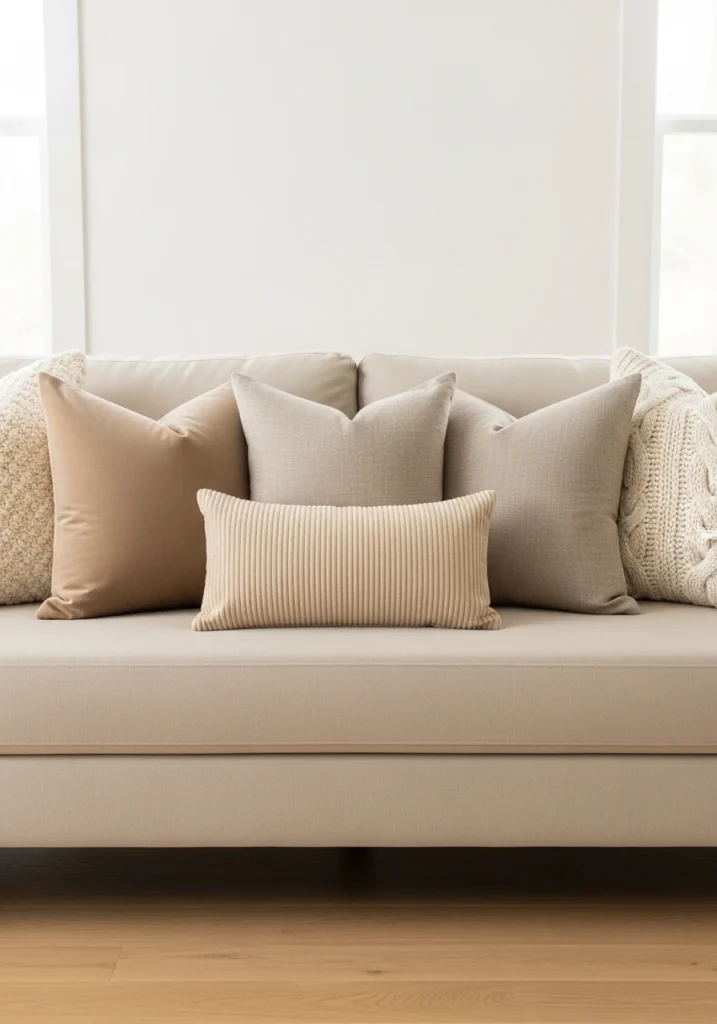
Here is where a lot of people get stuck. You buy three different textured pillows, toss them on the sofa, and suddenly the whole thing looks like a yard sale.
The good news is that mixing textures well is a learnable skill, not some innate gift that only interior designers are born with.
Stick to a Cohesive Color Story
The easiest way to mix multiple textures without visual chaos is to keep your colors closely related.
Choose two to three tones that all live in the same family and let the texture variation do the work.
A cream boucle, a warm taupe velvet, and an ivory chunky knit will look beautifully layered because the tonal harmony holds everything together.
This does not mean you can never introduce contrast. A single pillow in a deeper tone or a subtle pattern can add just the right amount of interest.
But if every pillow is fighting for attention in both color and texture, you will end up with visual noise instead of visual interest.
The Rule of Odd Numbers
Designers love odd numbers for a reason. Three pillows, five pillows, seven pillows, all look more natural and dynamic than even-numbered arrangements.
On a standard three-seat sofa, a grouping of five pillows tends to hit the sweet spot between full and fussy.
A simple formula that works reliably:
- Two larger pillows (around 20×20 inches) as anchors on either end
- Two medium pillows (18×18 inches) in front of or beside the larger ones
- One lumbar pillow in the center as the finishing touch
This gives you five pillows with natural variety in shape and scale, which automatically makes the arrangement feel more considered.
Vary Your Scales
Mixing textures is even more effective when you also vary the scale of the texture itself.
A fine-weave linen next to a chunky knit next to a smooth velvet creates a much more interesting visual rhythm than three different mid-weight weaves side by side.
Think of it like music. You want some bass notes (the big, heavy textures), some mid tones (medium textures), and some high notes (fine, smooth, or detailed textures).
All three together create a composition. All of one register, no matter how beautiful, gets monotonous.
Choosing the Right Fill for Your Textured Pillows
Nobody talks about pillow fills enough, which is a real oversight because the fill determines whether your beautifully textured pillow looks plump and inviting or sad and deflated.
Down and feather fills give you that effortlessly plump look that photographs well and feels wonderful.
The slight give when you press into them adds to the overall cozy aesthetic. The downside: they need regular fluffing and some people are allergic.
Down alternative fills have come a long way. A high-quality polyester fill can mimic the feel of down closely, and it holds its shape better over time.
For pillows that will actually get used daily, this is often the more practical choice.
Foam inserts tend to make pillows look stiff and boxy, which undercuts the cozy, relaxed vibe you are going for with textured throw pillows.
Avoid foam unless you specifically want a very structured, architectural look.
One tip worth knowing: always buy an insert one to two inches larger than your pillow cover.
A 20×20 inch cover filled with a 22×22 inch insert looks full, plump, and intentional. A 20×20 cover filled with a matching 20×20 insert looks tired and flat.
Shop Throw Pillow Inserts On Amazon
Caring for Textured Throw Pillows
Textured pillows, especially knits, boucle, and velvet, need a little more care than a basic cotton pillow. A few guidelines that will keep your pillows looking good for years:
- Boucle: Spot clean when possible. If machine washing is necessary, use a delicate cycle in a mesh laundry bag to protect the loops.
- Velvet: Avoid pressing directly. To refresh crushed pile, hold the pillow over steam and gently brush in the pile direction.
- Chunky knit: Hand wash or use a gentle cycle, then lay flat to dry. Hanging a wet knit pillow cover will stretch it out of shape.
- Linen and cotton weaves: These are generally the most forgiving. Most can go straight in the washing machine on a cool, gentle cycle.
- Faux fur and sherpa: Machine wash on cold and air dry. Heat is the enemy of faux fur and will mat the fibers permanently.
Final Thoughts
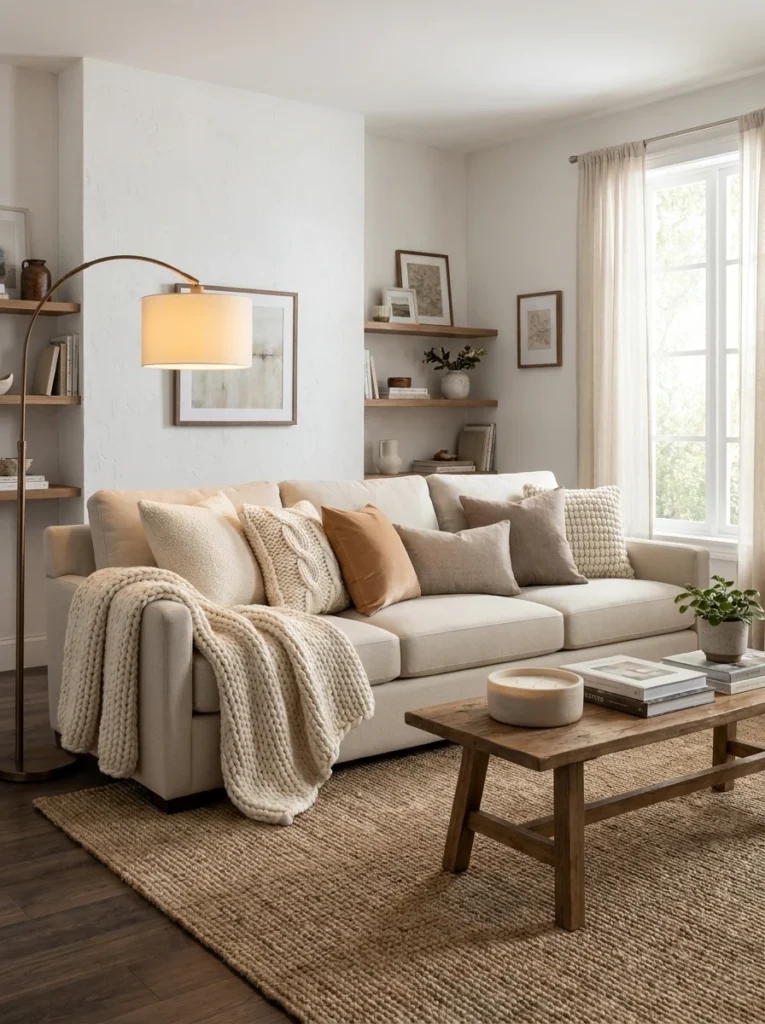
A neutral sofa is one of the smartest furniture investments you can make because it gives you complete freedom to evolve the look of your room over time.
And textured throw pillows are the most powerful, most affordable tool you have to make that sofa feel finished, personal, and genuinely inviting.
The formula is simple: lead with texture, keep your colors cohesive, mix your scales, and invest in good fills.
Do those four things and you will never look at your neutral sofa and think “nice, but something is missing” again.
Now go touch some boucle. You deserve it.
How Many Throw Pillows Should You Put on a Neutral Sofa?
For a standard three-seat sofa, five pillows is ideal. Use two larger anchor pillows (around 20×20 inches) on each end.
Place two medium pillows (18×18 inches) in front, with one lumbar pillow in the center.
This odd-numbered setup looks natural and full without feeling cluttered. Balance the sizes so no single pillow stands out too much.
What Textures Work Best on a Neutral Sofa?
Boucle, chunky knit, velvet, woven linen, and sherpa or faux fur all look great on a neutral sofa. Boucle and velvet bring visual richness. Woven linen and cotton keep things relaxed and casual.
Chunky knit adds cozy warmth, while sherpa suits warm, cabin-inspired spaces. The best way is to mix two or three different textures instead of using just one.
How Do You Mix Throw Pillow Textures Without It Looking Messy?
The trick is to keep colors cohesive while varying textures. Choose two to three tones from the same color family. Let the texture differences create visual interest. Also, vary the scale of the textures.
Pair something chunky with something fine for rhythm and depth. Use an odd number of pillows and mix shapes, like square and lumbar.
This makes the arrangement look intentional, not random.
What Is the Best Pillow Fill for Textured Throw Pillows?
Down and down alternative fills are great for textured throw pillows. They give a full, plump look that makes a sofa inviting.
Foam inserts can make pillows look stiff and boxy, which clashes with the cozy vibe most people want. A good tip is to buy an insert one to two inches larger than your pillow cover.
For example, a 20×20 inch cover works best with a 22×22 inch insert. This small size difference greatly enhances the pillow’s fullness and luxury.
Can You Use Textured Throw Pillows in the Same Color as Your Sofa?
This is one of the best styling methods. Use pillows that match your sofa’s tones. For example, ivory boucle on a cream sofa or warm taupe velvet on a greige sofa creates a layered look.
It feels intentional and luxurious. The flat sofa fabric and rich pillow texture work well together, avoiding any color clash. This approach is great for minimalist or Scandinavian-inspired spaces.