
Your living room has good bones. The paint is right, the furniture is decent, and yet something still feels flat.
I ran into this exact problem in my own place, and the fix wasn’t a new couch or a fresh coat of paint. It was layering textured rugs, and once I tried it, I couldn’t unsee how much life it added to a room.
I’ve spent way too many weekends pulling rugs in and out of my living room trying to get this right, so consider this your shortcut.
Below, I’m sharing everything I’ve learned about choosing and layering textured rugs so your space feels curated instead of accidental.
Why Texture Matters More Than Color in Modern Rooms
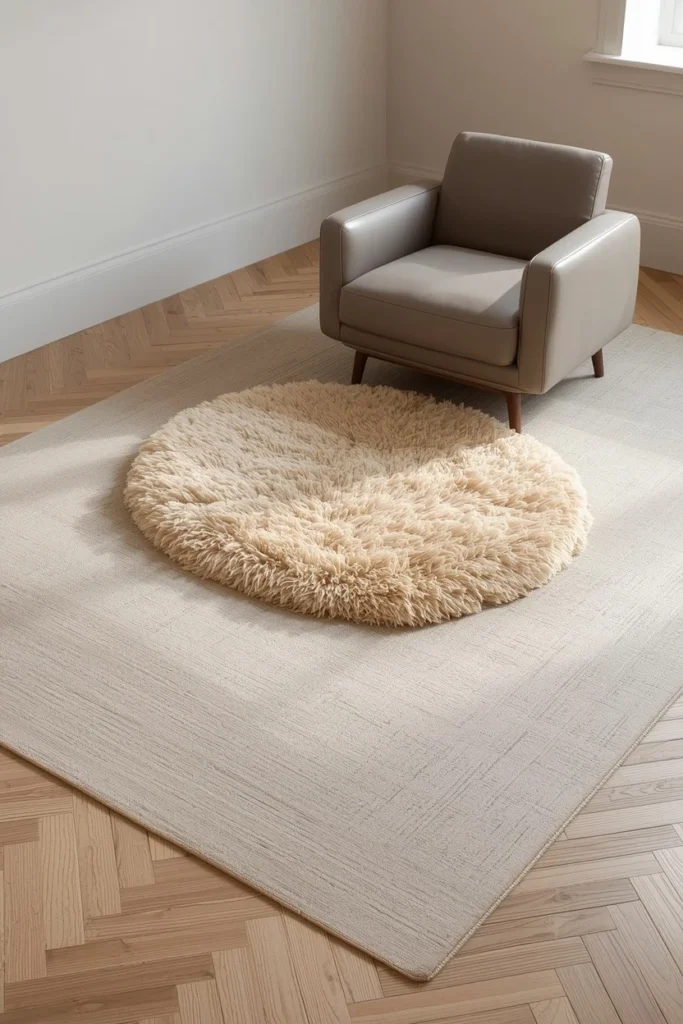
Modern interiors lean minimal, and minimal can quickly turn into cold and sterile if you’re not careful.
Color helps, sure, but texture does the heavy lifting when it comes to warmth. A flat, low-pile rug in a sleek gray living room just disappears into the background.
Think about it this way. Would a room with smooth walls, a smooth sofa, and a smooth rug ever feel inviting? Probably not. Your eyes and your feet both crave variation, and a textured rug gives them exactly that.
Here’s what texture actually does for a modern space:
- Adds visual depth without cluttering the color palette
- Softens hard lines from furniture, floors, and architecture
- Creates a tactile experience, which matters more than people admit
- Balances minimalism so the room doesn’t feel empty or unfinished
I learned this the hard way after buying a flat wool rug that looked great in photos and felt like cardboard in person. Lesson learned: texture is not optional in a modern room, it’s the whole point.
The Best Types of Textured Rugs for Layering
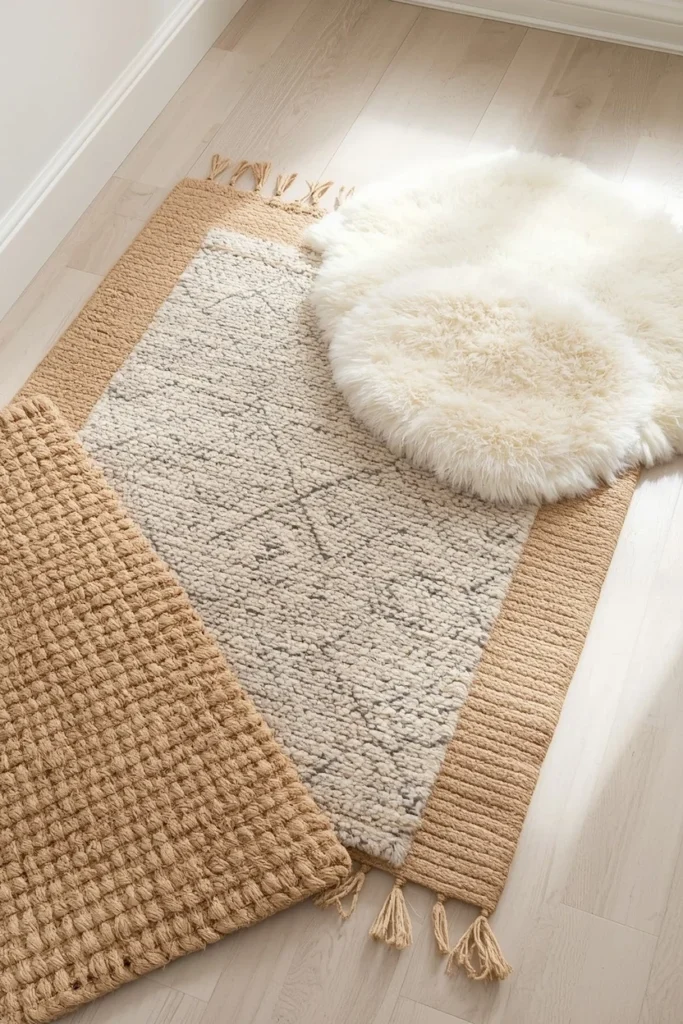
Not every textured rug plays well with others. Some fight for attention, and some blend so well you barely notice the layering trick at all. Here’s a breakdown of the textures that actually work.
Jute and Sisal for the Base Layer
Jute and sisal rugs are the unsung heroes of rug layering. They’re neutral, durable, and have just enough texture to anchor a space without overwhelming it.
I always start here because these natural fiber rugs act like a blank canvas.
- Natural, earthy tone that pairs with almost any color scheme
- Rougher texture that adds grounding without visual noise
- Budget-friendly compared to wool or shag options
- Durable enough for high-traffic areas like living rooms and entryways
Honestly, if you only buy one rug this year, make it a jute rug. It’s the least glamorous choice on this list and somehow the most useful.
Shop Natural Fiber Base Rugs On Amazon
Shag and Flokati for the Statement Layer
Once your base is down, this is where the fun starts. Shag rugs and flokati rugs bring softness and a serious dose of personality.
Placed over jute or sisal, they create that effortless, collected look everyone’s chasing on Pinterest.
- High pile creates dramatic texture contrast
- Feels incredible underfoot, especially in bedrooms
- Works well as an accent rug rather than wall-to-wall coverage
- Comes in bold shapes like circles or hides for extra visual interest
I’ll be honest, a full-room shag rug can look like a shedding animal died in your living room. But a smaller shag layered on top of a flat jute base? That’s the sweet spot.
Shop Shag And Flokati Accent Rugs On Amazon
Wool and Berber for Everyday Practicality
Wool rugs and Berber-style rugs sit in the middle ground. They offer texture without going full shag, and they hold up better to daily life, kids, pets, spilled coffee, you name it.
- Moderate pile height balances softness and durability
- Naturally stain-resistant and easy to clean
- Classic loop or knot patterns add subtle texture
- Works as either a base or top layer depending on the room
If you have a dog that thinks every rug is a chew toy, wool is your safest bet. Trust me on this one.
Shop Wool And Berber Rugs On Amazon
How to Layer Rugs Without It Looking Like a Mistake
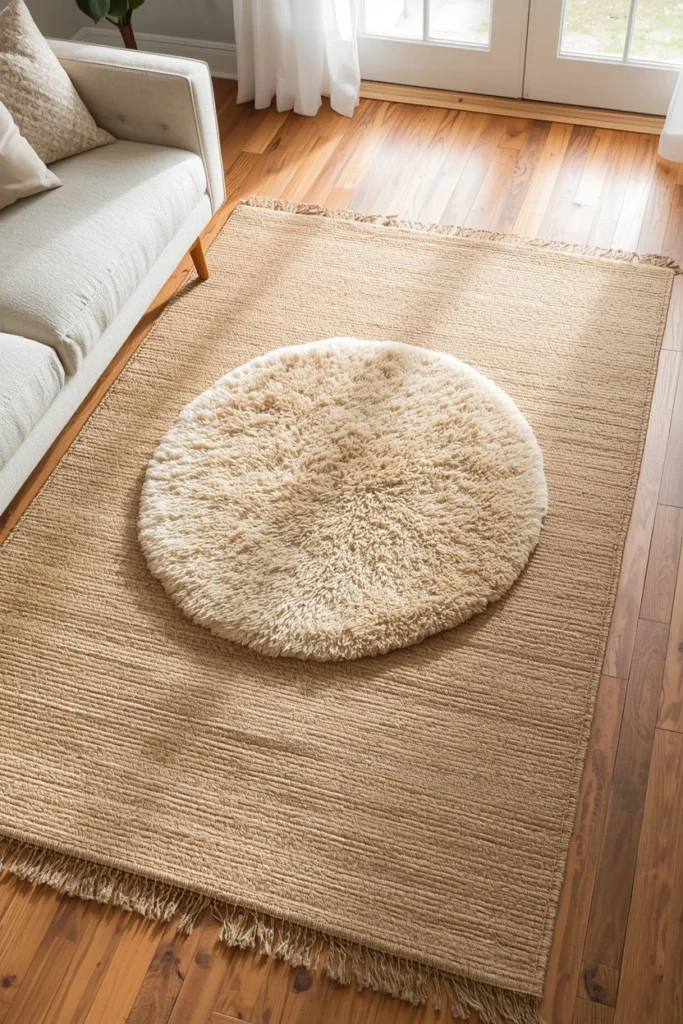
Layering rugs sounds simple until you actually try it and end up with something that looks like you couldn’t decide which rug to buy, so you bought both.
There’s a method to this, and once you get it, you’ll never go back to single-rug rooms.
Start With Size and Shape Contrast
The biggest mistake people make is layering two rugs of similar size or shape.
The bottom rug should always be noticeably larger than the top one, ideally extending several inches to a foot beyond the edges of the top layer on all sides.
Shape matters too. A round rug over a rectangular base creates an interesting visual break, while a rectangle over a rectangle can look like a layout error rather than a design choice.
Ever notice how the best-designed rooms always have this asymmetry built in? That’s not an accident.
Mix Textures, Not Just Patterns
People obsess over pattern mixing and forget that texture mixing is just as important, if not more so.
Pair a flat, tightly woven base with a high-pile or fringed top layer for contrast that actually reads well in person.
- Flat weave base + shag top layer = classic contrast
- Sisal base + faux fur accent = modern meets cozy
- Wool base + vintage-style overdyed rug = texture and color depth combined
Avoid stacking two similarly textured rugs. It’s like wearing two turtlenecks. Technically it works, but nobody’s impressed.
Anchor Furniture Across Both Layers
A layered rug setup only looks intentional when your furniture interacts with it properly. At least the front legs of your major furniture pieces should sit on the top rug, tying the whole arrangement together.
If your furniture floats awkwardly around the layered rugs instead of sitting on them, the whole look falls apart.
I made this mistake in my first attempt, and my coffee table looked like it was avoiding the rug on purpose.
Best Rooms for Layered Textured Rugs
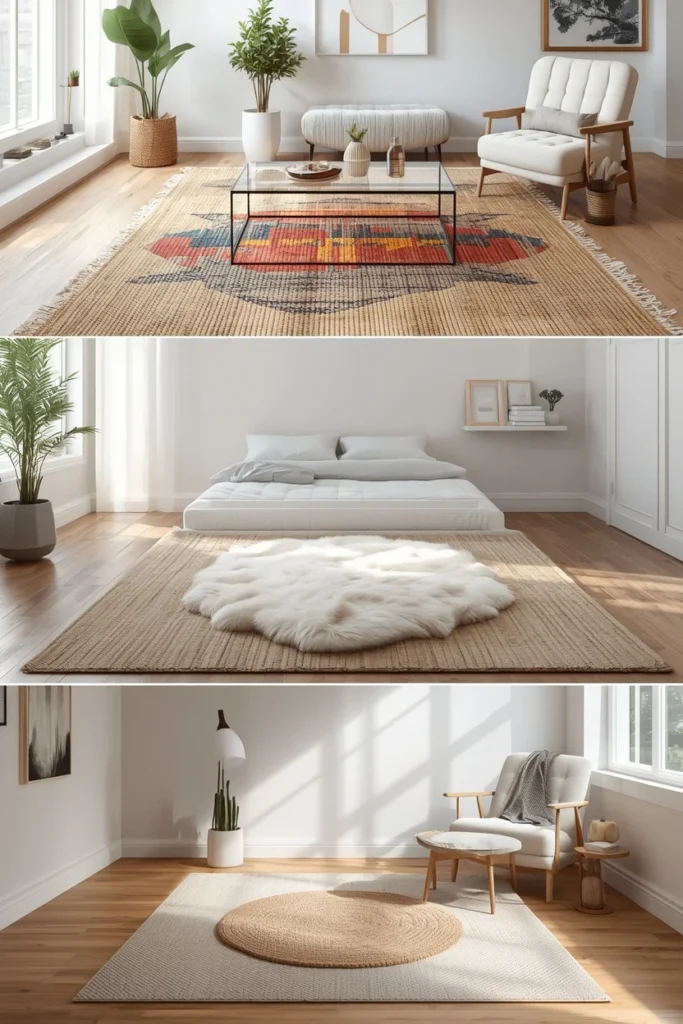
Not every room needs this treatment, and that’s okay. Some spaces genuinely benefit more than others, so let’s talk about where to focus your energy.
Living Rooms
This is the obvious winner. Living rooms have the most floor space and the most furniture to anchor, making them perfect for a two or even three-layer rug setup.
A jute base with a patterned wool rug on top instantly upgrades a plain seating area.
Bedrooms
Bedrooms benefit hugely from layered texture because, let’s face it, nobody wants to step onto a cold, flat rug first thing in the morning.
A flat woven rug topped with a small shag accent right at the bedside gives you softness exactly where you need it.
Reading Nooks and Corners
Small, cozy corners are underrated spots for rug layering. A single oversized rug in a tiny nook can feel like overkill, but two smaller layered rugs create warmth without eating up the whole space visually.
Common Mistakes to Avoid When Layering Rugs
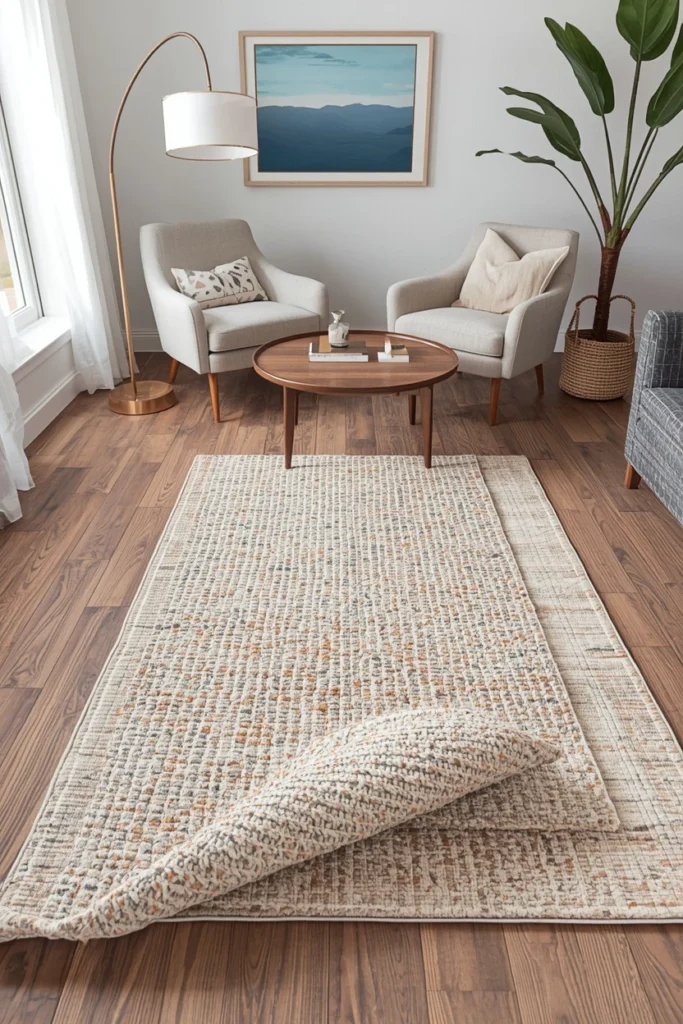
I’ve made most of these mistakes myself, so let me save you the trouble.
- Choosing rugs that are too similar in tone, which makes the layering invisible instead of intentional
- Skipping a rug pad, which leads to slipping, bunching, and honestly, a tripping hazard
- Layering rugs that clash in cleaning requirements, like a delicate wool rug under a shag rug that sheds everywhere
- Going too matchy-matchy with colors, which flattens the whole effect you’re trying to create
- Ignoring room proportions, since a small room with two large rugs will feel cramped rather than curated
None of these mistakes are unfixable, but they will cost you time, money, or a Saturday spent rearranging furniture for no reason. Ask me how I know.
Final Thoughts on Layering Textured Rugs
Textured rugs are one of the easiest ways to take a modern space from flat and forgettable to warm and genuinely lived-in.
The trick isn’t buying the most expensive rug in the store. It’s understanding how texture, size, and shape work together to create depth.
Start with a durable, neutral base like jute or wool, then layer something with more personality on top, whether that’s a shag rug, a vintage-style pattern, or a bold faux fur accent.
Pay attention to proportions, mix textures rather than matching them, and let your furniture bridge both layers so the whole thing feels planned rather than thrown together.
So, are you ready to stop staring at that flat, boring rug and actually do something about it? Your feet, and your living room, will thank you.
What Is The Best Base Rug For Layering Textured Rugs?
Jute and sisal rugs make the best base layer because they’re neutral, durable, and add subtle texture without competing with the top rug. They also handle foot traffic well, which matters if you’re layering in a living room or entryway.
Can You Layer Two Textured Rugs Of The Same Size?
You can, but it rarely looks intentional. The bottom rug should extend beyond the top rug on all sides so the layering reads as a deliberate design choice rather than a mismatched pair.
Do Layered Rugs Work In Small Rooms?
Yes, as long as you scale down. Two smaller layered rugs in a reading nook or corner add warmth without overwhelming the space, while one oversized layered setup can make a small room feel cramped.
How Do You Keep Layered Rugs From Slipping?
A good rug pad underneath both layers is non-negotiable. It stops bunching, keeps the rugs from sliding on hardwood or tile, and prevents a genuine tripping hazard in high-traffic areas.
Which Textured Rug Is Easiest To Clean For Pet Owners?
Wool and Berber-style rugs are the easiest to maintain around pets because they’re naturally stain-resistant and don’t shed the way shag or flokati rugs do. If you have a dog or cat, start your layering with wool.